
Gallbladder removal recovery is one of the most important phases after a cholecystectomy. With the growing use of modern surgical techniques such as laparoscopic and robotic procedures, gallbladder surgery has become safer, less invasive, and associated with faster healing.
However, recovery is not just about feeling better quickly. Understanding the surgical procedure itself is equally important for safe recovery. You can explore treatment options, surgical methods, and preparation details in our complete guide on gallbladder removal surgery and treatment options. It is also about preventing complications, understanding digestive changes, and allowing your body enough time to adapt. In this guide, we explain recovery timelines, digestion-related changes, essential dos and don’ts, and lifestyle tips to help you recover safely and confidently.
How Long Is the Recovery Time After Gallbladder Surgery?
Table of Contents
ToggleGallbladder removal recovery varies from person to person. Factors such as age, overall health, and the surgical approach used can influence healing speed.
First Few Days Mild to moderate pain, swelling, and discomfort around the incision site are common. Feeling tired or low on energy is normal.
First Week Light daily activities can usually be resumed. Many patients with desk-based jobs are able to return to work within a week, depending on comfort and recovery progress.
Weeks 2–4 Pain and discomfort continue to decrease. Energy levels improve, but heavy lifting and strenuous activities should still be avoided.
Weeks 4–6 Most patients feel close to normal. Regular activities and exercise can usually be resumed gradually, following medical advice.
Within a few weeks, many people notice steady improvement in digestion, stamina, and overall well-being.
Rest and physical activity play a major role in recovery after gallbladder surgery. To understand how many days of bed rest are needed, when you can move freely, and when it is safe to return to work, read our detailed guide on How many days bed rest after gallbladder removal?
Do Not Keep Your Stomach Empty for Long Hours
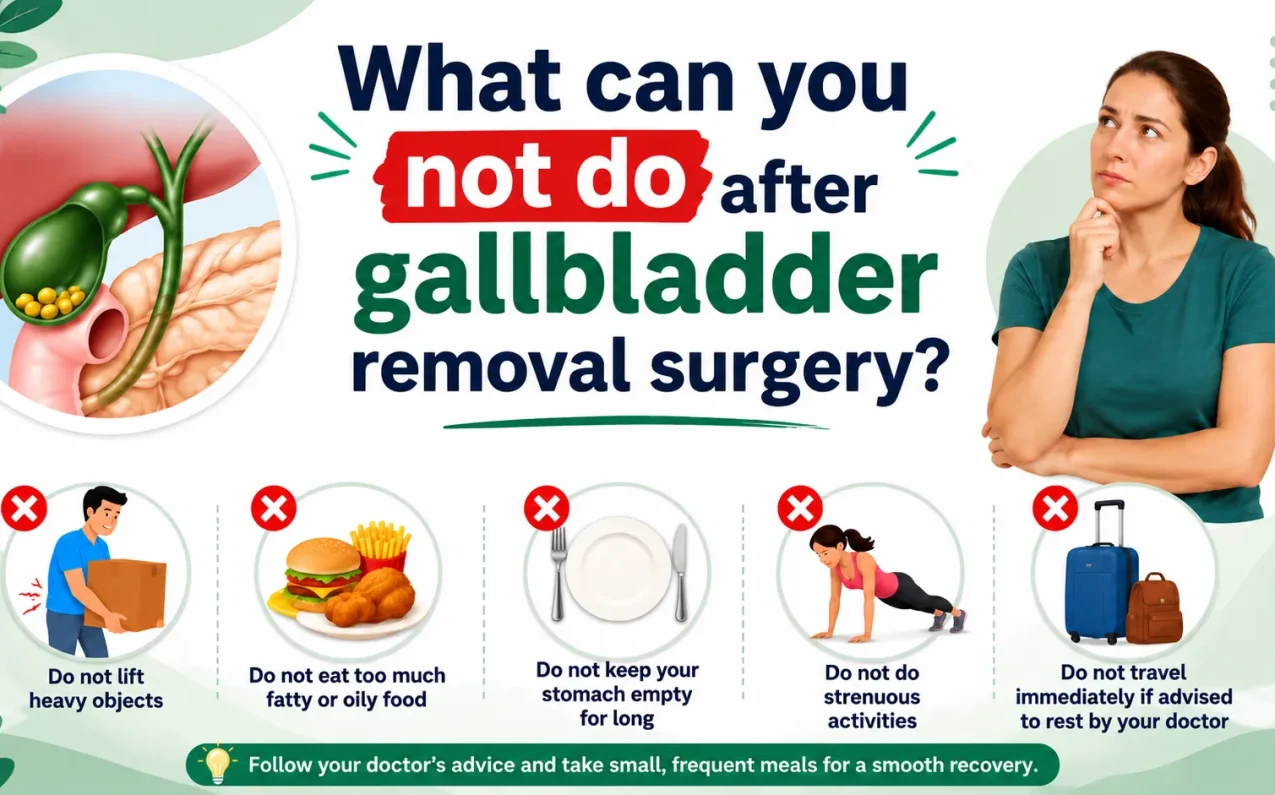
One of the most important things to avoid after gallbladder removal is prolonged fasting.
Even without food, the stomach continues to produce acid. Earlier, bile stored in the gallbladder helped neutralize this acid. After surgery, bile flows continuously in smaller amounts, which means your system may not balance acid as effectively if the stomach stays empty for too long.
What helps instead? Small, frequent meals spaced throughout the day. This keeps digestion comfortable and prevents acidity-related discomfort.
Avoid Heavy Lifting and Strenuous Activity for Six Weeks
While normal movement, office work, and travel are usually allowed soon after surgery, straining your abdomen is not.
For the first six weeks, avoid:
- Lifting very heavy objects
- Pushing or pulling heavy loads
- Intense physical strain
This precaution is important not because of internal healing, but to prevent hernia formation at the surgical site, whether the surgery was open or laparoscopic.
After six weeks, most people can safely return to all regular activities.
Digestive Changes After Gallbladder Removal
The gallbladder stores bile, which helps digest fats. After removal, bile flows directly into the intestine. This change can cause temporary digestive symptoms during the recovery period.
Common digestive changes include:
- Gas and bloating, especially after meals
- Loose stools or diarrhea, particularly in the early weeks
- Difficulty digesting fatty foods, leading to discomfort
- Mild acidity, as bile flows continuously
- Food sensitivity, especially to very fatty, spicy, or dairy-heavy foods
These symptoms are usually temporary as the body adjusts.
Many patients also wonder whether gallstones always require surgery or if they can be managed without an operation. To understand symptoms, non-surgical options, and when surgery becomes necessary, read our detailed guide on Can Gallstones Go Away Without Surgery? Patient Guide.
Dos After Gallbladder Removal Surgery
Following these practices can support smooth recovery:
- Prioritize rest during the initial days to allow proper healing
- Start activity slowly, with gentle walking to improve circulation
- Maintain a healthy diet rich in fruits, vegetables, and whole grains
- Eat small, frequent meals instead of large portions
- Stay hydrated to prevent constipation and support digestion
- Take prescribed medications exactly as advised
The digestive system gradually adapts to continuous bile flow with consistent, balanced eating habits.
Don’ts After Gallbladder Surgery
To avoid complications, it is important to avoid certain actions:
- Do not lift heavy weights (generally over 5–7 kg) for at least two weeks
- Avoid greasy, spicy, or very oily foods early in recovery
- Do not skip medications, including pain relief or antibiotics
- Do not ignore warning signs such as persistent pain, nausea, or swelling
- Avoid strenuous exercise too early, allowing at least 3–4 weeks
Avoiding these mistakes can significantly ease gallbladder removal recovery.
Lifestyle After Gallbladder Removal
Life without a gallbladder is usually normal. Most people adapt well with small lifestyle adjustments:
- Reduce fatty food intake during the first few weeks
- Eat smaller portions spread across the day
- Resume regular exercise gradually after healing
- Maintain a balanced diet to support digestion and weight control
With advanced surgical methods, many patients experience shorter hospital stays and quicker adaptation, making long-term lifestyle changes easier to manage.
How ConsultGrab Supports Your Recovery Journey
Recovery can feel confusing without the right guidance. Through ConsultGrab, patients receive reliable guidance, verified specialists, and end-to-end support—from diagnosis to recovery—ensuring a smoother and more confident healthcare journey.
We act as a trusted bridge between patients and verified specialists, offering clear explanations, appointment assistance, and access to a reliable hospital network. Our care team ensures you understand your recovery plan, dietary adjustments, and next steps—so you never feel alone in your healthcare journey.
Conclusion
Gallbladder surgery recovery requires patience, consistency, and mindful care. By following recovery guidelines, maintaining a balanced diet, and listening to your body, most people return to their normal routine within a few weeks.
Healing is unique for every individual, but with proper guidance and support, recovery can be smooth and stress-free.
Frequently Asked Question (FAQs)
After gallbladder removal surgery, patients should avoid heavy lifting, pushing, or strenuous physical activity for at least four to six weeks. These actions can strain the abdominal area and increase the risk of hernia formation at the surgical site, even after minimally invasive procedures.
Most patients can eat normal home-cooked food after gallbladder removal, but large fatty meals should be avoided initially. Eating small, frequent meals helps digestion because bile flows continuously without storage. Over time, the digestive system adapts and food tolerance improves.
Keeping the stomach empty for long periods after gallbladder surgery can increase acidity. The stomach continues to produce acid, but without stored bile, neutralization is reduced. Small, frequent meals help balance digestion and prevent discomfort or acid-related symptoms.
Heavy exercise and abdominal strain should be avoided for at least three to six weeks after gallbladder removal surgery. This restriction is important to protect the surgical area and prevent complications such as hernia, regardless of whether the surgery was laparoscopic or open.
No, foods such as curd, tomatoes, lemon, and fruits are not restricted after gallbladder removal surgery. These foods do not cause gallbladder-related issues after surgery. Patients can safely consume normal household foods unless individual intolerance is experienced.