

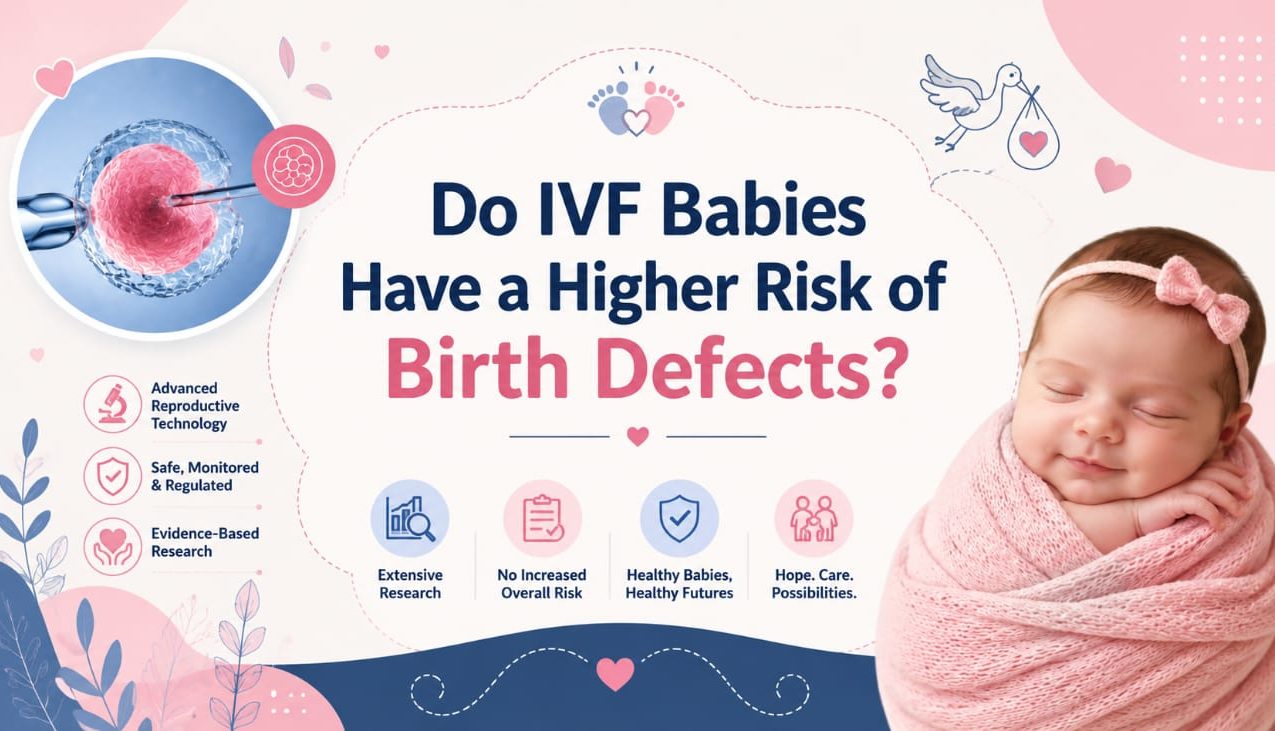
With the growing awareness of fertility treatments, many couples today ask an important question: “Do IVF babies have a higher risk of birth defects or health problems?”
This concern is understandable because IVF (In Vitro Fertilization) is a highly advanced medical process, and people naturally want reassurance about the long-term health and development of children born through IVF.
The good news is that modern fertility science has improved significantly over the years. While some pregnancy-related complications may occur in certain IVF pregnancies, experts believe that IVF itself is not considered the direct cause of birth defects in most cases.
At ConsultGrab, we help patients connect with experienced fertility specialists and trusted hospitals for fertility consultation, IVF guidance, pregnancy care, and reproductive treatment support.
Understanding Birth Defects and Developmental Problems
Table of Contents
ToggleThe term “birth defects” is very broad and can include many different types of medical conditions.
These may involve:
- Structural abnormalities
- Genetic disorders
- Developmental delays
- Learning disabilities
- Neurological conditions
- Speech or behavioral concerns
Some conditions are very minor and may not affect daily life, while others may require medical treatment or long-term care.
Minor and Major Structural Problems
Certain babies may be born with small structural differences such as:
- Extra fingers or toes
- Mild cosmetic abnormalities
- Small physical variations
These minor conditions may not significantly impact normal life.
However, some babies can also develop more serious structural abnormalities involving:
- Heart defects
- Kidney abnormalities
- Brain development issues
- Skull or spinal defects
These are considered major congenital conditions and may require specialized medical attention.
Developmental Concerns in Children
Apart from structural conditions, some children may experience developmental problems later in life.
These may include:
- Delayed sitting or walking
- Delayed speech development
- Learning difficulties
- Behavioral disorders
- Autism spectrum-related symptoms
For example, some children may not achieve developmental milestones at the expected age.
However, it is important to understand that these conditions can happen due to multiple reasons and are not caused by a single factor alone.
What Causes Birth Defects or Developmental Problems?
Birth defects can occur because of several medical, genetic, pregnancy-related, or delivery-related reasons.
1. Genetic Abnormalities in the Embryo
Sometimes the embryo itself may carry genetic abnormalities.
This can happen when:
- Chromosomes are missing
- Extra genetic material is present
- Chromosomal rearrangements occur
If the egg or sperm naturally carries genetic defects, the embryo formed may also carry abnormalities.
Importantly, this situation can happen in both:
- Natural conception
- IVF conception
This means the underlying genetic quality of the egg and sperm plays a much larger role than the IVF procedure itself.
Does IVF Change the Baby’s Genetics?
One common misconception is that IVF changes the genetic makeup of the child.
In reality, the baby’s genetic material still comes directly from the parents. The IVF process itself does not alter the genes of the baby.
In fact, modern fertility treatment has become more advanced with technologies that may help identify certain genetic abnormalities before embryo transfer.
In selected cases, fertility specialists may recommend:
- Preimplantation Genetic Testing (PGT)
- Preimplantation Genetic Diagnosis (PGD)
These techniques can help doctors select healthier embryos and reduce the risk of passing certain inherited genetic disorders.
This is one reason why modern IVF treatment is considered increasingly safe and medically advanced.
How Natural Pregnancy and IVF Are Similar
In natural conception:
- The ovary releases an egg
- The egg travels through the fallopian tube
- A healthy sperm fertilizes the egg
- An embryo forms
- The embryo implants in the uterus
In IVF, the same fertilization process happens outside the body in a laboratory setting.
Doctors collect:
- Eggs from the female partner
- Sperm from the male partner
The egg and sperm are fertilized to create an embryo, which is then transferred into the uterus. Since IVF involves multiple medical steps, laboratory procedures, and fertility evaluations, many couples also want to understand the overall treatment expenses before starting their fertility journey. You can explore this detailed guide on how much does IVF cost in India? Full Patient Guide to better understand the factors that may influence IVF pricing and treatment planning.
The important point is that the biological material remains the same. The ingredients are identical — only the fertilization method is different.
Does IVF Increase the Risk of Birth Defects?
According to current understanding and clinical experience, IVF itself is not considered the direct cause of birth defects.
If there is a problem in the egg or sperm, similar genetic risks may exist in both:
- Natural pregnancy
- IVF pregnancy
So, IVF does not independently create defects simply because fertilization occurs outside the body.
Most IVF babies grow and develop normally, just like naturally conceived children.
Why Some IVF Pregnancies May Have Higher Risks
One of the most common complications associated with IVF pregnancies is premature delivery.
This usually happens because IVF treatments in earlier years often involved transferring multiple embryos to increase pregnancy success rates.
As a result, twin or triplet pregnancies became more common. Couples planning fertility treatment should always consult experienced fertility specialists who follow modern single embryo transfer approaches to reduce pregnancy-related complications. Choosing the best doctors for IVF treatment in Delhi can help improve pregnancy monitoring, embryo selection, and overall maternal and baby health outcomes.
Multiple pregnancies can increase the chances of:
- Premature birth
- Low birth weight
- Pregnancy-related high blood pressure
- Intrauterine Growth Restriction (IUGR)
These complications may indirectly affect the baby’s health and development.
Modern IVF Advancements Have Reduced Many Risks
Fertility treatment has improved significantly in recent years.
Advanced technologies such as:
- Blastocyst culture
- Better embryo selection
- Single embryo transfer
- Preimplantation genetic screening
now help specialists reduce many pregnancy-related complications associated with IVF.
Today, fertility specialists increasingly recommend single embryo transfer whenever medically appropriate. This helps reduce the chances of twin pregnancy and lowers the risk of premature delivery.
As IVF technology continues to improve, pregnancy outcomes are also becoming safer and more successful.
Pregnancy Complications Can Affect Any Pregnancy
Some pregnancy-related problems can occur in both natural and IVF pregnancies.
These may include:
- High blood pressure during pregnancy
- Reduced blood supply to the baby
- Poor fetal growth
- Premature delivery
If the baby receives inadequate oxygen or nutrition during pregnancy, development may get affected.
Similarly, babies born too early may face certain health challenges because they are not fully developed at birth.
Problems During Delivery Can Also Affect the Baby
Certain complications may happen during childbirth itself, such as:
- Reduced oxygen supply
- Reduced blood flow to the brain
- Delayed crying after birth
These conditions can affect the baby’s health after delivery.
Importantly, such complications are not exclusive to IVF pregnancies.
The Health of Parents Matters Greatly
Many neonatal and developmental concerns are more closely linked to parental health rather than IVF itself.
Important factors include:
- Maternal age
- Sperm quality
- Existing health conditions
- Poor nutrition
- Lifestyle habits
- Pregnancy complications
This is why fertility specialists strongly recommend proper preconception care before IVF treatment.
Healthy preparation before conception can improve pregnancy outcomes significantly.
Importance of Pregnancy Screening and Prenatal Care
Proper pregnancy monitoring is extremely important after conception, whether pregnancy occurs naturally or through IVF.
Doctors may recommend:
- Early pregnancy screening tests
- Ultrasound scans during pregnancy
- Growth monitoring
- Blood pressure monitoring
- Detailed anomaly scans between 18–20 weeks
These tests help doctors evaluate whether the baby is developing normally and allow early management of complications if needed.
IVF Is a Safe and Effective Fertility Treatment
Modern IVF has helped millions of couples worldwide achieve parenthood safely.
When managed properly under experienced fertility specialists, IVF is considered a safe and effective treatment option for infertility.
Accurate information is extremely important because many myths and misconceptions about IVF continue to circulate online.
Understanding the science behind IVF can help couples make informed and confident decisions about fertility treatment.
Fertility Consultation and IVF Guidance at ConsultGrab
At ConsultGrab, we understand that fertility treatment can feel emotionally and medically overwhelming.
We help patients by:
- Connecting them with experienced fertility specialists
- Assisting with IVF and infertility consultations
- Providing appointment booking support
- Helping patients understand treatment options clearly
- Offering guidance throughout the fertility journey
Our mission is to ensure patients receive trusted medical guidance, transparent information, and access to quality healthcare support.
Final Thoughts
Scientific understanding of IVF continues to improve, and modern fertility care has become safer and more advanced than ever before.
Current medical understanding suggests that IVF itself is not the direct cause of birth defects. In most cases, factors such as genetics, parental health, multiple pregnancy, premature delivery, and pregnancy-related complications play a much larger role.
With modern advancements like single embryo transfer, blastocyst culture, genetic embryo screening, and improved prenatal monitoring, many previously associated risks have been reduced significantly.
Most IVF babies are born healthy and grow up normally, just like naturally conceived children.
With proper fertility evaluation, experienced medical supervision, and good prenatal care, IVF remains a safe and reliable path to parenthood for many couples struggling with infertility.
Current medical understanding suggests that IVF itself does not directly increase the risk of birth defects. Most IVF babies are born healthy and develop normally. In many cases, factors such as parental genetics, maternal age, multiple pregnancy, and pregnancy complications play a bigger role than the IVF procedure itself.
No, IVF does not change the baby’s genes. The genetic material still comes naturally from the parents’ egg and sperm. Modern IVF treatments may also include advanced techniques like Preimplantation Genetic Testing (PGT) or PGD to help identify certain genetic abnormalities before embryo transfer.
Premature birth in IVF pregnancies is often linked to twin or multiple pregnancies rather than IVF itself. Earlier IVF treatments frequently involved transferring multiple embryos to improve success rates. Today, single embryo transfer and blastocyst culture techniques help reduce the chances of premature delivery and low birth weight
There is no clear evidence that IVF directly causes developmental disorders such as autism, speech delay, or learning disabilities. Developmental concerns can occur due to various factors, including genetics, premature birth, pregnancy complications, and parental health conditions, in both natural and IVF pregnancies.
Couples can improve IVF pregnancy outcomes by maintaining a healthy lifestyle, following a balanced diet, completing recommended medical investigations, and managing existing health conditions before conception. Regular prenatal care, pregnancy screening tests, and guidance from experienced fertility specialists also help support healthy fetal development.