


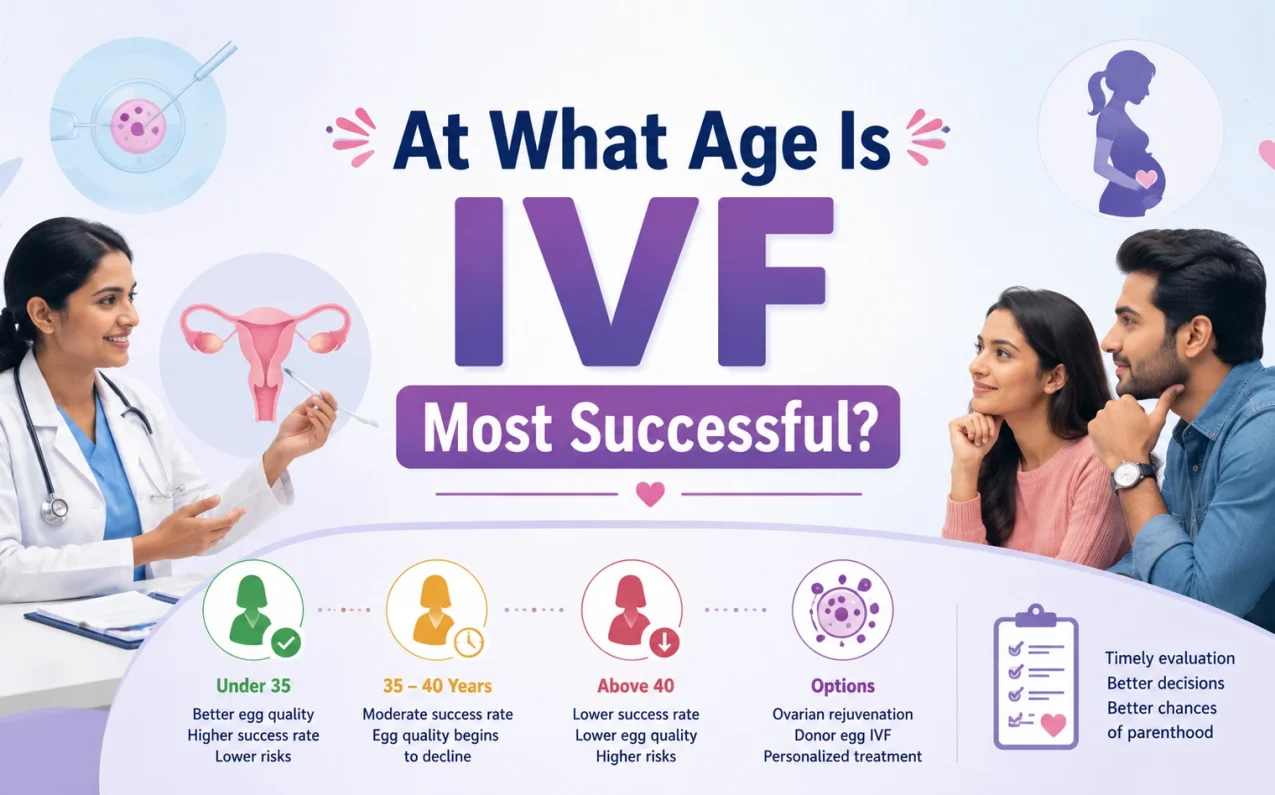
Infertility can be emotionally challenging for couples who dream of starting a family. With advancements in reproductive medicine, IVF (In Vitro Fertilization) has helped many individuals experience parenthood successfully. However, one of the most common questions couples ask is: “What is the best age for IVF success?” Many couples also want to understand the financial aspects of fertility treatment before starting their journey. Reading the How Much Does IVF Cost in India? Full Patient Guide can help patients understand IVF expenses, treatment factors, and overall planning more clearly.
Age plays a major role in fertility treatment outcomes. Understanding how fertility changes with time can help couples make informed decisions and avoid unnecessary delays in treatment
Understanding IVF and How It Works
Table of Contents
ToggleIVF is an advanced fertility treatment in which eggs are fertilized outside the body in a laboratory. Once fertilization occurs, the embryo is transferred into the uterus to achieve pregnancy.
This treatment is commonly recommended in cases such as:
- Low sperm count or poor sperm motility
- Endometriosis
- Low ovarian reserve or low AMH
- Multiple failed IUI cycles
- Unexplained infertility
- Age-related fertility decline
IVF has become a reliable option for many couples struggling with fertility issues and offers hope when natural conception becomes difficult.
Why Age Matters in IVF Success
Fertility naturally changes with age in both men and women. However, the impact is generally more significant in women because egg quality and egg quantity decline over time.
Fertility Before the Age of 35
The chances of IVF success are generally highest before the age of 35.
At this stage:
- Egg quality is usually better
- Ovarian reserve tends to be higher
- Pregnancy complications are comparatively lower
- Embryo quality is often stronger
Because of these factors, IVF treatment at a younger reproductive age often shows better success outcomes.
IVF Between 35 to 40 Years of Age
Women between 35 and 40 can still achieve successful pregnancy through IVF. However, fertility gradually declines during this phase.
Some common challenges may include:
- Reduced egg quality
- Lower ovarian reserve
- Increased risk of miscarriage
- Reduced implantation success
Even though IVF remains possible, early treatment becomes increasingly important during this age group.
IVF After the Age of 40
After 40, fertility decline becomes more noticeable. Both egg quantity and egg quality reduce significantly, which can affect IVF success rates.
Common Challenges After 40
1. Declining Egg Quality
As reproductive age increases, eggs may develop chromosomal abnormalities more frequently. This can lead to:
- Lower fertilization success
- Increased miscarriage risk
- Reduced embryo quality
2. Reduced Egg Quantity
The number of eggs remaining in the ovaries naturally decreases with age, making it harder to retrieve multiple healthy eggs during IVF cycles.
3. Increased Pregnancy Risks
Pregnancy after 40 may involve higher risks such as:
- Gestational diabetes
- High blood pressure
- Premature delivery complications
Because of these factors, fertility specialists usually recommend avoiding unnecessary delays in treatment.
When Should Couples Avoid Delaying IVF?
In some situations, waiting may reduce the chances of successful treatment.
Early IVF consultation is often advised when there are known fertility concerns such as:
- Severe male infertility factors
- Poor sperm count or motility
- DNA fragmentation issues
- Low AMH levels
- Endometriosis
- Repeated failed fertility treatments
If fertility issues are already diagnosed, timely treatment may improve overall outcomes.
Options Available for Women with Low Egg Reserve
For women with significantly reduced ovarian reserve or poor egg quality, certain advanced approaches may sometimes be considered.
These may include:
- Ovarian rejuvenation techniques
- PRP ovary procedures
- Ovarian ACRS
- Stem cell-based ovarian therapies
However, these approaches are still considered experimental and success cannot be guaranteed.
Egg Donation as an Alternative Option
When egg quality and quantity become severely reduced, donor egg IVF may be considered.
In this approach, eggs from younger donors are used during the IVF process. This can significantly improve the chances of successful pregnancy for many women facing age-related fertility decline.
Egg donor programs are widely used and may provide an effective option in selected cases.
Every Fertility Journey Is Unique
There is no single “perfect age” for IVF because every individual’s reproductive health is different. Some couples may require early treatment due to underlying fertility problems, while others may conceive successfully later with proper medical guidance.
The key factor is timely evaluation and informed decision-making.
How ConsultGrab Supports Patients During Fertility Treatment
At ConsultGrab, we understand that fertility treatment decisions can feel overwhelming. Our goal is to help patients connect with trusted fertility specialists and receive proper treatment guidance based on their unique medical situation.
We assist patients by:
- Connecting them with experienced fertility experts
- Helping with appointment coordination
- Providing transparent treatment guidance
- Supporting patients throughout their fertility journey
Our focus is to ensure that every patient receives reliable medical support and access to the right healthcare network without confusion or unnecessary stress.
Final Thoughts
IVF success is closely linked to age, especially for women. In most cases, earlier treatment offers better chances of pregnancy and lower health risks.
While IVF can still be successful after 35 or even after 40, delaying fertility evaluation may reduce available treatment options over time.
If you are experiencing fertility challenges or planning IVF treatment, seeking timely medical guidance can help you better understand your options and make confident decisions for your future parenthood journey. Consulting with the Best Doctors for IVF – In Vitro Fertilization in Delhi can also help couples receive proper fertility evaluation, personalized treatment planning, and advanced reproductive care based on their individual needs.
Frequently Asked Questions (FAQs)
IVF is generally most successful before the age of 35 because egg quality and ovarian reserve are usually better during this stage. Younger women often have higher implantation and pregnancy success rates with lower miscarriage risks. However, IVF can still be successful after 35 with proper fertility evaluation and timely treatment planning.
Yes, women above 40 can undergo IVF treatment, but success rates may decrease due to reduced egg quality and lower ovarian reserve. Age-related fertility decline can also increase miscarriage and pregnancy complication risks. In some cases, donor egg IVF may improve the chances of successful pregnancy and healthy embryo development.
Delaying IVF treatment may reduce fertility potential, especially when conditions like low AMH, endometriosis, severe male infertility, or repeated IUI failures are already present. As age increases, both egg quantity and egg quality decline. Early fertility consultation can help couples explore suitable treatment options before complications increase further.
IVF after 40 may involve challenges such as poor egg quality, reduced ovarian reserve, lower embryo implantation rates, and increased chromosomal abnormalities. Women may also face higher pregnancy-related risks, including gestational diabetes, high blood pressure, and premature delivery. Fertility specialists may recommend alternative options depending on individual reproductive health.
When egg quality or egg reserve is significantly low, fertility specialists may discuss options such as ovarian rejuvenation therapies, PRP ovary procedures, or donor egg IVF. While some advanced ovarian treatments are still considered experimental, donor egg programs are widely used and can improve IVF pregnancy success rates for many women.



2 Comments
How Successful Is IVF the First Time? What Affects Your Chances
[…] Read More: At what age is IVF most successful? […]
How Successful Is IVF After 40? What Age Means for Your Chances
[…] Read More: At what age is IVF most successful? […]