


- Having a family is one of the key objectives of every couple’s life. For the majority of people around the world, conception occurs naturally. However, there are cases where couples face certain medical problems that prevent them from conceiving naturally. In this case, the couple may be forced to undergo IVF treatment.
- For those who would like to know all about IVF treatment and the entire process involved, kindly visit our main page on What Is IVF Treatment? Step-by-Step Process Explained by ConsultGrab.
- At ConsultGrab, we offer free consultation services to help patients understand whether they need the treatment or not. We assist patients by providing information on the best IVF hospitals in India and the experience of the fertility experts who offer the treatment. We aim to assist patients in making the right decision without any confusion.
What Is IVF Treatment?
Table of Contents
ToggleIVF stands for In Vitro Fertilization.
1. In Vitro means outside the body.
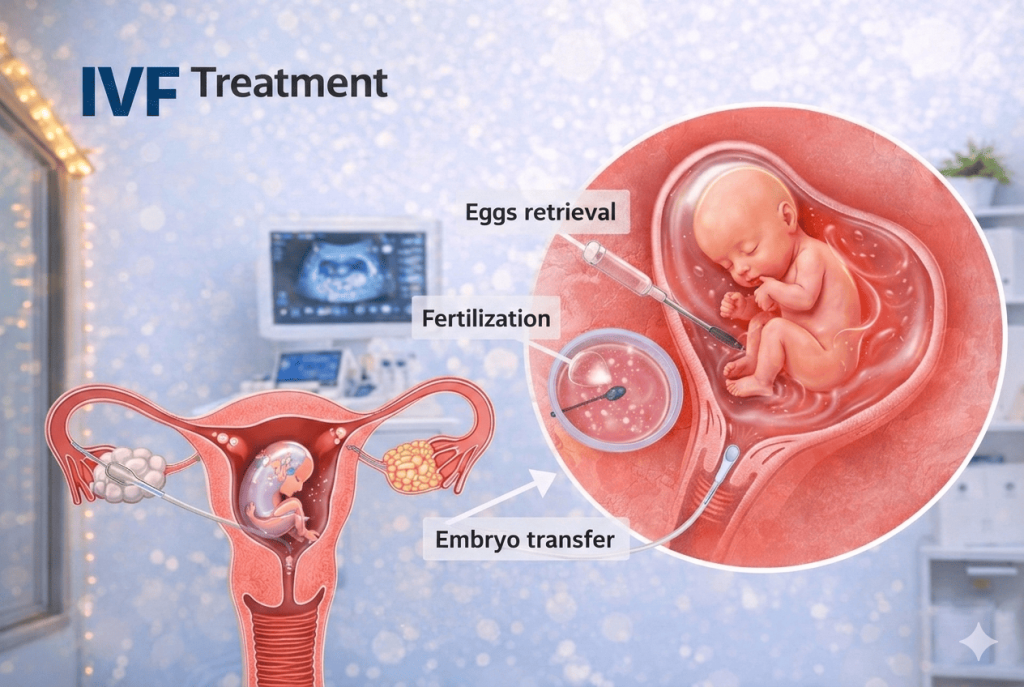
2. Fertilization means the process of uniting a sperm cell and an egg cell to start a pregnancy.In the natural process of conception, fertilization takes place inside a woman’s body. But in the process of IVF fertilization takes place outside the body under controlled medical conditions. Once the egg cell and the sperm cell meet to form a fertilized egg cell, the fertilized egg cell is placed inside the woman’s uterus to start a pregnancy naturally. IVF is considered to be one of the best methods of ART currently.
Who May Need IVF?
Doctors can recommend IVF for the following medical conditions:Blocked or damaged fallopian tubes
- Low sperm count
- Poor sperm movement
- Ovulation disorders
- Hormonal imbalance
- Endometriosis
- Unexplained infertility
- Age-related fertility decline
- Failure of previous fertility treatment
Not all infertile couples can turn to IVF as the first solution. contact us the best Doctors always consider the medical history, test results, and overall condition before suggesting IVF.
Step-by-Step IVF Process
IVF treatment follows a carefully planned medical process. Below is a complete explanation of each stage.
Ovarian Stimulation
In a natural menstrual cycle, a woman releases a single egg. In IVF, a woman releases many eggs to increase the chances of a successful fertilization process.To do this, a woman is injected with hormones for 8 to 12 days. These hormones stimulate the ovaries to produce many eggs instead of a single egg.During this time, the following activities are undertaken book appointment :
- Ultrasound scans are used to monitor the development of eggs.
- Blood tests are carried out to check hormone levels.
- The amount of hormones injected may be reviewed and changed if necessary.
Egg Retrieval
When the eggs are mature, a minor medical procedure is performed to collect them.
- The procedure takes 15 to 20 minutes.
- anesthesia is administered for comfort.
- A thin needle is used to collect the eggs from the ovaries by ultrasound.Most patients go home the same day. Mild cramping or discomfort may occur but is quickly relieved.
Sperm Collection and Preparation
On the same day as the egg cells are retrieved, the male partner is asked to donate a sperm sample.In the laboratory:
- The sperm sample is cleaned.
- Healthy and active sperm cells are chosen.
- The best sperm cells are prepared for fertilization.
- If the sperm count or movement is low, doctors use a technique called intracytoplasmic sperm injection, in which one sperm cell is injected into an egg cell ivf treament in delhi
Fertilization
Read Our Previous Blog The prepared eggs and sperm are placed together in a special environment.If fertilization is successful, the egg starts to divide and develop into an embryo.This division starts within 24 hours.A special environment is created to help the embryo develop.
Embryo Development
The embryos are then monitored for 3 to 5 days after fertilization.The following aspects of the embryo are checked by embryologists:
1. Cell division pattern
2. Growth rate
3. Quality of the embryoThe healthiest embryo is selected for transfer. In some cases, additional healthy embryos are stored for future use.
Embryo Transfer
The embryos are then monitored for 3 to 5 days after fertilization.The following aspects of the embryo are checked by embryologists:
- Cell division pattern
- Growth rate
- Quality of the embryo
- The healthiest embryo is selected for transfer. In some cases, additional healthy embryos are stored for future use.
Pregnancy Test
- About 10 to 14 days after embryo transfer, a blood test is performed to confirm pregnancy.
- If the result is positive, routine prenatal care begins.
- If the result is negative, the doctor discusses possible next steps and future treatment options.
How Long Does IVF Take?
A single IVF treatment cycle can take anywhere from 4 to 6 weeks, starting from the time of ovarian stimulation to the time of pregnancy testing.While some may conceive in the first attempt, others may need to undergo several cycles of IVF treatment depending on their health conditions.
Factors That Affect IVF Success
The success rate of IVF treatment depends on a number of factors:
- Age of the woman
- Quality of eggs
- Quality of sperm
- Health of the uterus
- Hormonal balance
- Lifestyle
- Experience of the fertility clinic
In general, the younger the woman, the better the success rate. However, many women who are in their 30s and 40s have been able to achieve the goal of a healthy pregnancy with the right medical assistance. The experience of the fertility clinic plays a vital role.
Is IVF Safe?
IVF is regarded as a safe and established medical practice when conducted by qualified specialists.However, like other medical treatments, IVF carries a few minor risks, which include:
- Mild bloating
- Mood changes
- Headache, which
- occurs as a result of hormonal medication
Ovarian hyperstimulation, which is a rare conditionThe process is monitored by doctors to minimize risks and ensure patient safety.
Emotional Aspects of IVF
The process of IVF is emotionally trying for couples. The feelings that couples may go through include
- Hope and excitement
- Anxiety while waiting
- Stress regarding the outcome
- Mood swings
Understanding the process and receiving proper counseling from medical experts can help them cope with the situation effectively.
Common Myths About IVF
- IVF babies are different from naturally conceived babies.
Fact: IVF babies are just as healthy and normal.
- IVF always leads to twins.Fact: Doctors often implant a single embryo to avoid the risks
- IVF guarantees pregnancy.Fact: Doctors often implant a single embryo to avoid the risks
- IVF is for older women. Fact: IVF can be used by couples of different ages who face fertility challenges.
Preparing for IVF Treatment
It can improve the overall experience.The recommendations are:
- Maintain a balanced diet
- Avoid smoking and drinking
- Ensure adequate sleep
- Reduce stress
- Adhere to all medical advice
Attend all appointments A healthy lifestyle helps promote reproductive health.
How ConsultGrab Supports Patients
The process of learning about the various fertility treatment options can be a daunting task. ConsultGrab aims to help patients overcome this challenge by providing the following services:
- Free consultation to assess the treatment requirements
- Assistance to trusted IVF hospitals across India
- Details about experienced fertility specialists
- Booking appointments
- Second opinion assistance
We strive to provide complete clarity, transparency, and confidence to our patients.
Final Thoughts
This is a scientifically advanced technique aimed at assisting couples in becoming parents through a process of IVF treatment when natural conception is a challenge.This is a challenging journey for any couple, and though it is full of emotional and physical challenges, understanding each of the steps makes them more confident.This scientifically advanced technique of IVF has helped millions of families achieve their dream of becoming parents through proper medical evaluation and expert guidance.
Disclaimer
All the information in this article is derived from publicly available educational medical sources and general medical knowledge available online. This information is for general purposes only and should not be considered a substitute for professional medical advice, diagnosis, or treatment. It is always best to consult a qualified healthcare professional before making any medical decision.