

Complete Guide to Procedure, Recovery, Risks & Modern Treatment Options
Hip pain can gradually affect every part of daily life. Walking, climbing stairs, sitting comfortably, getting into a car, or even wearing shoes can become difficult when the hip joint is severely damaged.
For many patients suffering from advanced arthritis or hip joint degeneration, hip replacement surgery can help reduce pain, restore mobility, and improve quality of life.
Modern hip replacement surgery is considered one of the most successful orthopaedic procedures worldwide. With advancements in surgical techniques and implant technology, many patients today can return to active and independent lifestyles after treatment.
Choosing the right surgeon is an important part of achieving successful treatment outcomes. Patients can explore and consult with the Best Doctors for Hip Replacement Surgery to better understand their treatment options and receive expert guidance based on their condition.
At ConsultGrab, we help patients connect with experienced orthopaedic specialists and trusted hospitals for accurate diagnosis, treatment guidance, and personalised care throughout their treatment journey.
Understanding the Hip Joint
The hip is a ball-and-socket joint.
- The socket part is called the acetabulum.
- The ball part is the upper end of the thigh bone (femur).
Both surfaces are covered with smooth cartilage that allows the joint to move freely without pain. A healthy hip joint supports everyday activities such as walking, bending, sitting, climbing stairs, cycling, and exercising.
Although many people think the hip joint is located on the outer side of the body, the actual joint lies deeper near the groin region. This is why hip arthritis pain is often felt in the groin, buttocks, thigh, or even the knee.
The hip also plays an important role in supporting the lower back and the rest of the lower body. When the hip becomes stiff or painful, surrounding joints and muscles often compensate, which may lead to back pain and difficulty walking
What Causes Hip Arthritis?
Hip arthritis develops when the smooth cartilage inside the joint gradually wears away. Once this protective layer is damaged, the bones begin rubbing directly against each other, causing pain, stiffness, and inflammation.
Several conditions can lead to hip joint damage, including:
- Osteoarthritis (age-related wear and tear)
- Previous injuries or trauma
- Hip dysplasia or joint misalignment
- Autoimmune and inflammatory diseases
- Obesity and excess stress on the joint
- Genetic factors
- Long-term sports or repetitive joint stress
As arthritis progresses, patients may experience:
- Persistent groin pain
- Hip stiffness
- Difficulty walking
- Trouble bending or squatting
- Pain while sleeping
- Reduced flexibility
- Difficulty getting into cars
- Problems wearing shoes and socks
- Reduced ability to exercise or perform hobbies
In severe cases, the affected leg may even become slightly shorter because of joint damage over time.
What Is Hip Replacement Surgery?
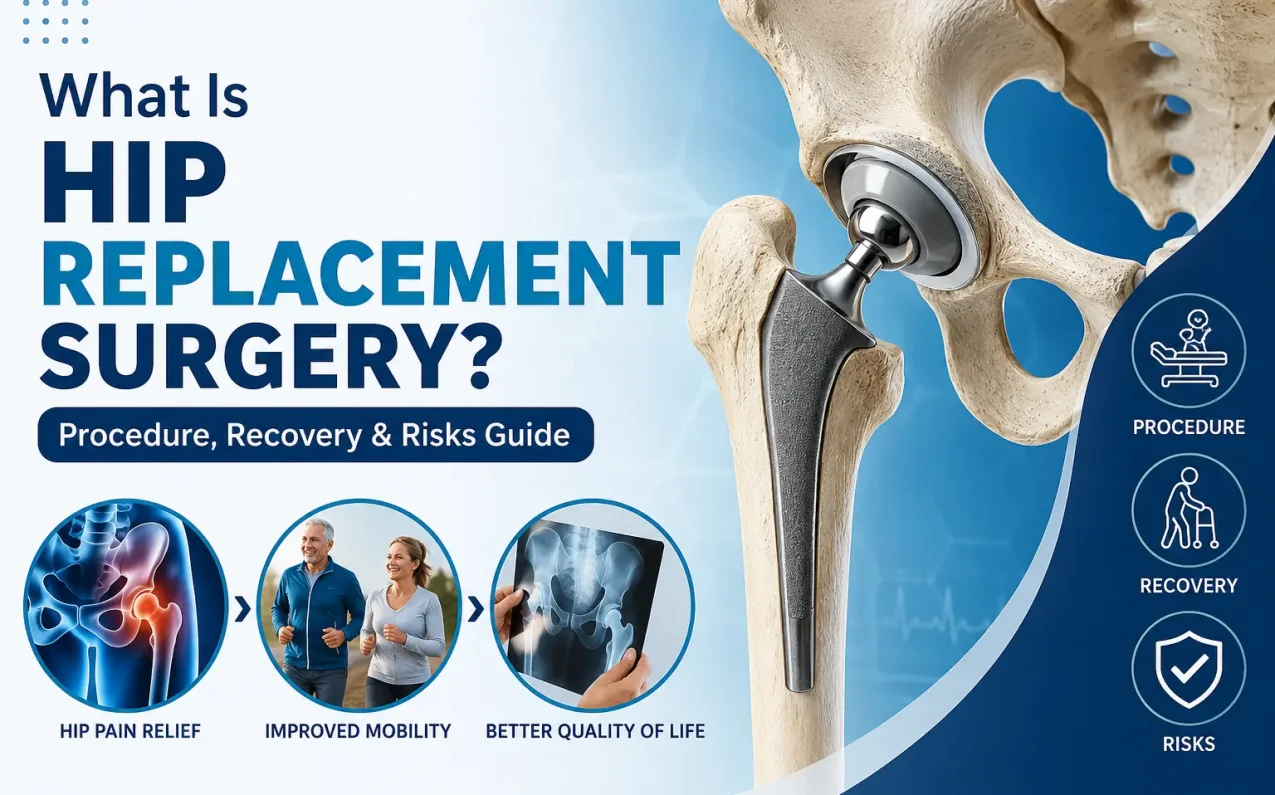
Hip replacement surgery is a procedure where the damaged parts of the hip joint are replaced with artificial components.
The primary goals of the surgery are:
- To reduce pain caused by bone-on-bone arthritis
- To improve hip movement and daily function
For many patients considering treatment, understanding the procedure is only one part of the decision-making process. It is also important to learn about the Hip Replacement Surgery Cost in India to better plan for treatment and compare available healthcare options.
During the procedure:
- The damaged ball of the hip joint is removed
- A metal stem is inserted into the thigh bone
- A new artificial ball is attached
- The damaged socket is replaced with an artificial socket
- A smooth liner is placed between the components for painless movement
The artificial joint creates smooth movement again, helping patients walk more comfortably and regain independence.
Materials Used in Hip Replacement
Modern hip replacements are made from durable medical-grade materials such as:
- Metal
- Ceramic
- Polyethylene (specialized medical plastic)
These materials are designed to reduce friction and improve long-term durability.
Many implants are specially designed to allow the patient’s bone to naturally grow around the implant, helping it become securely fixed over time.
Different Surgical Approaches for Hip Replacement
Orthopaedic surgeons may use different approaches to access and replace the hip joint.
The three common approaches include:
Posterior Approach
The surgery is performed through the back of the hip near the buttock region.
Lateral Approach
The surgery is performed from the side of the hip.
Anterior Approach
The surgery is performed from the front of the hip.
The anterior approach is often associated with:
- Smaller incisions
- Reduced muscle disruption
- Faster early recovery
- Fewer movement restrictions
- Lower dislocation risk
However, every surgical technique has advantages and limitations. The most important factor is choosing an experienced orthopaedic surgeon who is skilled in the chosen procedure.
Hip Replacements Are Increasing Among Younger Adults
Hip replacement surgery is no longer considered a treatment only for elderly patients. Recent medical trends show a significant increase in younger adults undergoing hip replacement surgery due to severe joint damage, sports injuries, obesity, arthritis, and active lifestyles.
Experts predict that the number of patients under the age of 65 receiving hip replacements will continue to rise significantly over the coming years.
Younger patients today often want to maintain active lifestyles and avoid long-term disability caused by chronic hip pain.
Several factors may contribute to earlier joint degeneration in younger adults, including:
- Sports-related stress on the hip
- Hip dysplasia or joint misalignment
- Obesity
- Previous injuries
- Genetic predisposition
- Autoimmune conditions
Many younger patients delay consultation because they believe hip replacement is only suitable for older individuals. However, modern treatment decisions increasingly rely on the joint’s condition and its impact on quality of life rather than on age alone.
Advanced implants and improved surgical techniques now allow many patients to return to activities such as walking, cycling, swimming, travel, and low-impact exercise after recovery.
Recovery After Hip Replacement Surgery
Most patients stay in the hospital for approximately 3 to 5 days after surgery.
Walking usually begins within a day after surgery, depending on pain control and physical strength. Physiotherapists help patients gradually regain movement and confidence.
Early Recovery
During the first few weeks, patients may experience:
- Mild swelling
- Bruising
- Tightness in the thigh
- Temporary discomfort while walking
However, many patients notice that arthritis pain improves very quickly after surgery.
Around 6 Weeks
By this stage, many patients:
- Walk more comfortably
- Reduce or stop walking support
- Resume many daily activities
Around 3 Months
Most patients achieve major recovery within three months and continue improving gradually over the next several months.
Complete adaptation to the new hip may continue improving for up to 6–12 months.
Activities After Hip Replacement
After recovery, many patients can comfortably return to activities such as:
- Walking
- Cycling
- Swimming
- Hiking
- Gym workouts
- Golf
- Travel
- Light recreational sports
High-impact activities such as running may increase wear on the artificial joint and are often discouraged.
Risks and Complications of Hip Replacement Surgery
Hip replacement is considered a highly successful procedure, but like all surgeries, it does carry some risks.
Possible complications include:
- Infection
- Blood clots
- Dislocation
- Bleeding
- Nerve injury
- Fracture around the implant
- Temporary numbness near the incision
- Leg length difference
Serious complications are relatively uncommon, and modern surgical techniques continue to improve patient safety and outcomes.
How Long Does a Hip Replacement Last?
Modern hip replacement implants are designed to last many years.
In many patients, the implant may last 20 years or longer depending on:
- Age
- Activity level
- Weight
- Implant type
- Overall health
Younger and highly active patients may place greater stress on the artificial joint, which can increase long-term wear over time.
If necessary, revision surgery can replace worn implants in the future, although revision procedures are usually more complex than the original surgery.
When Should You Consider Hip Replacement Surgery?
Not every patient with arthritis immediately requires surgery.
Many patients initially manage symptoms through:
- Physiotherapy
- Exercise programs
- Weight management
- Lifestyle changes
- Pain medications
- Joint strengthening exercises
Hip replacement is usually considered when:
- Pain becomes severe
- Walking becomes difficult
- Daily activities are significantly affected
- Sleep is disturbed due to pain
- Non-surgical treatments no longer provide relief
The decision should mainly depend on how much the hip problem is affecting overall quality of life.
How ConsultGrab Supports Patients
At ConsultGrab, we understand that deciding on surgery can feel overwhelming. Our mission is to help patients make informed healthcare decisions with confidence and clarity.
We help patients by:
- Connecting them with experienced orthopaedic specialists
- Assisting with appointments and consultations
- Providing treatment guidance and second opinions
- Helping compare hospitals and treatment options
- Offering support throughout the treatment journey
Our goal is to ensure patients receive transparent information, trusted medical guidance, and access to advanced healthcare services.
If you or a loved one is experiencing severe hip pain, arthritis symptoms, or mobility problems, ConsultGrab can help you connect with the right specialists for proper evaluation and treatment planning.
Final Thoughts
Hip replacement surgery has helped millions of patients worldwide regain mobility, independence, and comfort. For individuals struggling with severe arthritis and chronic hip pain, it can significantly improve quality of life and daily function.
Modern surgical techniques, improved implants, and better rehabilitation programs have made hip replacement safer and more effective than ever before.
Understanding the procedure, recovery process, benefits, and risks can help patients make informed treatment decisions with confidence.
Before making any decision, always consult a qualified orthopaedic specialist for proper diagnosis and personalized treatment advice.
Frequently Asked Questions (FAQs)
What is hip replacement surgery?
Hip replacement surgery is a procedure in which damaged parts of the hip joint are replaced with artificial components made of metal, ceramic, or medical-grade plastic. It is commonly performed to relieve severe hip pain, improve mobility, and restore quality of life in patients with advanced hip arthritis or joint damage.
When should you consider hip replacement surgery?
Hip replacement surgery is usually considered when severe hip pain, stiffness, and reduced mobility begin affecting daily activities such as walking, climbing stairs, sleeping, or getting dressed. Patients may also consider surgery when medications, physiotherapy, and other non-surgical treatments no longer provide effective relief.
How long does it take to recover from hip replacement surgery?
Most patients begin walking within a day after hip replacement surgery and recover significantly within 6 to 12 weeks. Full recovery may continue for up to 6–12 months, depending on age, physical condition, rehabilitation, and overall health. Physiotherapy and gradual activity increase are important for successful recovery.
How long does a hip replacement last?
Modern hip replacement implants can last 20 years or longer in many patients. The lifespan of the artificial joint depends on factors such as age, activity level, body weight, implant quality, and overall joint health. Younger and highly active patients may experience faster implant wear over time.
Can younger adults undergo hip replacement surgery?
Far far away, behind the word mountains, far from the countries Vokalia and Consonantia, there live the blind texts. Separated they live in Bookmarksgrove right at the coast