

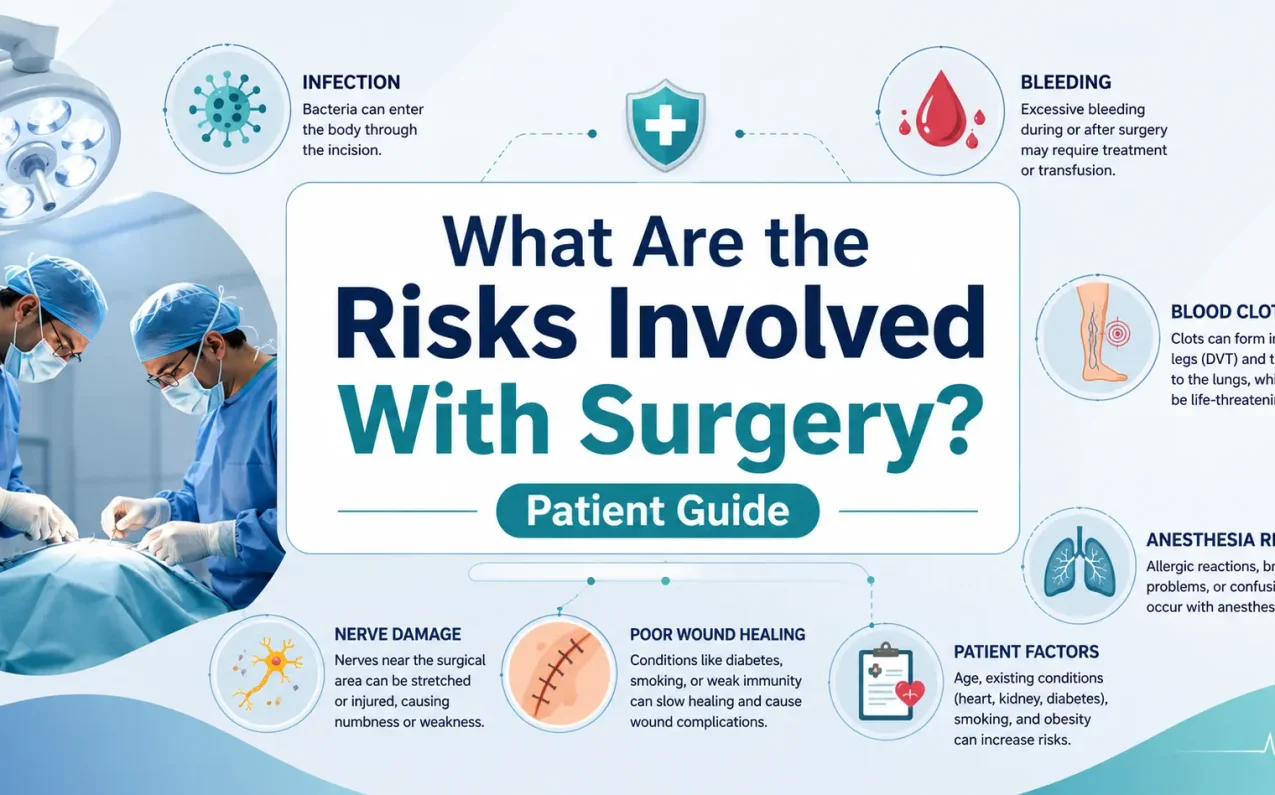
Surgery can be an important step toward treating a medical condition, improving mobility, managing disease, or restoring quality of life. However, no surgical procedure is completely free of risk. Modern medical care has made surgery safer than ever, but complications can still occur depending on the type of procedure, the patient’s health, and the complexity of treatment.
Understanding the possible risks involved with surgery can help patients make informed decisions and discuss concerns with their medical team before treatment.For patients considering joint procedures such as hip replacement, choosing an experienced specialist and understanding the available treatment options is an important part of the decision-making process. You can also explore our guide to Best Hip Replacement Surgery in Delhi | Top Orthopedic Surgeons to learn more about specialist-led hip replacement care.
What Are the Risks Involved With Surgery?
Table of Contents
ToggleThe risks of surgery generally fall into four broad categories:
- General surgical risks
- Anesthesia-related risks
- Procedure-specific or structural risks
- Patient-specific risk factors
The actual level of risk varies from one patient and procedure to another.
1. General Risks Associated With Surgery
Some complications can occur with many different surgical procedures because an incision or other tissue intervention may temporarily affect the body.
Infection
An incision can create an opportunity for bacteria to enter the body. An infection may remain around the surgical wound or, in some cases, affect deeper tissues.
Medical teams use sterile surgical techniques and other preventive measures to reduce this risk.
Bleeding
Some bleeding is expected during many operations, but excessive bleeding can become a complication. In certain situations, blood may collect internally without being immediately visible.
Depending on the severity, additional treatment or a blood transfusion may be required.
Blood Clots
Reduced movement after surgery can increase the possibility of blood clots developing in the veins of the legs. This condition is known as deep vein thrombosis (DVT).
If a clot travels to the lungs, it can cause a pulmonary embolism, which can be a serious and potentially life-threatening complication.
Early movement, compression devices, and medication may be used when appropriate to reduce this risk.
2. What Are the Risks of Anesthesia?
Anesthesia is used to prevent pain and discomfort during surgery. Depending on the procedure, it may involve general anesthesia or regional/local anesthesia.
Although anesthesia is carefully monitored, it can have its own risks.
READ MORE: How Much Time Will My Surgery Take? Complete Guide
Allergic Reactions
Some patients may have an unexpected reaction to a medication used during anesthesia. Severe allergic reactions are uncommon but can require immediate medical treatment.
Breathing Problems
General anesthesia can temporarily affect normal breathing and protective airway reflexes. Patients are closely monitored during and after surgery until normal breathing function is restored.
Temporary Confusion or Delirium
Some patients, particularly older adults, may experience temporary confusion, disorientation, memory problems, or unusual perceptions after surgery.
This may last for several hours or, in some cases, several days.
3. Procedure-Specific and Structural Risks
Every operation involves a particular body area. Therefore, the risks can also depend on the organs, tissues, blood vessels, and nerves located around the surgical site.
Nerve Damage
Nerves near the surgical area can sometimes be stretched, irritated, or damaged. This may result in temporary or, in some cases, lasting numbness, weakness, or other changes in nerve function.
The possibility depends greatly on the location and complexity of the procedure.
Scar Tissue and Adhesions
The body naturally creates scar tissue while healing. In some situations, internal scar tissue can cause tissues or organs to stick together, a condition known as adhesions.
Depending on their location, adhesions may contribute to pain or other complications.
Poor Wound Healing
Surgical wounds do not heal at the same rate in every patient. Factors such as diabetes, smoking, and a weakened immune system can interfere with normal healing.
Poor healing can increase the possibility of wound complications, including the wound opening again.
4. How Does a Patient's Health Affect Surgical Risk?
The risk of complications is not determined by the operation alone. A patient’s overall health can significantly influence both the procedure and recovery.
Important factors may include:
- Existing health conditions
- Age
- Smoking
- Obesity
- Heart health
- Kidney function
- Blood pressure
- Diabetes
- Overall immune function
For example, conditions affecting the heart, kidneys, or blood sugar may require additional assessment before surgery.
Older adults and very young patients may also require special consideration because their bodies can respond differently to surgical stress.
How Do Doctors Reduce the Risks of Surgery?
Before recommending surgery, the medical team evaluates the expected benefits against potential complications.
READ MORE: What Are My Anesthesia Options Before Surgery?
Risk-reduction measures may include:
Preoperative Evaluation
Blood tests, heart evaluation, imaging, and other assessments may be performed to understand the patient’s health and identify possible risk factors before the operation.
Infection Prevention
Sterile operating-room practices and preventive medication when appropriate can help reduce the risk of surgical infection.
Blood-Clot Prevention
Depending on the patient’s condition and procedure, the medical team may use compression devices, encourage movement, or prescribe medication to reduce the risk of blood clots.
Careful Monitoring
Patients are monitored during surgery and throughout the immediate recovery period so that changes in breathing, blood pressure, heart function, bleeding, or other important parameters can be identified promptly.
Does Every Surgery Have the Same Level of Risk?
No. Surgical risk varies significantly from one procedure to another.
A relatively small operation may have different risks from a complex procedure involving major organs. The patient’s health, the reason for surgery, the complexity of the operation, and the expected recovery can all influence the overall risk.
This is why patients should avoid judging their individual surgical risk solely from another person’s experience.
What Questions Should You Ask Before Surgery?
Before undergoing an operation, patients can have a detailed discussion with their healthcare team.
Useful questions include:
- What are the most important risks associated with my procedure?
- How likely are these complications in my situation?
- Does my existing health affect the risk?
- What type of anesthesia will be used?
- How will complications be prevented or managed?
- What should I do before surgery to improve my recovery?
- What symptoms should I watch for after the operation?
Clear answers to these questions can make the treatment decision more informed and understandable.
Why Is Risk-Benefit Assessment Important?
The decision to undergo surgery is generally based on whether the expected benefits outweigh the potential risks.
For some patients, avoiding treatment may allow an existing condition to worsen or continue affecting daily life. For others, non-surgical treatment may be appropriate.
The right decision depends on the patient’s individual diagnosis, health status, treatment options, and expected outcomes.
How Can ConsultGrab Help Patients Understand Their Treatment Options?
Choosing the right doctor and hospital can feel overwhelming, particularly when surgery involves significant risks or complex treatment decisions.
ConsultGrab works as a bridge between patients and relevant medical specialists. Its approach focuses on understanding each case, explaining treatment options clearly, and helping patients access appropriate healthcare services.
Patients can receive guidance with:
- Finding relevant specialists
- Understanding available treatment options
- Appointment assistance
- Hospital coordination
- Treatment and cost comparison
- Support throughout the healthcare journey
The goal is to help patients make healthcare decisions with greater clarity and confidence.
Conclusion
Understanding the risks involved with surgery is an important part of making an informed healthcare decision. General complications such as infection, bleeding, blood clots, and anesthesia-related problems can occur, while other risks depend on the specific body area and procedure.
Your age, existing health conditions, lifestyle, and overall physical condition can also influence surgical risk and recovery. Fortunately, careful preoperative assessment, surgical planning, infection prevention, monitoring, and postoperative care can help reduce many potential complications.
Before making a decision, discuss your individual risks, expected benefits, and available alternatives with an appropriate medical specialist. With reliable information and the right medical guidance, patients can approach treatment decisions with greater confidence and clarity.
Frequently Asked Questions
Common surgical risks include infection, excessive bleeding, blood clots such as deep vein thrombosis (DVT), anesthesia-related complications, poor wound healing, and procedure-specific complications. The likelihood of these risks varies according to the type of surgery, the patient’s overall health, existing medical conditions, and the complexity of the procedure.
Yes. Anesthesia can involve risks such as allergic reactions, breathing difficulties, and temporary confusion or delirium after surgery. Medical teams continuously monitor patients during anesthesia and recovery to identify and manage complications promptly. The specific risks depend on the type of anesthesia used and the patient’s health condition.
Existing conditions such as diabetes, high blood pressure, heart disease, kidney problems, and weakened immune function may increase surgical risks. Smoking and obesity can also affect anesthesia, wound healing, and recovery. A preoperative evaluation helps the medical team identify these factors and plan appropriate precautions.
Surgical risks can be reduced through preoperative evaluation, blood tests, heart and other health assessments, sterile operating-room practices, appropriate infection prevention, blood-clot prevention, careful anesthesia management, and postoperative monitoring. Medical teams assess individual risk factors before surgery and use appropriate safety measures throughout the treatment process.
No, there is no completely risk-free surgical procedure. However, modern surgical techniques, anesthesia monitoring, preoperative assessment, infection-control practices, and postoperative care have significantly improved patient safety. The decision to undergo surgery is generally based on an individual assessment of the expected benefits, potential risks, and available treatment alternatives.