

Last Updated: November 2026
PCOS is a common hormone condition. It can be missed for years, so knowing the signs early matters
Start Your Journey Toward Parenthood Today
Table of Contents
ToggleOur specialists are here to guide you with compassion, expertise, and personalized care every step of the way.
What Is PCOS?
PCOS stands for polycystic ovarian syndrome. It is a hormone disorder that affects at least 10% of women worldwide.
- It affects how the ovaries work
- It can cause irregular periods and irregular ovulation (when an egg is released).
- It can be linked to long-term health issues such as insulin resistance and diabetes.
Why is the name confusing?
The word “cyst” sounds serious, so it can cause worry.
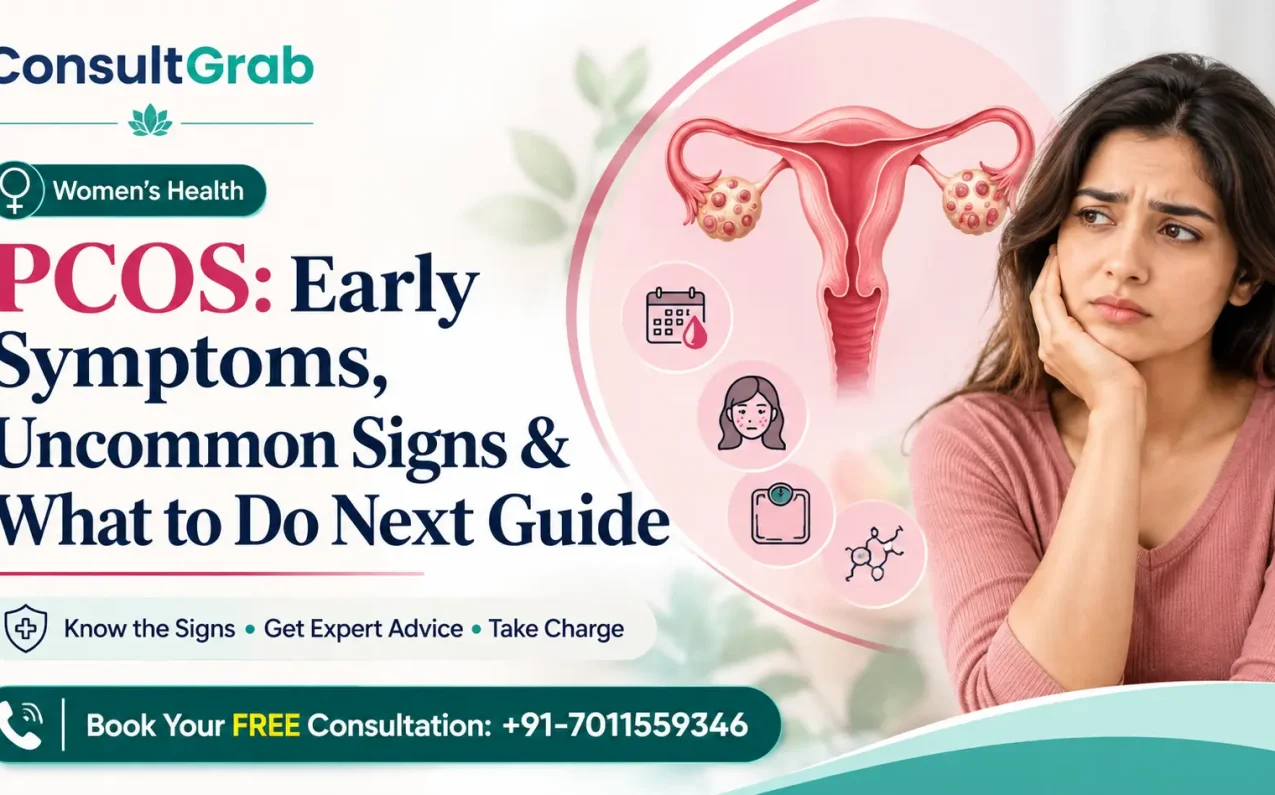
In PCOS, the ovaries usually have more small fluid-filled sacs called follicles, and each one holds an egg.
- These are not large cysts. They are many small follicles.
How does a doctor check the ovaries?
- An ultrasound counts the small follicles in both ovaries.
- A typical count is about 10 to 15 in total.
- A higher count, or ovaries that are larger than average (about 2 to 3 cm), can be a clue.
- An ultrasound alone cannot confirm PCOS. Diagnosis depends on a group of signs and symptoms.
What Are the Common Symptoms of PCOS?
Common symptoms include:
- Irregular periods: Cycles can be far apart, or periods can stop for months.
- Excess hair growth (hirsutism): Thick, dark hair on the chin, upper lip, chest, or belly.
- Acne or oily skin: Breakouts that do not respond well to normal care.
- Thinning hair: Hair loss at the crown or hairline, in a male-pattern style.
- Weight gain: Often around the belly, though not everyone with PCOS gains weight.
- Fertility difficulty: Trouble getting pregnant, mostly due to irregular ovulation.
- Dark patches of skin: Velvety darkening on the back of the neck, shoulders, or between the thighs. This is called acanthosis nigricans.
- Fatigue: Feeling very tired, which can relate to insulin resistance or emotional stress.
Note: Many of these signs can have other causes too. They are clues to discuss with a doctor, not proof of PCOS.
Is weight gain always a sign of PCOS?
- Not everyone with PCOS gains weight, and not everyone who gains weight has PCOS.
- Insulin resistance (when the body does not use insulin well) can make weight gain more likely.
- Weight loss can sometimes help symptoms, but it is not a simple fix for everyone.
Can PCOS happen in thin people?
- Some people with PCOS have a thin body and all the other symptoms.
- Because of this, PCOS can be missed if a doctor links it only to weight.
What Are the Less Common Symptoms?
Some people also notice these less common signs:
- Pelvic pain
- Headaches
- Sleep problems, such as sleep apnea (breathing that stops and starts during sleep)
Does PCOS Affect Fertility?
- PCOS is often linked to fertility problems, but this is not always the case.
- Many people with PCOS can get pregnant without difficulty.
- The main link is irregular ovulation, which means fewer chances to conceive in a year.
Sleep problems, such as sleep apnea (breathing that stops and starts during sleep)
Read More: Does PCOD/PCOS Require IVF?
Start Your Journey Toward Parenthood Today
Our specialists are here to guide you with compassion, expertise, and personalized care every step of the way.
What Should I Do If I Think I Have PCOS?
- Talk to your healthcare provider about your symptoms.
- Look for a doctor who listens and takes your concerns seriously.
- Expect some tests, usually blood work and an ultrasound.
- Ask about other causes, such as thyroid or prolactin problems.
How do I prepare for the doctor visit?
- Write down your symptoms and when they started.
- Note any family history, such as a mother or sister with PCOS.
- Say clearly why you are there: “I think I may have PCOS, and I want testing.”
- Ask for a follow-up visit to review results and treatment options.
Should I ask about a specialist?
- Yes, if you feel unsure about your doctor’s experience with PCOS.
- Ask whether they manage PCOS long term or can refer you to someone who focuses on it.
Read More: When Should You Decide on IVF? Complete Fertility Guide
Three Questions to Ask Your Doctor
- What tests will we do to confirm PCOS or rule out other causes?
- How will I get the results, and will we have a follow-up visit?
- What are the next steps and treatment options after diagnosis, and should I see a PCOS specialist?
Being prepared can reduce frustration and make your visit more useful.
How Consultgrab Can Help
ConsultGrab works as a bridge between patients and trusted medical specialists. We aim to help you get the right diagnosis and the right treatment path.
Our team can help you understand your case, connect you with relevant specialists, and explain your options clearly. You should never feel alone in your health decisions.
Frequently Asked Questions(FAQ,s)
Irregular periods are one of the most common early signs.
No. PCOS usually means many small follicles, not large cysts.
Yes, many people with PCOS get pregnant, though irregular ovulation can make it take longer.
Start with your primary doctor or gynecologist, and ask for a referral to a PCOS specialist if needed
Ask for a second opinion or a referral to a doctor who listens and focuses on PCOS.