
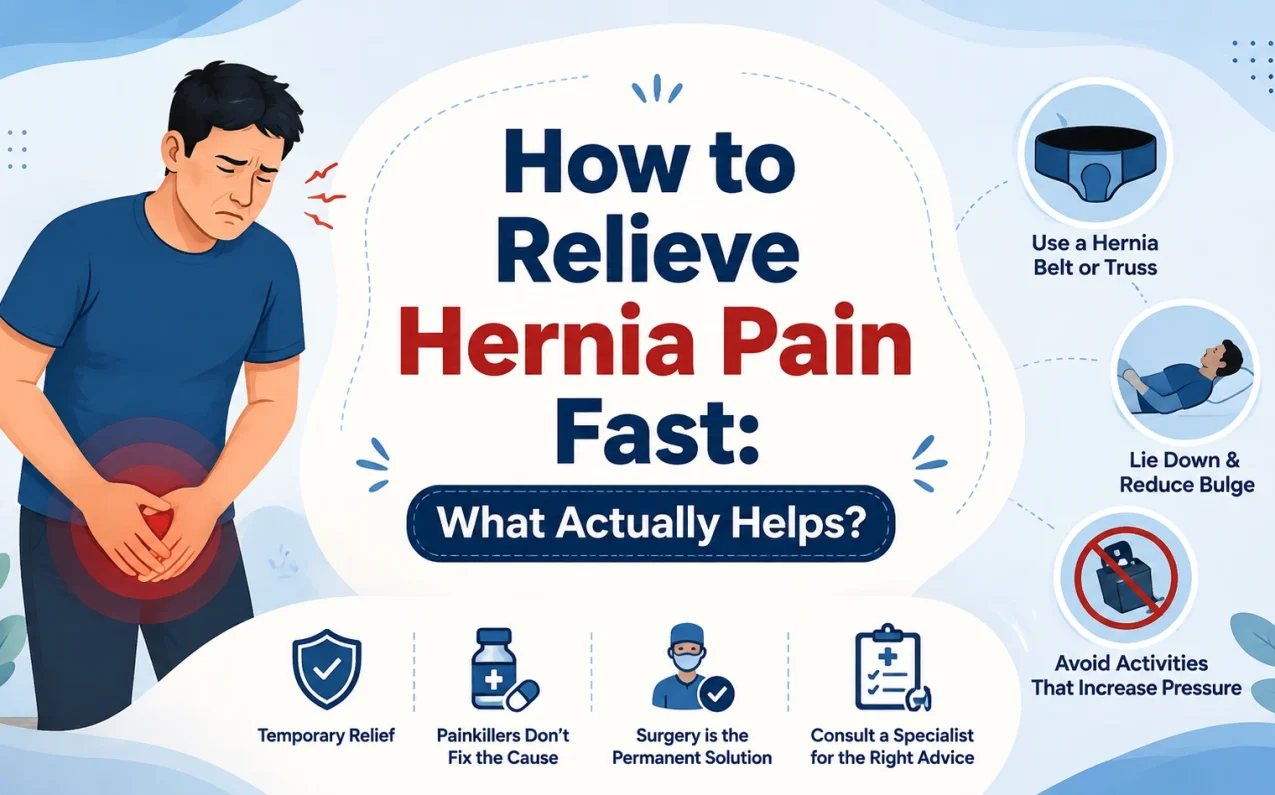
The fastest way to relieve hernia pain is to reduce the bulge that causes pressure on nearby tissues. Temporary relief may be possible by avoiding activities that increase the bulge, lying down when appropriate, and using a hernia belt or truss correctly. While these measures can help manage discomfort, they do not repair the hernia itself.
This guide explains what actually helps relieve hernia pain, why common painkillers may not be effective, and when a permanent treatment may be necessary.
If your symptoms persist or you’re considering surgical treatment, it’s also helpful to understand the financial aspects before making a decision. You can explore our detailed guide on Hernia Treatment Cost in Delhi NCR to learn about the factors that influence treatment costs and how to plan your treatment journey with confidence.
What Causes Hernia Pain?
Table of Contents
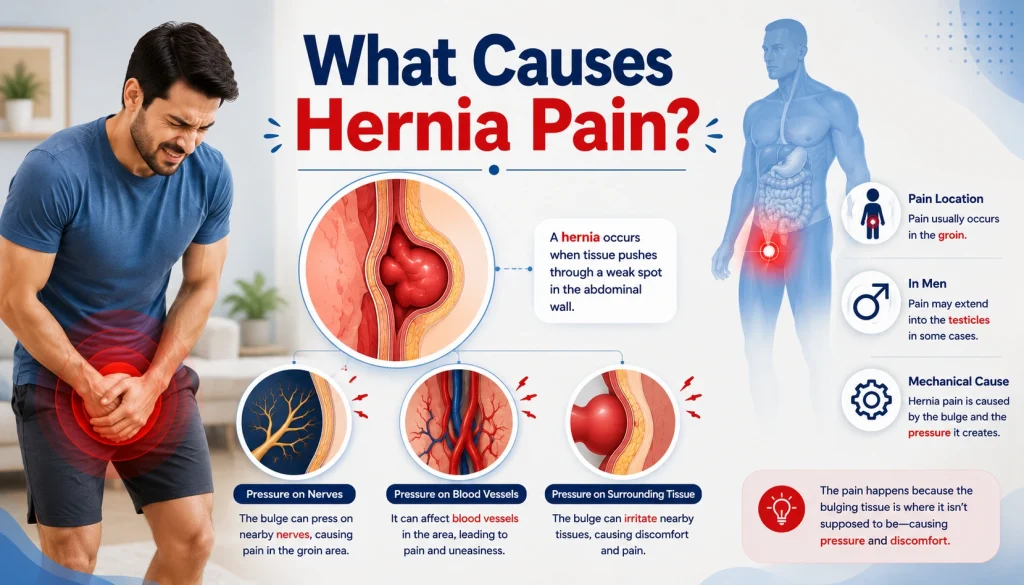
ToggleA hernia develops when there is an opening or weak area in the abdominal wall. Through this opening, internal tissues can bulge outward instead of remaining in their normal position. If you’re wondering why a hernia develops, you can also read our detailed guide on What Is the Major Cause of Hernia? Understanding Symptoms & Risks.
As this bulge forms, it can place pressure on nearby tissues, nerves, and blood vessels. This pressure is often the main reason people experience pain or discomfort.
For an inguinal hernia, the pain commonly develops in the groin area. In some men, the discomfort may also extend into the testicles.
How Can You Relieve Hernia Pain Quickly?
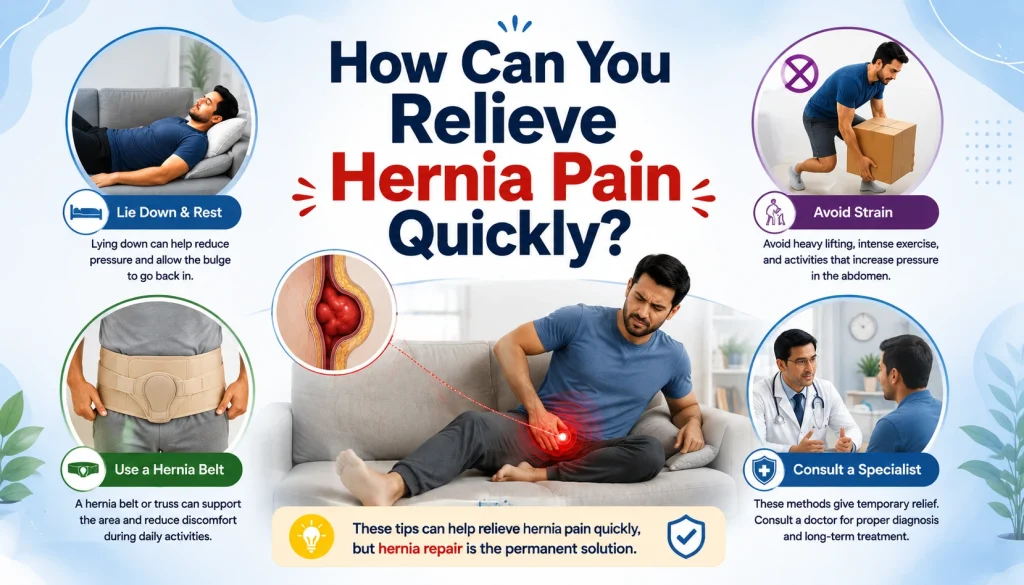
The fastest way to reduce hernia-related discomfort is to minimize the bulging that causes pressure in the affected area.
1. Avoid Activities That Increase the Bulge
Certain movements or activities can make the hernia protrude more, increasing pressure and worsening pain.
Reducing or avoiding activities that trigger the bulge may help decrease discomfort until you receive proper medical evaluation.
2. Use a Hernia Belt or Truss Correctly
A hernia belt, also called a truss, is designed to apply gentle pressure over the area where the hernia usually bulges.
For the best support:
- Lie down first so the bulging tissue can move back into place.
- Position the belt so the support pad sits directly over the hernia.
- Tighten the belt while still lying down.
- Stand up only after the belt is securely in place.
Using the belt in this way helps reduce the likelihood of the hernia bulging during standing or movement, which may temporarily relieve pain.
Do Painkillers Help Hernia Pain?
In many cases, common pain medications such as ibuprofen, acetaminophen (Tylenol), or opioid pain medicines do not effectively address hernia pain.
The reason is simple: hernia pain is primarily a mechanical problem, not just a pain signal. The discomfort is caused by pressure from the bulging tissue rather than inflammation alone.
Because of this, simply taking pain medication does not correct the underlying cause of the discomfort.
What Is the Long-Term Solution?
While supportive measures may temporarily reduce symptoms, they do not repair the hernia itself.
The definitive treatment is hernia repair surgery.
During repair, the tissues are returned to their proper position inside the abdomen, and the opening through which they bulge is repaired. This addresses the underlying mechanical cause of the pain rather than only managing the symptoms.
When Should You Seek Medical Advice?
If you continue experiencing hernia pain or discomfort, it’s important to consult a healthcare professional who can evaluate your condition and discuss the most appropriate treatment options.
Every hernia is different, and treatment decisions depend on individual factors. A proper assessment helps determine the right approach and prepares you for the next steps if surgical repair is recommended.
How ConsultGrab Can Help
If you’re experiencing persistent hernia symptoms and are unsure what to do next, ConsultGrab helps make the treatment journey simpler.
Our care team connects patients with experienced specialists and trusted hospitals, helping you:
- Understand your condition and treatment options.
- Book appointments with the right medical specialists.
- Compare treatment plans with transparency.
- Receive guidance throughout the treatment process.
To learn more about our healthcare guidance services, trusted hospital network, and how we support patients throughout their treatment journey, visit the ConsultGrab website.
Our goal is to help you make informed healthcare decisions with confidence and access the care you need without unnecessary stress.
Conclusion
If you’re looking for how to relieve hernia pain fast, temporary relief focuses on reducing the hernia bulge through activity modification and proper use of a hernia belt or truss. However, these measures only manage symptoms. Because the pain results from the hernia itself, surgical repair remains the definitive treatment. If symptoms persist, seeking professional medical guidance can help you understand the most suitable treatment plan for your situation.
Frequently asked questions
The quickest temporary relief comes from reducing the hernia bulge by avoiding activities that increase pressure and using a properly fitted hernia belt or truss as directed.
No. A hernia belt may temporarily reduce discomfort by supporting the affected area, but it does not repair the hernia.
Hernia pain is mainly caused by mechanical pressure from the bulging tissue. Pain medications do not remove this pressure, so they may not provide significant relief.
Yes. Repairing the hernia restores the tissues to their normal position and closes the opening that allows the bulge, making it the long-term solution described for hernia-related pain.