

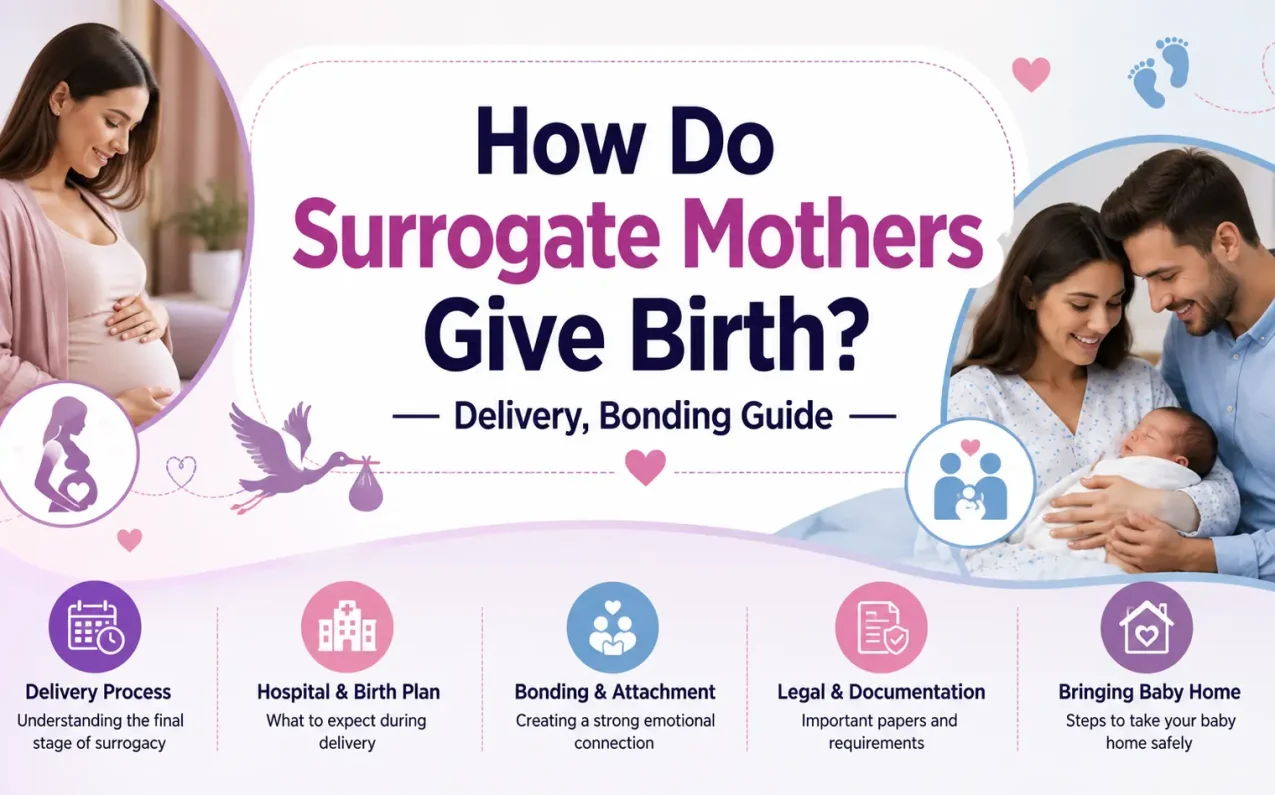
Surrogacy is a life-changing journey that ends with one of the most emotional and important moments for intended parents—the birth of their baby.To better understand the important role played throughout this journey, you can explore What Is a Surrogacy Mother? Role, Eligibility and Full Guide. Many people understand the medical aspects of surrogacy but often wonder what happens during delivery, how the baby is handed over to the parents, and how bonding develops after birth.
This guide explains how surrogate mothers give birth, what intended parents can expect during delivery, how emotional attachment develops, and the steps involved in taking the baby home.
The Final Stage of the Surrogacy Journey
Table of Contents
ToggleAfter months of pregnancy, medical monitoring, and preparation, the final stage of surrogacy arrives when the baby is ready to be born.
Healthcare providers typically estimate a due date early in the pregnancy. While no due date is exact, most babies are born close to the expected delivery period. As the due date approaches, intended parents are usually informed so they can prepare for the delivery and make necessary travel or hospital arrangements.
The birth of the baby is the moment everyone involved has been working toward throughout the surrogacy process.
Are Intended Parents Present During Delivery?
In many surrogacy arrangements, intended parents attend the birth of their baby. The specific role of the parents during labor and delivery depends on several factors, including:
- Hospital policies
- The agreed birth plan
- Medical circumstances
- Comfort levels of everyone involved
Before delivery, all important details should be discussed and documented clearly. This helps ensure that expectations are understood and that the delivery experience remains positive and respectful for everyone.
Understanding Attachment During Pregnancy
One concern many intended parents have is whether the surrogate will become emotionally attached to the baby or whether they themselves will feel connected to a child they did not carry.
Attachment is a natural psychological process that begins during pregnancy and continues after birth. However, attachment develops differently for each person involved.
The Baby's Early Development
During pregnancy, the baby becomes familiar with sounds, voices, and experiences from the surrounding environment. These early experiences contribute to the baby’s development and sense of familiarity after birth.
Bonding for Intended Parents
Many intended parents begin forming a connection with their baby long before delivery. They may:
- Follow pregnancy milestones closely
- Participate in medical appointments when possible
- Read to the baby
- Talk or sing to the baby
- Imagine future family experiences
These activities help create emotional involvement throughout the pregnancy journey.
Is Immediate Bonding Necessary?
Not every parent feels an instant connection the moment the baby is born. This is completely normal.
For some parents, emotional attachment develops gradually through daily caregiving, feeding, comforting, and spending time with the baby. The parent-child bond continues to strengthen through consistent interaction and care.
How the Baby Is Handed Over After Birth
One of the most significant moments in surrogacy is the transition from delivery to parenthood.
The physical transfer of the baby to the intended parents is also an emotional milestone. It represents the completion of the pregnancy journey and the beginning of family life. For those who want to better understand the child born through this process, What Is a Surrogacy Baby? Complete Guide & Meaning Explained provides detailed information about its meaning and role in the surrogacy journey.
Healthcare professionals generally focus on creating a smooth and positive transition for everyone involved.
Ways to Encourage Early Parent-Child Bonding
There are several simple steps that may help strengthen the connection between intended parents and their baby.
Before Delivery
Parents may choose to:
- Talk to the baby regularly
- Read stories aloud
- Play music during pregnancy
- Participate in important pregnancy milestones
- Prepare comfort items that will be used after birth
These activities can help parents feel involved throughout the pregnancy.
During and After Delivery
Following hospital guidelines and medical recommendations, parents may be encouraged to:
- Spend time with the baby as soon as possible
- Hold the baby frequently
- Respond to the baby’s needs
- Engage in skin-to-skin contact when appropriate
Early interaction helps parents become familiar with their newborn and supports the development of a strong family bond.
The Emotional Transition for Everyone Involved
Surrogacy is not only a medical process but also an emotional journey.
For intended parents, delivery marks the beginning of parenthood after months or years of waiting. For the surrogate, it represents the successful completion of an important commitment.
A respectful and positive conclusion can help create a meaningful experience for everyone involved.
Returning Home With Your Baby
After the baby is discharged from the hospital, parents can begin preparing for life at home.
Depending on individual circumstances and legal requirements, families may need to complete documentation related to:
- Birth registration
- Parentage documentation
- Travel documents
- Identification records
- Other administrative procedures
The specific requirements vary depending on location and personal circumstances. Parents also often plan for the financial aspects of their surrogacy journey, including medical, legal, and administrative expenses. For a detailed breakdown, see Surrogacy Cost in Delhi: Complete Guide for Intended Parents (2026).
Working with experienced professionals throughout the process can help families understand the necessary steps and avoid unnecessary stress.
Why Professional Guidance Matters During Surrogacy
Surrogacy involves medical, emotional, legal, and logistical considerations. Having access to experienced fertility specialists and patient support teams can make the journey significantly smoother.
At ConsultGrab, we help intended parents connect with trusted fertility experts and experienced medical professionals who can guide them through every stage of the surrogacy process. From understanding treatment options to coordinating consultations and receiving ongoing support, our goal is to make the path to parenthood more informed and less overwhelming.
Whether you are exploring surrogacy for the first time or preparing for the final stages of your journey, having the right guidance can make all the difference.
Conclusion
Surrogate mothers give birth much like any other pregnancy, but the delivery carries unique emotional significance for everyone involved. The birth marks the transition from pregnancy to parenthood, creating an opportunity for intended parents to begin building their lifelong relationship with their child.
While attachment and bonding develop differently for every family, love, care, and consistent interaction help create strong and healthy parent-child relationships over time. With proper medical support, planning, and guidance, the final stage of the surrogacy journey can be a rewarding and memorable experience for all involved.
Frequently Asked Questions (FAQs)
A surrogate mother gives birth through a hospital delivery, similar to any other pregnancy. As the due date approaches, intended parents are usually informed and may attend the birth. After delivery, the baby is transferred to the intended parents according to the agreed birth plan and hospital procedures.
Yes, intended parents can often be present during the delivery of their baby. Their involvement depends on hospital policies, medical circumstances, and the agreed delivery plan. Discussing expectations before birth helps ensure a smooth experience for the surrogate, healthcare team, and intended parents.
Yes, intended parents can begin bonding with their baby during pregnancy. Activities such as following pregnancy milestones, talking to the baby, reading stories, and participating in the surrogacy journey help create emotional attachment before delivery and support early parent-child bonding.
After birth, intended parents usually spend time with their newborn and begin building their parental bond. Early interaction, holding the baby, and skin-to-skin contact when appropriate can strengthen attachment. The baby is then discharged from the hospital once medical requirements are completed.
Intended parents can strengthen bonding by spending time with the baby, responding to the baby's needs, providing comfort, and engaging in regular caregiving. Consistent interaction after birth helps develop a secure emotional connection and supports healthy parent-child relationships over time.