

Last Updated: November 2026
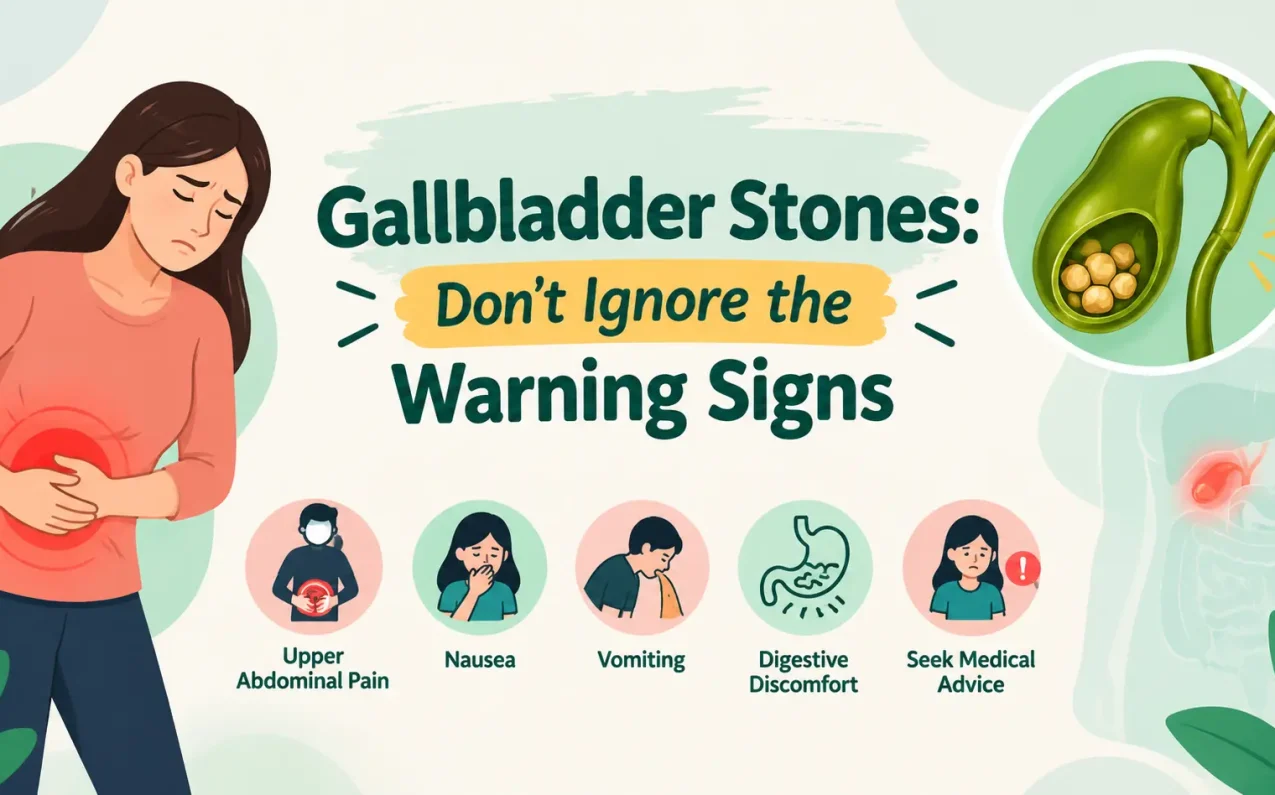
Gallbladder stones are hard lumps that form in the gallbladder. Many people never feel them, but when they block a small duct they can cause pain, infection, or a serious pancreas problem.
Need Expert Medical Guidance? Talk to a Specialist Today
Table of Contents
ToggleShare your details and our care team will call you back with the right specialist and clear next steps.
What Does the Gallbladder Do?
The gallbladder is a small organ that stores bile, a fluid that helps your body digest fat.
- The liver makes bile. The gallbladder only stores it.
- Bile helps break down the fats you eat and helps your body absorb them.
- When you are not eating, bile waits in the gallbladder.
- When you eat, bile flows through the common bile duct into your intestines.
- After a fatty meal, the body releases a little extra bile.
Can You Live Without a Gallbladder?
Yes. The gallbladder is not absolutely necessary.
- It does not make bile, so removing it does not stop bile production.
- The liver keeps making bile and sends it straight into the intestines.
- Over time, the common bile duct grows a little bigger and does the storage job.
What Is a Gallbladder Attack?
A gallbladder attack is pain caused by a gallstone blocking the exit of the gallbladder.
Doctors also call it biliary colic or symptomatic cholelithiasis (gallstones that cause symptoms).
- The pain is felt in the upper right belly or the upper middle belly.
- It usually starts right after a fatty meal.
- It comes in short episodes, not all the time.
Why does it happen?
- A stone gets stuck in the cystic duct, the small tube that lets bile leave the gallbladder.
- When the stone blocks the tube, it causes pain.
- When the stone moves, the pain can settle.
Do All Gallstones Cause Symptoms?
No. Many people have gallstones and never feel any pain.
- Only a few people get symptoms.
- Problems begin when stones start blocking the ducts.
- Treatment is needed mainly for people whose stones cause symptoms.
Read More: Common Symptoms of Gallbladder Stones
Can a Gallbladder Attack Feel Like a Heart Attack?
Yes. The pain sits in the upper belly and lower chest, so the two can be confused.
- Some people go to the emergency room worried about their heart.
- Doctors often rule out a heart attack first.
- Later, they find the real cause is the gallbladder.
What Problems Can Gallstones Cause?
Gallstones can cause three main problems.
1. Pain after eating (biliary colic)
- Pain comes after meals, usually fatty ones.
- This pain goes away after the gallbladder is removed.
2. Gallbladder infection
- A stone can get trapped at the gallbladder’s exit.
- This can cause a serious infection and make you very ill.
- Surgery to remove the gallbladder may be needed.
3. Pancreatitis (swelling of the pancreas)
- A stone can get stuck in the common bile duct near the point where the pancreas drains.
- This blocks the pancreas’s digestive juices.
- It can cause severe pancreatitis, which can be life-threatening.
- Surgery may be needed because of the stones, even if the gallbladder itself is not the direct problem.
Who Needs Gallbladder Surgery?
People whose gallstones cause symptoms or complications need surgery. The medical name is cholecystectomy, which means removal of the gallbladder.
- Repeated pain after meals
- A gallbladder infection
- Stones blocking the common bile duct, with a risk of pancreatitis
How Is Gallbladder Surgery Done?
About 99% of the time, it is done by laparoscopic (keyhole) surgery.
- The surgeon works through four small cuts.
- The biggest cut is about the size of a thumbnail.
- The others are about the size of an eraser head.
- A larger cut may be needed if the gallbladder is very big and full of large stones.
- Keyhole surgery can usually be done safely even when the gallbladder is inflamed.
What Is Recovery Like?
Most people recover well and tolerate the surgery easily.
- Many go home the same day.
- Pain medicine is needed for the first couple of days.
- Most people do not need it for more than a week, because the cuts are small.
- You can usually return to a normal diet right after surgery.
Read More: What Can You Not Do After Gallbladder Removal Surgery?
Is Life Better After Gallbladder Removal?
For people with symptoms, yes. The pain linked to the gallbladder goes away after it is removed.
- The liver keeps making bile.
- The common bile duct takes over the storage role.
Read More: Is Life Better After Gallbladder Removal? What to Expect
How Can ConsultGrab Help?
ConsultGrab connects patients with trusted medical specialists so they can get the right diagnosis and treatment.
- We understand each case in detail.
- We connect you with the right specialists.
- We explain treatment options clearly.
- We support you through the whole process.
If you have repeated upper belly pain after meals, speak to a specialist early. Our team can guide you to the right care.
Need Expert Medical Guidance? Talk to a Specialist Today
Share your details and our care team will call you back with the right specialist and clear next steps.
Frequently Asked Questions
Pain in the upper belly caused by a stone blocking the gallbladder’s exit, usually after a fatty meal.
It stores bile, which helps digest and absorb fats.
In the upper right belly or the upper middle belly.
Yes. The pain is in the upper belly and lower chest, so it can feel similar.
No. Many people have gallstones with no symptoms.
Yes. A stone stuck at the gallbladder’s exit can cause a serious infection.
Yes. A stone in the common bile duct can block the pancreas and cause dangerous pancreatitis.
Yes. It is usually done safely with keyhole surgery, about 99% of the time.
Many people go home the same day. Most need pain medicine for a week or less.
Yes. You can usually resume a normal diet right away.
Yes. The liver keeps making bile and sends it straight to the intestines.
Key Takeaways
- The gallbladder stores bile. It does not make it.
- Many people have gallstones with no symptoms.
- Pain after fatty meals is a warning sign.
- Stones can cause infection or pancreatitis.
- Keyhole surgery is safe, and recovery is usually quick.