

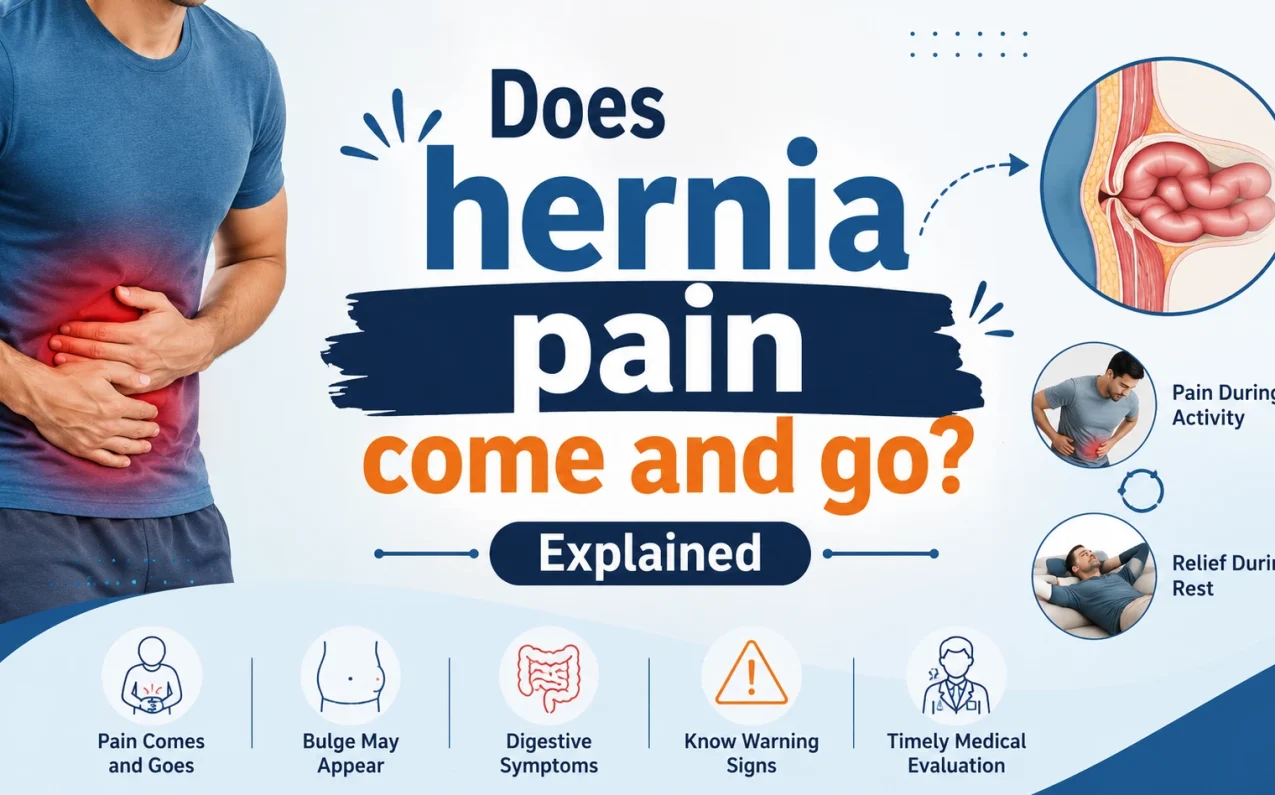
Many people notice an unusual discomfort in their abdomen or groin that seems to appear one day and disappear the next. This often leads to a common question: Does hernia pain come and go?
The answer is yes. Hernia pain can be intermittent, meaning it may come and go depending on your activities, body position, and the severity of the condition. However, even when the pain temporarily disappears, the underlying weakness in the abdominal wall remains.
If symptoms persist or become more frequent, seeking evaluation from experienced specialists is important to determine the most appropriate treatment approach. Patients looking for expert care can explore their options with the Best Doctors for Hernia Surgery in Delhi to better understand available surgical and non-surgical treatment solutions.
Understanding why hernia pain fluctuates, what symptoms to watch for, and when medical attention becomes necessary can help patients make informed healthcare decisions and avoid potential complications.
What Is a Hernia?
Table of Contents
ToggleA hernia develops when tissue, fat, or part of the intestine pushes through a weak area in the abdominal wall muscles.
This weakness creates an opening through which internal tissues can protrude, often causing noticeable symptoms such as pain, pressure, or a visible bulge beneath the skin.
Hernias can occur in different areas of the body, but they are most commonly found:
- In the groin region
- Around the belly button
- Near previous surgical incisions
- Within the upper stomach area (hiatal hernia)
The symptoms vary from person to person. Some individuals experience no discomfort at all, while others may develop significant pain that affects daily activities.
Does Hernia Pain Come and Go?
Yes, hernia pain frequently comes and goes.
Many patients report periods where the discomfort completely disappears, only to return later during certain activities.
This occurs because the tissue protruding through the muscle weakness may move in and out of the opening.
When the tissue temporarily slips back into its normal position, symptoms may lessen or disappear. When it pushes outward again, pain and discomfort often return.
Common Situations That Trigger Hernia Pain
Pain may become more noticeable during:
- Standing for long periods
- Walking for extended durations
- Lifting heavy objects
- Exercising
- Bending over
- Coughing
- Sneezing
- Laughing forcefully
Many patients notice symptom relief when:
- Lying down
- Resting
- Avoiding physical strain
- Gently reducing the bulge back into the abdomen (if possible)
While the pain may come and go, the hernia itself does not heal on its own.
Why Does Hernia Pain Fluctuate?
The primary reason hernia pain changes throughout the day is pressure inside the abdomen.
Whenever abdominal pressure increases, more tissue may push through the weakened area, creating:
- Increased pain
- Pressure sensations
- Pulling discomfort
- Visible bulging
If you notice recurring pain, a bulge beneath the skin, digestive symptoms, or any concerning changes, seeking timely medical evaluation is the safest approach. Early assessment can help prevent complications and ensure appropriate treatment planning. Patients considering surgical repair may also benefit from learning What Are the Risks of Hernia Surgery before making treatment decisions.
What Does Hernia Pain Feel Like?
Hernia pain is often described in several ways.
Common sensations include:
Dull Ache
A persistent aching feeling around the affected area.
Pressure or Heaviness
Many patients describe a sensation of weight or dragging, particularly in the groin region.
Pulling Sensation
Some individuals experience a pulling or tugging feeling when moving, bending, or lifting.
Burning Discomfort
A mild to moderate burning sensation may occur around the hernia site.
Sharp Pain During Strain
Pain can suddenly intensify during coughing, sneezing, lifting, or other activities that increase abdominal pressure.
The severity can range from mild discomfort to significant pain depending on the size and progression of the hernia.
The Hernia Bulge: A Key Symptom
One of the most recognizable signs of a hernia is a visible or palpable bulge beneath the skin.
This bulge may:
- Appear while standing
- Become larger during physical activity
- Increase with coughing or straining
- Disappear when lying down
Many patients notice that they can gently push the bulge back in. This is often referred to as reducing the hernia.
However, even if the bulge temporarily disappears, the weakness in the abdominal wall remains present.
Can a Hernia Cause Symptoms Other Than Pain?
Yes.
While pain and bulging are the most common symptoms, some patients experience digestive issues as the condition progresses.
Potential symptoms include:
Constipation
If enough intestine becomes involved in the hernia, normal movement through the digestive tract may slow down.
Bloating
Patients may feel abdominal fullness or swelling.
Nausea
Digestive discomfort can sometimes trigger nausea.
Vomiting
In more serious situations, vomiting may occur, especially if the intestine becomes obstructed.
Although these symptoms are less common, they can indicate that the hernia is affecting intestinal function.
Can a Hernia Exist Without Pain?
Absolutely.
Not all hernias cause discomfort.
Some patients discover a hernia only because they notice a bulge during bathing, dressing, or a routine physical examination.
Even painless hernias should not be ignored.
Over time, they may:
- Increase in size
- Become more symptomatic
- Interfere with daily activities
- Develop complications
Early evaluation allows appropriate monitoring and treatment planning.
Conditions That Can Be Mistaken for a Hernia
Absolutely.
Not all hernias cause discomfort.
Some patients discover a hernia only because they notice a bulge during bathing, dressing, or a routine physical examination.
Even painless hernias should not be ignored.
Over time, they may:
- Increase in size
- Become more symptomatic
- Interfere with daily activities
- Develop complications
Early evaluation allows appropriate monitoring and treatment planning.
When Hernia Pain Becomes an Emergency
Although uncommon, hernias can occasionally become dangerous.
A serious complication occurs when a portion of the intestine becomes trapped within the hernia opening.
This can compromise blood flow to the affected tissue.
Without prompt treatment, the trapped tissue may become damaged.
Warning Signs Requiring Immediate Medical Attention
Seek emergency care if you experience:
- Sudden severe pain
- A bulge that cannot be pushed back in
- Persistent nausea or vomiting
- Significant abdominal swelling
- Inability to pass gas
- Inability to have a bowel movement
- Fever or chills
- Redness, darkening, or discoloration around the bulge
These symptoms may indicate a strangulated or incarcerated hernia, which requires urgent medical evaluation.
Does Hernia Pain Get Worse Over Time?
In many cases, yes.
Some individuals experience only mild symptoms initially.
However, as the opening in the abdominal wall enlarges, symptoms may gradually become more noticeable.
Patients often report:
- More frequent pain episodes
- Increased bulge size
- Greater discomfort during daily activities
- Reduced ability to exercise or lift objects
This gradual progression is one reason why ongoing symptoms should not be ignored.
How Is a Hernia Diagnosed?
Diagnosis typically begins with a medical history and physical examination.
Healthcare providers may assess:
- The location of pain
- Presence of a bulge
- Changes during standing or coughing
- Symptom patterns over time
In some cases, imaging studies may be recommended to confirm the diagnosis or evaluate the size and contents of the hernia.
Getting the Right Guidance for Hernia Care
If you are experiencing recurring abdominal or groin pain, especially when accompanied by a bulge, obtaining professional guidance is important.
Because hernia symptoms can vary significantly between individuals, proper evaluation helps determine:
- Whether a hernia is present
- The type of hernia involved
- The risk of complications
- Appropriate treatment options
At ConsultGrab, we help patients connect with experienced specialists and trusted hospitals for comprehensive evaluation and treatment planning.
Our support team assists patients by:
- Providing healthcare guidance
- Helping schedule specialist consultations
- Explaining treatment pathways
- Comparing available treatment options
- Coordinating care through a trusted medical network
The goal is to make the treatment journey more informed, transparent, and stress-free.
Conclusion
So, does hernia pain come and go?
Yes. Hernia pain commonly fluctuates based on physical activity, body position, and pressure inside the abdomen. Many patients experience periods of relief followed by recurring discomfort.
However, the disappearance of pain does not mean the hernia has healed. The underlying weakness remains and may gradually worsen over time. While a hernia itself does not typically heal without treatment, understanding risk factors and preventive habits may help reduce strain on the abdominal wall. You can learn more about practical prevention strategies in our guide on How to Avoid Hernia Naturally and Reduce Hernia Risk.
If you notice recurring pain, a bulge beneath the skin, digestive symptoms, or any concerning changes, seeking timely medical evaluation is the safest approach. Early assessment can help prevent complications and ensure appropriate treatment planning.
Frequently Asked Questions (FAQs)
Yes, hernia pain often comes and goes depending on physical activity, body position, and pressure inside the abdomen. Symptoms may worsen during lifting, coughing, bending, or prolonged standing and improve when lying down. However, the hernia itself does not disappear and usually requires medical evaluation.
Physical activities such as lifting heavy objects, exercising, coughing, or straining increase abdominal pressure. This pressure can push tissue or intestine further through the weakened abdominal wall, causing greater pain, pressure, or a visible bulge. Symptoms often improve with rest and reduced physical strain.
Yes, some hernias can cause pain, pressure, or a pulling sensation before a noticeable bulge develops. Patients may experience discomfort during movement or exertion even when no lump is visible. A medical examination is often needed to confirm the diagnosis.
Emergency warning signs include sudden severe pain, nausea, vomiting, inability to pass gas or have a bowel movement, fever, and a bulge that becomes firm or cannot be pushed back in. These symptoms may indicate a trapped or strangulated hernia and require immediate medical attention.
No, a hernia does not heal on its own even if the pain temporarily disappears. The weakness in the abdominal wall remains present and may gradually worsen over time. Persistent or recurring symptoms should be evaluated by a healthcare professional to determine appropriate treatment options.