
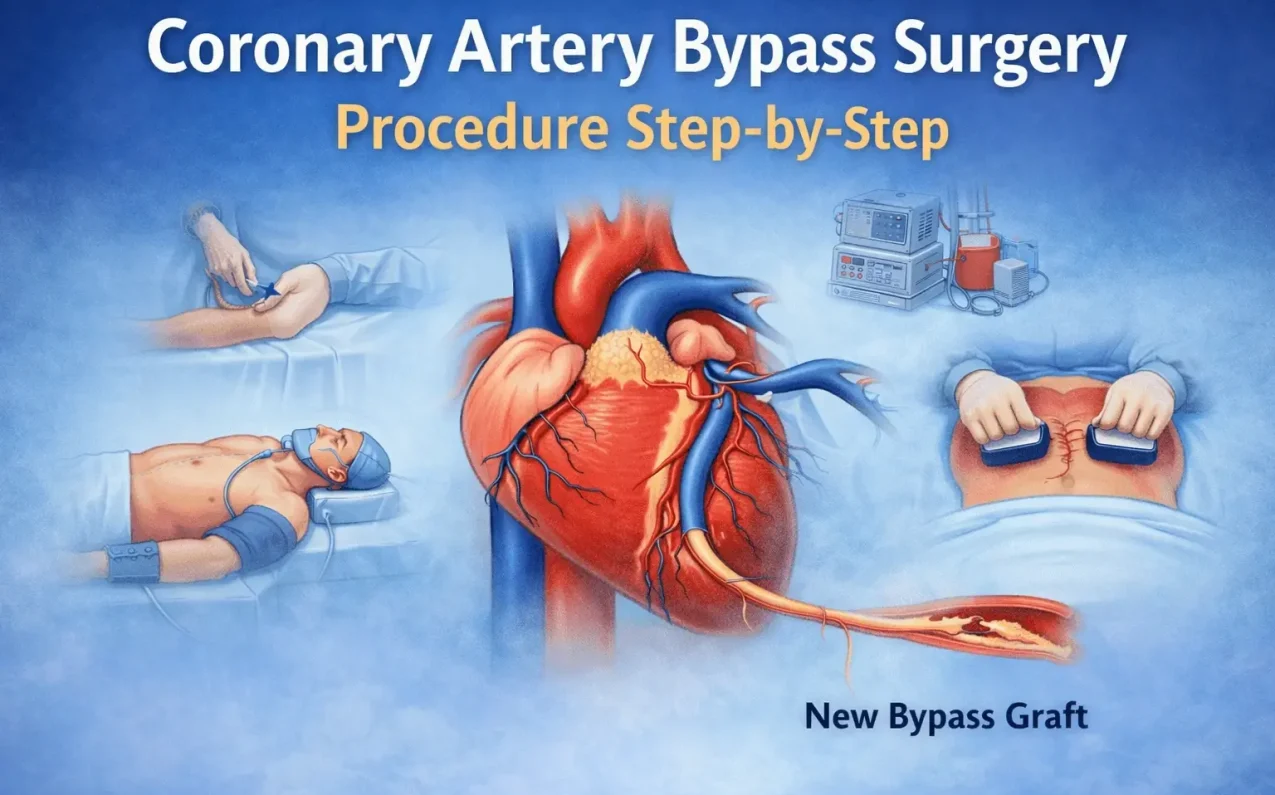
Heart bypass surgery – often called CABG or just bypass – ranks among the most reliable ways to treat serious heart issues around the world. When a doctor suggests this operation for you or someone close, uncertainty, worry, or stress might follow without warning. Many patients begin by exploring their treatment options, hospitals, and specialists before making a decision. If you’re looking for comprehensive information about care, recovery, and expert surgical support, learn more about the best bypass surgery treatment in Delhi.
Picture this. A clear look at how coronary artery bypass surgery works, broken down piece by piece. Think of it as a walk through each part, using words anyone can follow. Not jargon. Just sense. Over here at ConsultGrab, clarity comes first. Choices about health should feel calm, not crowded with doubt. Understanding matters more than speed. That is what guides us.
We also provide FREE consultation services to:
- Check whether bypass surgery or transplant is required
- Guide you to the best bypass surgery hospitals in India
- Share information about experienced heart and transplant surgeons
- Provide cost comparisons between hospitals
Assist with appointments and second opinions
What Is Coronary Artery Bypass Surgery?
Table of Contents
ToggleWhen plaque clogs the heart’s blood vessels, a surgeon might reroute blood flow using a different path. This operation helps deliver oxygen again by bypassing damaged sections of the coronary arteries.
From somewhere else in the body, a surgeon takes a good blood vessel to build a detour around the blocked area. Now, blood full of oxygen flows better toward the heart tissue.
Who Needs Coronary Artery Bypass Surgery?
Bypass surgery is usually recommended when:
• Multiple coronary arteries are blocked
• Blockages are severe and cannot be treated with angioplasty or stents
• The left main coronary artery is significantly narrowed
• Symptoms like chest pain (angina), shortness of breath, or fatigue persist
• Heart function is reduced due to poor blood supply
If you are experiencing these conditions and need expert guidance, you can book an appointment with a heart specialist for bypass surgery consultation to discuss your treatment options and receive a personalized evaluation.
Through Consult Grab’s free consultation, patients can confirm whether bypass surgery is the best option or if alternative treatments are possible.
Types of Coronary Artery Bypass Surgery
Before understanding the step-by-step procedure, it’s important to know the types:
1.One Two Three or Four Bypasses
- It changes based on the number of clogged arteries
- A single blocked vessel gets rerouted once. Four trouble spots mean four fixes are done at the same time
2.On-Pump Bypass Surgery
- Heart is stopped
- A heart-lung machine maintains circulation
3.Off Pump Beating Heart Bypass Surgery
- Surgery performed while the heart continues beating
4.Less invasive heart bypass procedure
- Smaller incision
- Faster recovery for selected patients
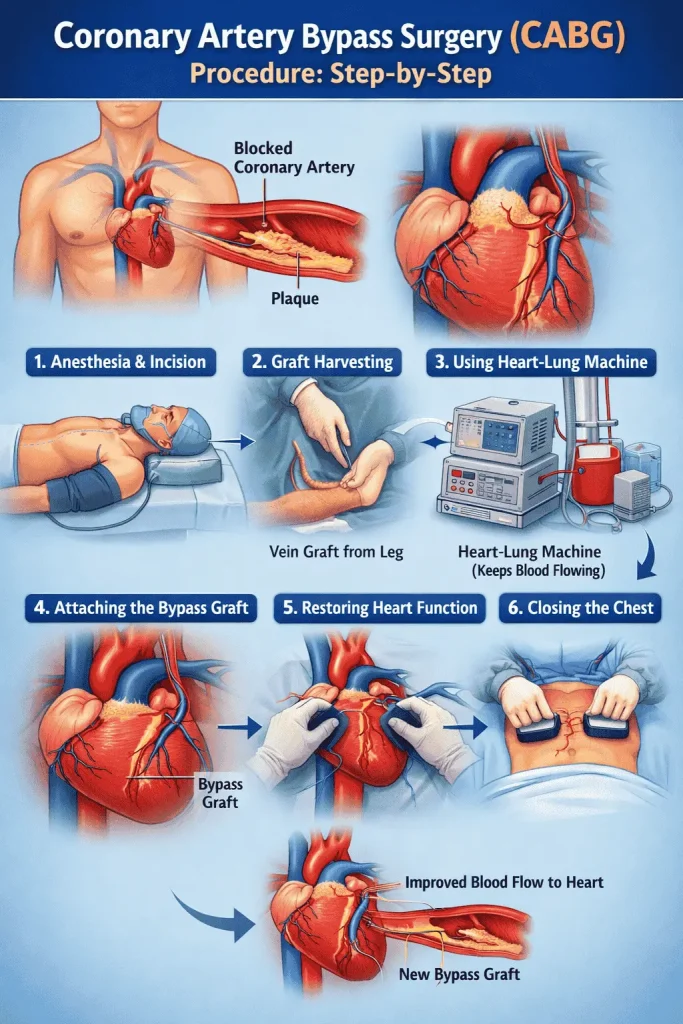
Coronary Artery Bypass Surgery Procedure Step-by-Step
Step 1: Pre-Surgery Evaluation and Preparation
Before surgery, patients undergo detailed tests including:
- ECG
- Echocardiogram
- Coronary angiography
- Blood tests
- Chest X-ray
Doctors also evaluate diabetes, blood pressure, kidney health, and lung function.
Consult Grab helps patients understand test results, select the right hospital, and arrange pre-surgery consultations with expert surgeons.
Step 2: Anaesthesia and Surgery Preparation
That morning, when it’s time for the procedure:
- The patient is given general anaesthesia
- Vital signs are continuously monitored
- The chest area is sterilized
Now sleeping deep, the person feels nothing at all while it happens. Unaware throughout, comfort stays complete without any sensation crossing their mind.
Step 3: Opening the chest during surgery
- Down the middle of the chest, a cut is made by the surgeon
- The breastbone (sternum) is carefully divided
- The heart is exposed for surgery
This provides full access to the heart and coronary arteries.
Step 4: Harvesting the Bypass Graft
Healthy blood vessels are taken from:
- Internal mammary artery (chest)
- Saphenous vein (leg)
- Radial artery (arm)
Pressure makes these vessels work better than others. Their design handles stress without failing. What matters is how they respond when force increases. Strength shows up most in tight situations. Performance stays steady even when pushed hard.
Step 5: Connecting to the Heart-Lung Machine
In on-pump CABG:
- The heart is temporarily stopped
- A heart-lung machine takes over circulation
- Blood full of oxygen moves through the system. It travels onward, carrying what’s needed. The flow never stops. Each path delivers silently. Life depends on this steady stream
Skipping this part happens during off-pump procedures.
Step 6: Create the bypass
- A single end connects the graft to either the aorta or one large artery nearby
- A small pathway opens past the obstruction in the heart’s vessel
- A steady stream moves inside the new pathway, slipping past the clog. The detour carries what needs to go forward
This process could happen again several times, based on how many arteries are clogged.
Step 7: Restarting the heart and closing the chest
- If the heart has stopped, it gets restarted
- Chest tubes are placed to drain fluids
- Firm metal stitches hold the chest bone closed again
- The incision is closed with sutures
Most times, the operation lasts between three and six hours – longer if things get tricky.
Immediate Recovery After Bypass Surgery
ICU Care (First 24–48 Hours)
After surgery steps:
- Patient is moved to the ICU
- Breathing tube is removed within hours
- Every few seconds, sensors check how fast the heart beats. Blood pressure gets measured quietly in the background. Oxygen in the bloodstream is tracked without interruption
Hospital Stay
- Average hospital stay: 5 to 7 days
- Pain is controlled with medications
- Walking and breathing exercises begin early
Long-Term Recovery and Rehabilitation
At Home Recovery
- Full recovery may take 6 to 12 weeks
- Gradual return to daily activities
- Proper wound care and medications
Cardiac Rehabilitation
- Supervised exercise program
- Diet counselling
- Stress management
- Lifestyle modification
Cost of Coronary Artery Bypass Surgery in India
The cost varies depending on:
- Hospital location and reputation
- Surgeon’s experience
- Number of bypass grafts
- Type of surgery (on-pump/off-pump)
Approximate Cost Range in India:
Consult Grab provides transparent cost comparison between hospitals, helping patients avoid overcharging and hidden expenses.
Choosing the Best Bypass Surgery Hospital in India
When selecting a hospital, consider:
- Availability of advanced cardiac infrastructure
- ICU and emergency care standards
- Infection control protocols
- Success rate of bypass surgeries
Consult Grab guides patients to trusted, high-quality hospitals based on medical needs and budget.
Role of Experienced Surgeons in Bypass Surgery
An experienced cardiac surgeon ensures:
- Lower complication risk
- Better graft success
- Faster recovery
- Higher survival rates
Through ConsultGrab, patients can:
- Get details of experienced bypass and transplant surgeons
- Book appointments easily
Request second opinions without pressure
How Consult Grab Helps You
At Consult Grab, we simplify your medical journey by providing free and expert assistance, including. Patients looking for trusted healthcare guidance can explore our medical consultation and hospital assistance platform in India to learn more about the services and support we provide throughout the treatment journey.
Free Consultation
We help assess whether bypass surgery or any transplant is required.
Guidance on Best Bypass Surgery Hospitals in India
We recommend trusted, NABH-accredited hospitals known for cardiac excellence.
Information About Experienced Cardiac & Transplant Surgeons
Get access to profiles of highly experienced heart surgeons.
Cost Comparison Between Hospitals
Transparent comparison so you can choose wisely.
Appointment & Second Opinion Assistance
We help schedule consultations and provide unbiased second opinions.
Our goal is simple:
To help patients make the right medical decision without confusion.
Disclaimer
All information provided in this article is collected from various medical sources available on the internet and is intended for educational purposes only. It should not be considered as medical advice. Always consult qualified healthcare professionals before making any medical decisions.
Frequently Asked Questions (FAQ)
The success rate of coronary artery bypass surgery is very high, often above 95%, especially when performed in experienced hospitals with skilled surgeons.
A typical operation lasts between three and six hours - length shifts with how many clogged vessels need fixing plus whether it's a single or multiple graft setup.
Most folks stay numb through operations thanks to numbing drugs. Following the procedure, some soreness shows up - nothing extreme - and pills usually keep it under control.
Recovery takes most people between six and twelve weeks. How fast someone heals ties closely to their general condition, how old they are, also whether they stick with rehab routines.