
Hip pain can make even the simplest daily activities difficult. For many older adults, walking, climbing stairs, or even getting out of bed becomes painful. At this stage, one question often comes to mind:
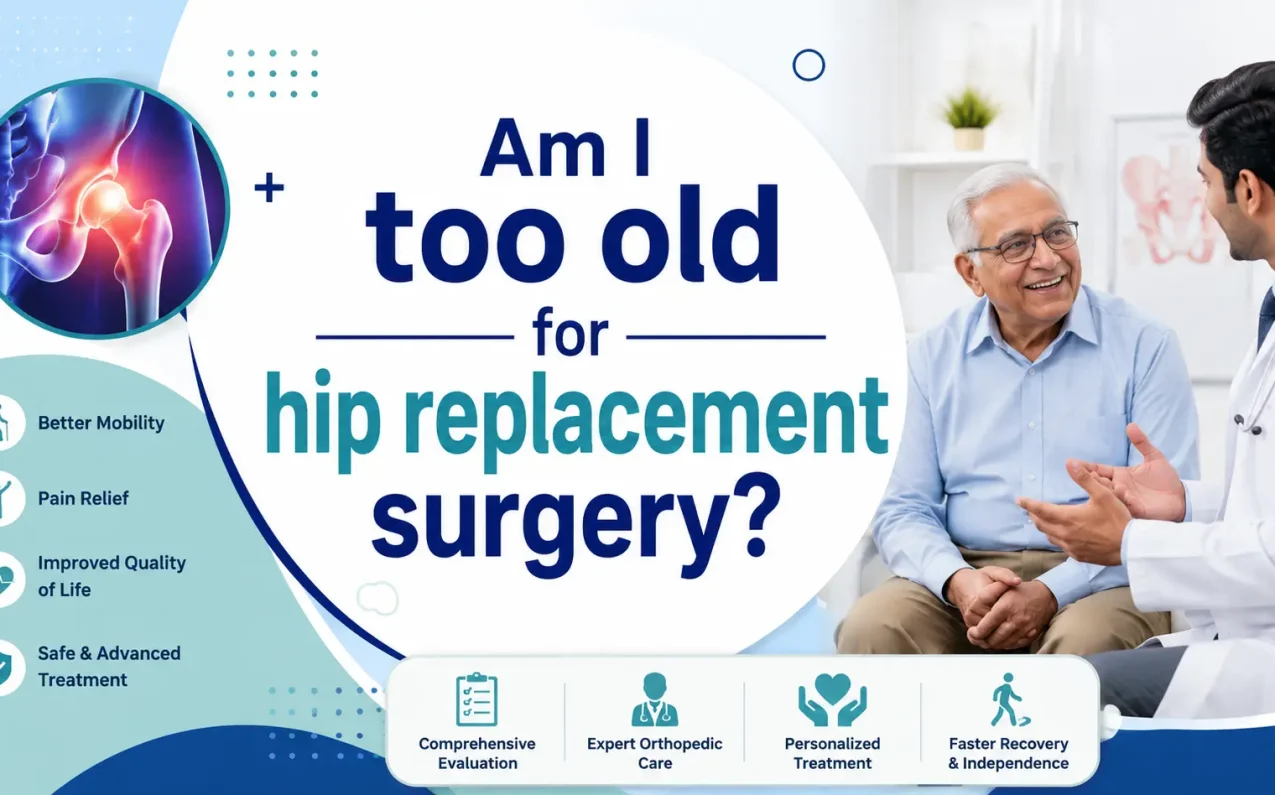
Am I too old for hip replacement surgery?
The simple answer is No. Age alone does not determine whether someone is suitable for hip replacement surgery. Modern orthopedic care focuses on a person’s overall health, mobility, and quality of life rather than the number of birthdays they have celebrated.
Let’s understand what really matters before making this important healthcare decision.
Age Is a Number—Overall Health Matters More
Table of Contents
ToggleWhen evaluating a patient for hip replacement surgery, doctors do not make decisions based only on chronological age. Instead, they assess biological age, which reflects how healthy and functional the body is.
For example, two people may both be 78 years old. One may be active with healthy heart, lungs, and kidneys, while the other may have multiple serious medical conditions that affect overall fitness. Although both share the same age, their suitability for surgery can be very different.
This is why many people in their 80s and even beyond successfully undergo hip replacement surgery when their overall health supports the procedure.
Factors Doctors Evaluate Before Hip Replacement
Rather than focusing only on age, specialists carefully assess several important factors.
1. Daily Mobility and Independence
Is hip pain preventing you from walking comfortably? Has it become difficult to use the bathroom, perform household activities, or meet friends and family?
If pain has significantly reduced your independence, surgery may offer an opportunity to regain mobility.
2. Bone Health
Doctors evaluate bone quality before surgery. Even if bone strength is reduced, modern implant techniques can often provide stable fixation in suitable patients.
3. Existing Medical Conditions
Conditions such as diabetes, high blood pressure, heart disease, or kidney problems are carefully reviewed. Well-managed medical conditions often allow patients to proceed safely after appropriate evaluation.
4. Recovery Support
Successful recovery depends not only on surgery but also on rehabilitation. Family support, motivation, and commitment to physiotherapy play an important role in achieving good outcomes.
The Hidden Risk of Avoiding Surgery
Many families hesitate because they believe surgery may be too risky in old age. However, delaying treatment can sometimes create even greater challenges.
Severe hip pain often leads to reduced movement. As mobility decreases, muscles become weaker, body weight may increase, and overall health can gradually decline. Staying confined to bed for long periods can also affect emotional well-being and reduce independence.
For suitable patients, restoring mobility through hip replacement may help improve comfort and support a more active lifestyle.
READ MORE: Hip replacement surgery is not only performed for arthritis but may also be recommended for conditions like Avascular Necrosis (AVN) when the hip joint is severely damaged. Learn more in our guide, Does Hip Replacement Cure Avascular Necrosis? AVN Treatment Guide, to understand how AVN affects the hip, available treatment options, and when hip replacement may be considered.
How Modern Advances Have Improved Hip Replacement
Today’s surgical techniques have made hip replacement very different from what many people imagine.
Minimally Invasive Techniques
Smaller surgical incisions and reduced muscle disruption can help decrease pain and blood loss during surgery.
Advanced Anesthesia
Many procedures can be performed using spinal anesthesia, where only the lower part of the body is numbed. This approach can reduce stress on the body compared with traditional methods in appropriate patients.
Early Mobilization
Modern recovery protocols encourage patients to begin standing and walking with support, often within the first day after surgery, under medical supervision. Early movement supports rehabilitation and helps patients return to daily activities sooner.
READ MORE: Wondering when you can safely resume everyday activities like climbing stairs after surgery? Read our guide on Can You Go Up and Down Stairs After Hip Replacement? to understand when it is safe, the precautions to follow, and practical tips for regaining confidence during recovery.
Don't Let Age Alone Decide Your Future
If an elderly family member is living with severe hip pain due to arthritis or a fracture, age should not be the only reason to avoid discussing surgery.
The right approach is to undergo a complete medical evaluation. Doctors usually recommend a detailed pre-anesthetic assessment to examine heart, lung, kidney, and overall body function before making a treatment decision.
When the evaluation shows that surgery is appropriate, hip replacement may help reduce pain, improve movement, and restore independence.
How ConsultGrab Supports Your Treatment Journey
Choosing the right treatment can feel overwhelming, especially when surgery is involved. At ConsultGrab, we help patients connect with experienced orthopedic specialists and verified hospitals in Delhi. Our care team provides guidance, appointment assistance, and transparent treatment support so patients and families can make informed healthcare decisions with confidence.
Final Thoughts
If you’ve been wondering, “Am I too old for hip replacement surgery?”, remember that age is only one part of the picture. Your overall health, mobility, medical condition, and recovery potential are far more important.
Instead of making a decision based on age alone, consult an experienced orthopedic specialist, complete the necessary health evaluation, and understand all available treatment options. For many older adults, the right treatment at the right time can lead to a more comfortable, active, and independent life.
Frequently Asked Questions
No. There is no fixed age limit for hip replacement surgery. Orthopedic specialists evaluate your overall health, mobility, bone quality, and existing medical conditions rather than your age alone. Many older adults undergo successful hip replacement surgery when they are medically fit and can benefit from improved mobility and pain relief.
Doctors assess several factors, including your functional ability, bone health, heart and kidney function, diabetes or blood pressure control, and your ability to participate in rehabilitation. A comprehensive pre-anesthetic evaluation helps determine whether hip replacement surgery is a safe and appropriate treatment option.
Not always. Delaying hip replacement due to age alone can result in reduced mobility, muscle weakness, prolonged pain, and loss of independence. If a patient is medically suitable, timely surgery may help restore movement and improve overall quality of life after proper evaluation by an orthopedic specialist.
Modern hip replacement surgery uses minimally invasive techniques, advanced anesthesia, and early rehabilitation protocols that support faster recovery. Smaller incisions, reduced tissue damage, and supervised early walking can help elderly patients recover more comfortably when surgery is recommended by their healthcare team.
The first step is to consult an experienced orthopedic specialist for a complete medical assessment. Your doctor will evaluate your overall health, review existing medical conditions, and recommend a pre-anesthetic check-up to determine whether hip replacement surgery is the right treatment for your condition and recovery goals.