


Last Updated: November 2026
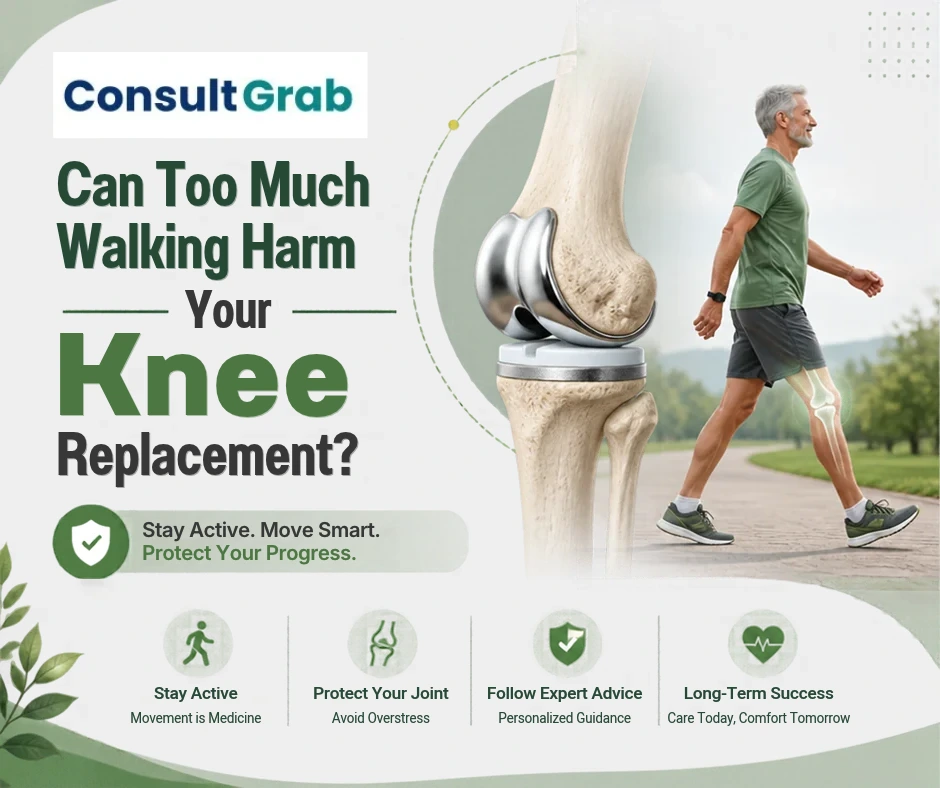
- Walking is perfectly okay for most people with a knee replacement.
- Excessive high-stress activity can harm a knee replacement, but normal walking is much gentler.
- A pain flare-up after walking does not mean your new knee is damaged.
- The goal is to find a comfortable middle level of walking that builds strength without setting you back.
Need Expert Medical Guidance? Talk to a Specialist Today
Table of Contents
ToggleShare your details and our care team will call you back with the right specialist and clear next steps.
What Is a Knee Replacement (Prosthetic)?
• A knee replacement is surgery that puts an artificial joint, called a prosthetic, in your knee.
• It is usually done for severe knee pain, arthritis, or joint damage.
• Over time, too much stress can loosen the prosthetic.
• A loose prosthetic may need another operation, called a revision surgery.
Read More: Knee Replacement Risks & Complications
Can You Do Too Much Activity After Knee Replacement?
Yes, excessive activity can harm a knee replacement.
- Some activities put a lot of stress and strain through the new joint.
- Over time, this can break down the knee replacement.
- It can also raise the risk of the prosthetic loosening.
- Loosening can lead to revision surgery.
Which Activities Put the Most Stress on a Knee Replacement?
- Running
- Cutting and jumping movements
- Plyometrics (explosive jumping exercises)
- Excessive amounts of weight lifting
Read More: Knee Replacement Risks & Complications
Is Walking Bad for a Knee Replacement?
No. Walking is generally safe and helpful.
- Walking does put some pressure on the knee joint.
- But that force is much lower than running, jumping, or heavy lifting.
- For the vast majority of people, the benefits outweigh the risk of harm.
- Early in recovery, pain and swelling usually limit how much you can do anyway.
Why Does My Knee Hurt After Walking If It Isn't Damaged?
Pain is a warning signal, not proof of damage.
- Your body may not have adapted to that much activity yet.
- A flare-up can bring more pain, swelling, stiffness, or all three.
- This can happen after walking, hiking, biking, swimming, or gardening.
- It means your body couldn’t handle that amount right away.
What Is the Difference Between a Flare-Up and Real Damage?
- The point where symptoms start is very low.
- The point where actual damage happens is much higher.
- It takes a lot more stress to injure a knee replacement than to cause soreness.
- So a flare-up is uncomfortable, but it is not a sign of harm to the prosthetic.
Read More: Knee Replacement Risks & Complications
Need Expert Medical Guidance? Talk to a Specialist Today
Share your details and our care team will call you back with the right specialist and clear next steps.
How Do You Find a Safe Walking Level After Knee Replacement?
Adjust your walking habits until you find a comfortable level.
- If flare-ups keep happening, don’t stop walking altogether.
- Instead, look at the factors below and change them one at a time.
1. Intensity
- Are you walking briskly, or at a normal, moderate pace?
- A slower pace may reduce flare-ups.
2. Walking Surface
- Are you walking on a hard surface or a softer one?
- Softer surfaces may feel easier on the knee.
3. Footwear
- Check that your shoes are good and supportive.
4. Frequency
- Are you walking multiple miles, multiple times a day?
- Or just a couple of times a week?
- Try adjusting how often and how far you walk.
What Is the Happy Medium for Walking After Knee Replacement?
It is enough activity to get the benefits, without causing flare-ups.
- Walking should be enough to build strength and endurance.
- It should also support heart health and give you aerobic exercise.
- It shouldn’t be so intense that it triggers symptoms and sets you back.
- Some trial and error is normal.
Will I Be Able to Walk More Over Time?
Yes, most people can do more as they heal.
- Early on, you may only tolerate a little walking.
- As you recover, you will hopefully tolerate more and more.
- Your right level will change as your recovery moves forward.
How ConsultGrab Can Help With Knee Replacement
ConsultGrab connects patients with trusted medical specialists.
- We offer knee replacement consultation with orthopedic surgeons for severe knee pain, arthritis, or joint damage.
- We understand each case in detail and connect you with the right specialist.
- We explain treatment options clearly and support you through the whole process.
- Our goal is accurate guidance, transparent information, and a smooth, stress-free journey.
Read More: Knee Replacement Risks & Complications
Need Expert Medical Guidance? Talk to a Specialist Today
Share your details and our care team will call you back with the right specialist and clear next steps.
Frequently Asked Questions (FAQs)
For most people, no. Walking puts much less stress on the joint than running, jumping, or heavy lifting.
It can be. Pain, swelling, or stiffness after activity is a flare-up, not a sign of damage.
No. The level of stress needed for real damage is much higher than what causes symptoms.
Running, cutting and jumping, plyometrics, and excessive weight lifting put the most stress on it.
Look at your walking pace, surface, footwear, and how often and how far you walk.
Enough to build strength and endurance, but not so much that it causes flare-ups. This differs for each person.
Yes. Early on you may tolerate less, and the amount usually grows as you heal.
Excessive high-stress activity over time can break it down and loosen the prosthetic, which may mean revision surgery.



1 Comment
Signs You Need Knee Replacement Surgery: 5 Key Signs to Check
[…] Read More: Can Too Much Walking Harm Your Knee Replacement? […]