
Introduction
Table of Contents
ToggleFor decades, the standard treatment for muscle-invasive bladder cancer has been radical cystectomy — surgical removal of the entire bladder, followed by a new way for the body to pass urine. It’s effective, but it’s also a major, life-altering surgery.
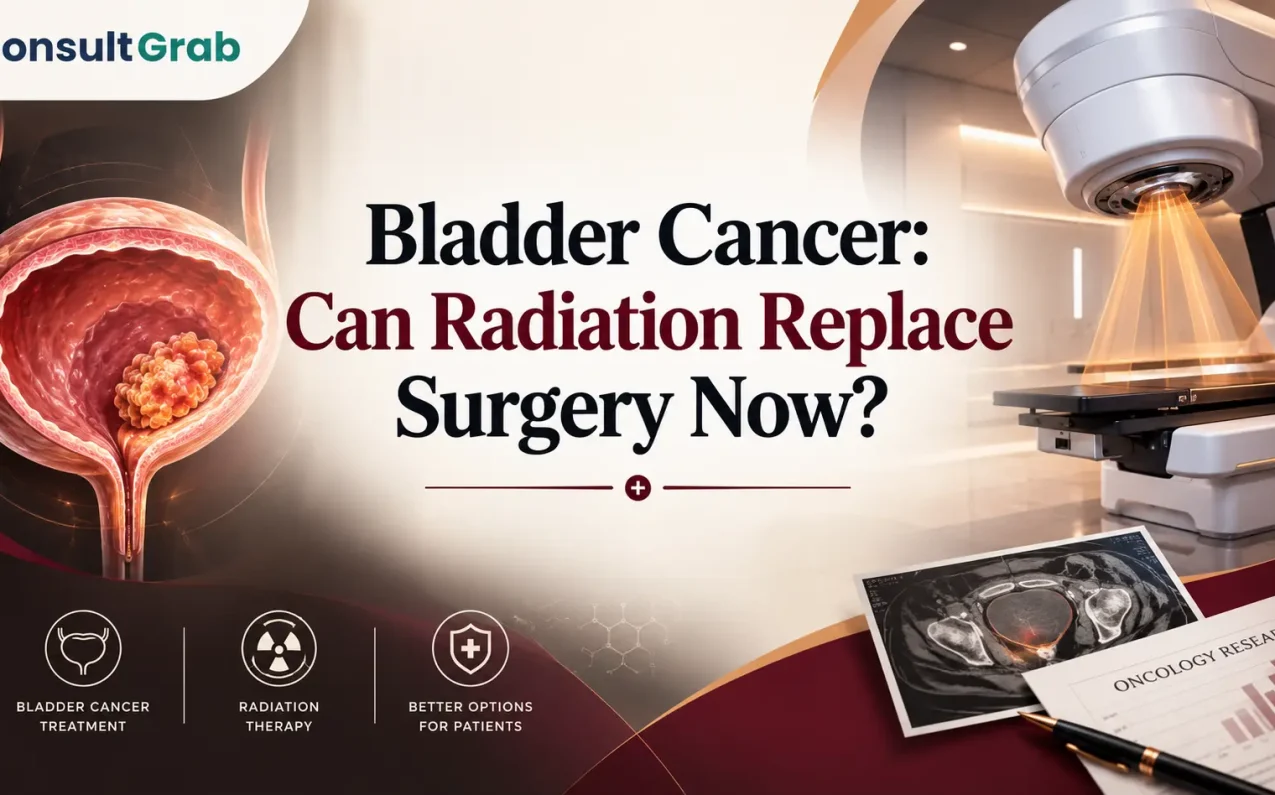
In September 2026, the American Society for Radiation Oncology (ASTRO) released its first-ever clinical guideline focused specifically on radiation therapy for bladder cancer — and it formally recognizes an alternative: keeping the bladder intact, using a combination approach called trimodal therapy.
This article explains what the new guideline says, who it may apply to, and what it means for patients facing this diagnosis.
Read More
Key Findings from the Guideline
- This is ASTRO’s first standalone clinical guideline dedicated entirely to radiation therapy’s role in bladder cancer care
- It was developed jointly with the American Society of Clinical Oncology (ASCO) and the European Association of Urology, reflecting broad medical consensus
- The central recommendation: for appropriately selected patients, bladder preservation should be presented as a curative option, alongside — not instead of — radical cystectomy
- The guideline also covers radiation’s role after surgery and in advanced or symptomatic disease, not just as a surgery alternative
How the Guideline Was Developed
- A multidisciplinary task force of radiation oncologists, urologists, and medical oncologists reviewed the existing clinical evidence on radiation therapy across all stages of bladder cancer
- The task force was co-led by Dr. Leslie K. Ballas (Cedars-Sinai) and Dr. Jason A. Efstathiou (Mass General Brigham/Harvard Medical School)
- The guideline addresses four key clinical questions: curative bladder-preserving treatment, radiation technique and dosing, radiation after bladder removal surgery, and radiation for advanced or symptomatic disease
What Does the Guideline Actually Recommend?
- Trimodal therapy is now a recognized curative alternative to bladder removal for appropriately selected patients with muscle-invasive bladder cancer (staged cT2-4aN0M0)
- “Appropriately selected” has specific criteria — favorable candidates typically have a single tumor smaller than 7 cm, a common cancer subtype (urothelial carcinoma), and no extensive pre-cancerous changes or kidney blockage
- Trimodal therapy combines three steps: maximal surgical removal of the visible tumor (without removing the bladder itself), followed by radiation therapy given alongside chemotherapy to make the radiation more effective
- Ongoing monitoring is essential — patients who choose bladder preservation need regular follow-up cystoscopy (a scope exam of the bladder) and surveillance to watch for recurrence
- Radiation also has a defined role beyond bladder preservation — including after cystectomy in certain cases, and to relieve symptoms or control disease in advanced or metastatic bladder cancer
What This Means for Patients
- This is now official, published clinical guidance — not experimental. It’s meant to directly shape how multidisciplinary cancer teams discuss treatment options with patients
- Patients with muscle-invasive bladder cancer should now expect bladder preservation to be discussed as a real option, not automatically skipped in favor of surgery
- Good to know:
- Not every patient is a good candidate — tumor size, type, and extent all matter, and this decision should be made by a multidisciplinary team
- Choosing bladder preservation means committing to long-term surveillance, since the bladder itself remains at risk for recurrence
- This guideline reflects updated consensus, but individual treatment centers may take time to formally incorporate it into their standard protocols
When to Speak With a Specialist
It’s worth raising this guideline directly with your oncology team if you or a family member:
- Has recently been diagnosed with muscle-invasive bladder cancer and hasn’t yet discussed bladder-preservation as an option
- Is currently facing a recommendation for radical cystectomy and wants to understand whether trimodal therapy might apply to their case
- Has questions about what trimodal therapy actually involves — including the combination of surgery, radiation, and chemotherapy
- Is considering a second opinion before deciding on bladder cancer treatment
A cancer diagnosis often comes with a narrow window to make major treatment decisions. Getting access to a multidisciplinary team — including a radiation oncologist, urologist, and medical oncologist — and a clear explanation of all curative options, including newer ones like this, can make a meaningful difference in the decision-making process.
Future Research and Next Steps
- Ongoing research continues to refine radiation techniques (such as adaptive radiotherapy) to better protect healthy tissue while treating the tumor
- Further data collection is expected to continue tracking long-term outcomes and recurrence rates for patients choosing bladder preservation over surgery
- Broader adoption across cancer centers — ensuring more patients are actually offered this option where appropriate — will likely be a continuing focus
Conclusion
This guideline doesn’t replace surgery as a bladder cancer treatment — it formally establishes that, for the right patients, it doesn’t have to be the only option. For anyone facing a muscle-invasive bladder cancer diagnosis, the key takeaway is simple: ask your care team whether bladder preservation through trimodal therapy is a possibility in your specific case.
Medical Disclaimer: This article is for educational purposes only and is not a substitute for professional medical advice, diagnosis, or treatment. Treatment decisions for bladder cancer should always be made with a qualified oncology team based on individual diagnosis and health status.
Frequently Asked Questions (FAQs)
Trimodal therapy is a bladder-preserving treatment combining maximal surgical removal of the visible tumor, radiation therapy, and concurrent chemotherapy. It's now recognized by ASTRO as a curative alternative to full bladder removal for appropriately selected patients.
Favorable candidates typically have muscle-invasive bladder cancer with a single tumor smaller than 7 cm, a common cancer subtype (urothelial carcinoma), and no extensive pre-cancerous changes or kidney blockage. A multidisciplinary team evaluates each case individually.
For appropriately selected patients, ASTRO's new guideline states trimodal therapy is a curative option, comparable to radical cystectomy. It requires committed long-term surveillance to monitor for recurrence, since the bladder remains in place.
Patients need regular cystoscopy (a scope examination of the bladder) and ongoing surveillance after trimodal therapy, to monitor for cancer recurrence within the preserved bladder.
Trimodal therapy has been used for years in select cases, but this September 2026 guideline is ASTRO's first formal, standalone clinical guideline establishing it as a recognized curative option — giving cancer teams clearer, evidence-based direction on patient selection.
Original Research Source
This article is based on findings from a newly published clinical guideline and related medical coverage.
Primary Research: ASTRO Clinical Guideline — Radiation Therapy for Bladder Cancer, published in Practical Radiation Oncology (September 2026)
Media Coverage: ASTRO Press Release / EurekAlert · Radiology Business
The content has been independently rewritten, analyzed, and simplified for educational purposes to help patients and families better understand this guidance.