

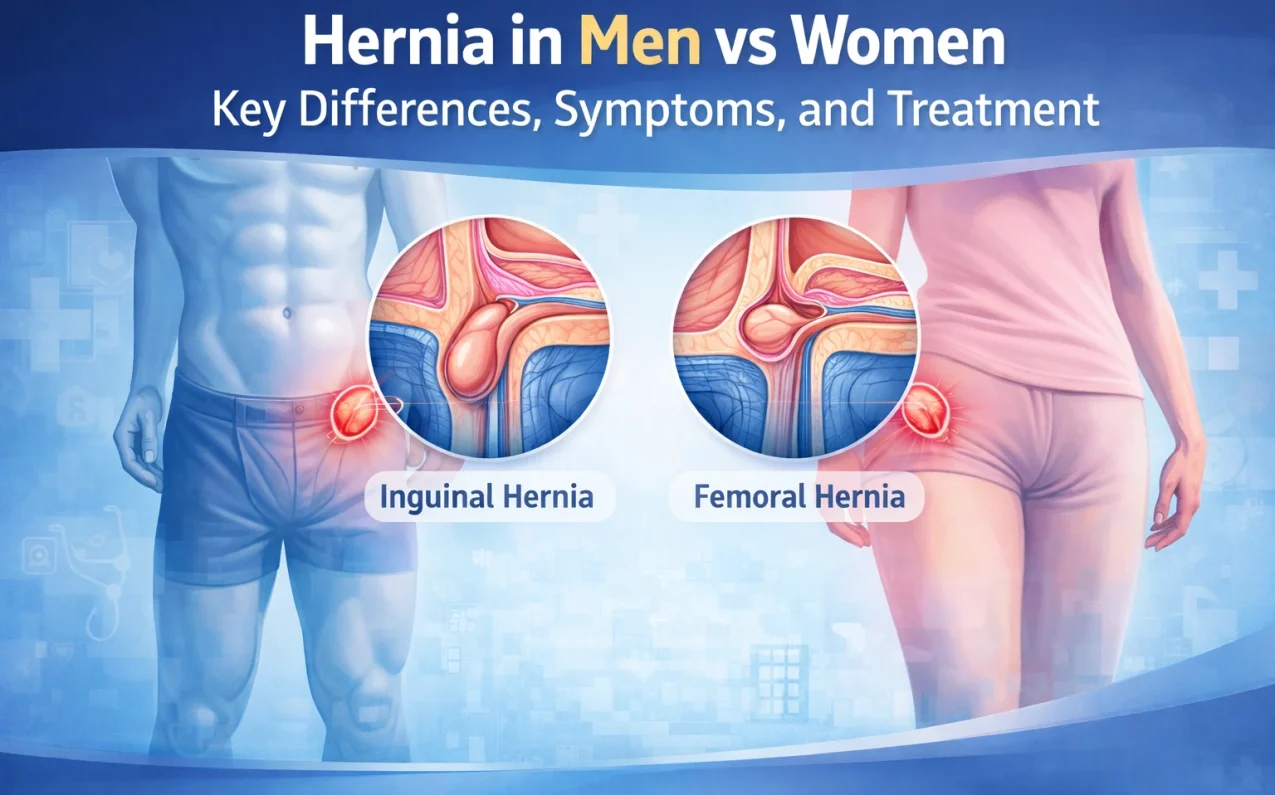
Hernia in men vs women is an important medical topic because the condition affects both genders differently in terms of symptoms, diagnosis, and risk level. Many people ignore early signs, assuming it is a minor issue that will resolve on its own.
A hernia develops when an internal organ or fatty tissue pushes through a weak spot in the surrounding muscle wall. This condition is most commonly seen in the abdomen or groin area and often appears as a visible bulge.
Although hernias may start without severe pain, they usually worsen over time. Understanding the differences between hernia in men and women can help in early diagnosis, timely treatment, and prevention of complications.
Understanding hernia in men vs women helps patients identify symptoms early and choose the right treatment approach.
What is Hernia?
Table of Contents
Toggle
A hernia occurs when there is a weakness or tear in the muscle wall. This weakness allows internal tissues, such as part of the intestine, to push outward and form a lump.
In many cases, the bulge becomes more noticeable when standing, coughing, or lifting heavy objects. It may temporarily disappear when lying down, which often causes people to ignore it.
Hernias are progressive in nature. This means they tend to grow larger and more painful over time if not treated. They do not heal naturally because the underlying muscle weakness remains.
Early Signs and Symptoms of Hernia
The early signs and symptoms of hernia can vary depending on the type and severity of the condition. However, some common symptoms are seen in most patients.
A visible hernia bulge in the abdomen or groin is the most noticeable symptom. This bulge may become more prominent during physical activity or straining.
Many patients experience mild hernia pain or discomfort, especially while lifting heavy objects, bending, or coughing. The pain is often described as a dull ache or burning sensation.
Some people feel a sense of heaviness or pressure in the abdomen. This feeling may worsen throughout the day and improve with rest.
In certain cases, especially in women, the symptoms may not be clearly visible. This can make early detection more difficult.
Warning Signs You Should Not Ignore
While some hernias remain mild, others can suddenly become serious. Recognizing warning signs is crucial for preventing complications.
Severe and sudden pain is one of the most important warning signs. It may indicate that the hernia has become trapped.
Nausea, vomiting, and inability to pass gas or stool can also occur. These symptoms suggest a blockage in the intestine.
The bulge may become hard, tender, or discolored. If it turns red or purple, it may indicate reduced blood supply.
In such cases, immediate medical attention is required. Delaying treatment can lead to life-threatening complications.
Hernia in Men vs Women
Hernia in men vs women shows clear differences due to anatomical structure, hormonal factors, and lifestyle habits. These differences affect how the condition develops and how it is diagnosed.
In men, hernia is more common and usually easier to detect. The symptoms are often visible and straightforward.
In women, hernia is less common but more complex. They may not present with a clear bulge, making diagnosis more challenging.
These differences highlight the importance of gender-specific awareness when identifying and treating hernia.
The anatomical difference in the pelvic and groin region plays a major role in how hernia develops in men and women. This also affects the risk of complications and treatment outcomes.
Key Differences Between Hernia in Men and Women
| Factor | Hernia in Men | Hernia in Women |
|---|---|---|
| Occurrence | More common | Less common |
| Common Type | Inguinal hernia | Femoral hernia |
| Visibility | Clearly visible bulge | Often hidden |
| Symptoms | Groin swelling, pain during activity | Pelvic discomfort, vague pain |
| Diagnosis | Easier | Often delayed |
| Risk Level | Moderate | Higher complication risk |
| Causes | Physical strain, heavy lifting | Pregnancy, hormonal changes |
| Complications | Lower risk | Higher risk, especially strangulation |
Hernia in Men
Hernia in men is most commonly seen as inguinal hernia, which develops in the groin region. This type occurs due to a natural weakness in the abdominal wall.
Men are more likely to develop hernia because of the structure of the inguinal canal. This area is more prone to weakness and pressure.
Heavy lifting, physical labor, and chronic coughing are common contributing factors. These activities increase pressure on the abdominal wall.
Symptoms in men are usually easy to identify. A visible lump and discomfort during movement are common signs.
Hernia in Women
Hernia in women is less common but can be more serious due to delayed diagnosis. Femoral hernia is the most common type seen in women.
This type occurs near the upper thigh and is often not visible externally. As a result, symptoms may be vague and confusing.
Women may experience deep pelvic pain or discomfort. These symptoms are sometimes mistaken for gynecological problems.
Pregnancy and childbirth increase the risk of hernia in women. Hormonal changes also weaken the abdominal muscles.
Types of Hernia
There are several types of hernia based on their location and cause. Each type has unique characteristics and risk levels.
Inguinal hernia is the most common type and mainly affects men. It occurs in the groin area.
Femoral hernia is more common in women and occurs near the upper thigh. It carries a higher risk of complications.
Umbilical hernia appears around the belly button. It is often seen in infants and pregnant women.
Hiatal hernia occurs when part of the stomach moves into the chest. It can cause acid reflux and heartburn.
Incisional hernia develops at the site of a previous surgery. It can affect both men and women.
Causes of Hernia
Hernia develops due to a combination of muscle weakness and increased internal pressure. Over time, this pressure forces tissues outward.
Heavy lifting is one of the most common causes of hernia. Repeated strain weakens the abdominal muscles.
Chronic coughing or sneezing also increases pressure. This is often seen in smokers or people with respiratory issues.
Constipation and straining during bowel movements contribute to hernia formation. Obesity further increases the risk.
In women, pregnancy puts additional pressure on the abdominal wall. This makes them more susceptible to hernia.
Risk Factors in Men vs Women
Men are at higher risk of hernia due to natural structural weakness in the groin area. Physical labor and heavy lifting increase this risk.
Women are more vulnerable during pregnancy and after childbirth. Hormonal changes also affect muscle strength.
Age is another important factor. As people grow older, muscles naturally weaken, increasing the risk of hernia.
Lifestyle habits such as poor diet, lack of exercise, and smoking increase the risk in both men and women.
How is Hernia Diagnosed?
Hernia diagnosis usually begins with a physical examination. Doctors check for a bulge while the patient stands or coughs.
In some cases, imaging tests are required to confirm the diagnosis. Ultrasound is commonly used for initial evaluation.
CT scans and MRI provide detailed images of the affected area. These tests are especially useful for detecting hidden hernias.
Early diagnosis helps prevent complications and ensures timely hernia treatment.
Can Hernia Heal Without Surgery?
A common question among patients is whether hernia can heal without surgery. The answer is no.
Hernias do not heal naturally because the muscle weakness remains. Over time, the condition may worsen.
Lifestyle changes can help manage symptoms. Avoiding heavy lifting and maintaining a healthy weight can reduce discomfort.
However, hernia treatment through surgery is the only permanent solution.
What Happens If Hernia is Left Untreated?
Ignoring a hernia can lead to serious complications. The condition may worsen gradually or suddenly.
An incarcerated hernia occurs when it becomes trapped. It cannot be pushed back into place.
A strangulated hernia is more dangerous because blood supply to the tissue is cut off.
This condition is a medical emergency and requires immediate surgery. Delay in treatment can be life-threatening.
Is Hernia Dangerous?
In the early stages, hernia may not seem dangerous. Many people live with mild symptoms for years.
However, the risk increases if the hernia grows larger or becomes painful. Complications can develop without warning.
Early hernia treatment significantly reduces these risks. Consulting a doctor at the right time is essential.
Hernia Treatment Options
Treatment depends on the size, type, and severity of the hernia. Doctors may recommend different approaches.
Small and painless hernias may be monitored over time through watchful waiting.
Medications can help manage symptoms, especially in hiatal hernia, but they do not cure the condition.
Surgery is the most effective hernia treatment. It repairs the weak muscle and prevents recurrence.
Open surgery and laparoscopic surgery are commonly used techniques. Recovery time varies based on the method used.
Prevention Tips
Although hernia cannot always be prevented, certain steps can reduce the risk.
Maintaining a healthy weight reduces pressure on abdominal muscles. Regular exercise strengthens the core.
A fiber-rich diet prevents constipation and reduces strain during bowel movements.
Avoid lifting heavy objects without proper technique. Quitting smoking also helps reduce the risk of hernia.
Conclusion
Hernia in men vs women shows clear differences in symptoms, causes, and risk levels. Men are more likely to experience visible hernias.
Women often face hidden and complex cases, which makes early diagnosis more difficult.
Understanding hernia symptoms, causes, and treatment is essential for timely care. Seeking medical attention early can prevent serious complications and improve overall quality of life.