

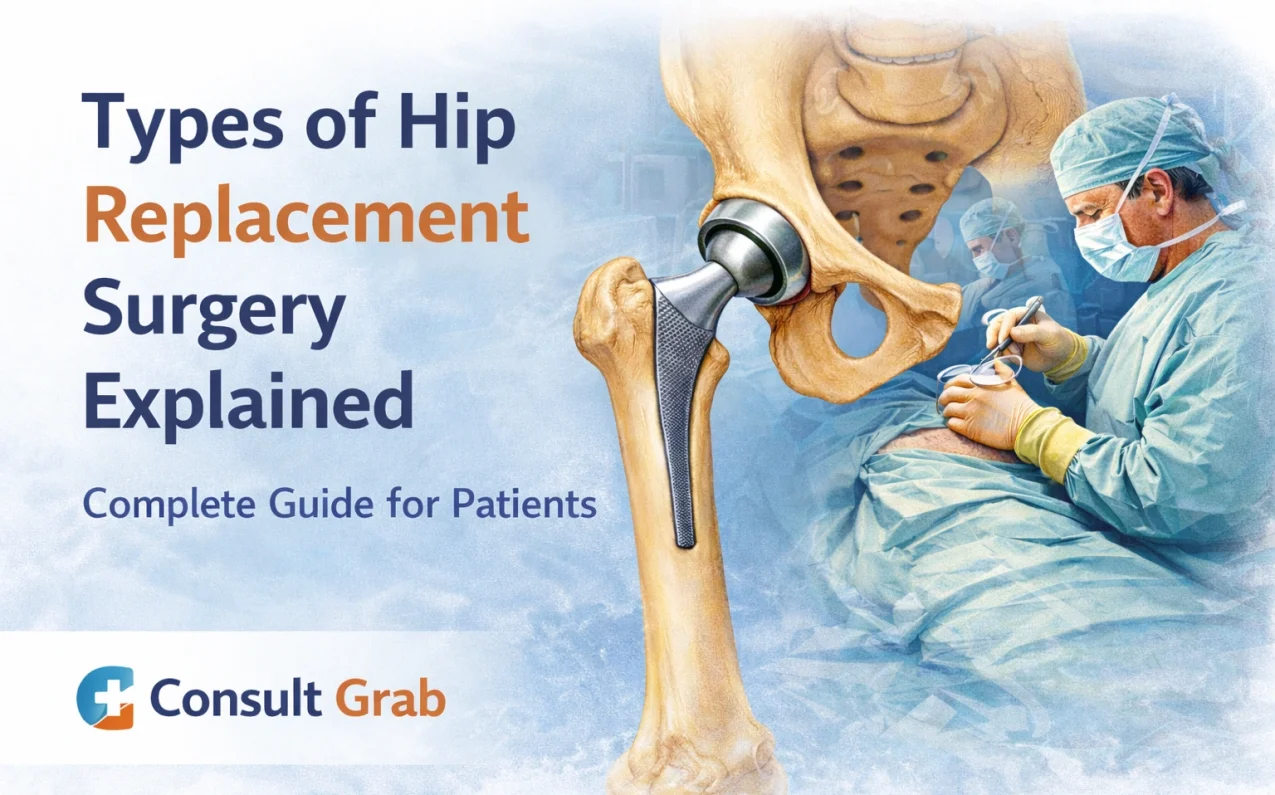
Hip pain is a common problem faced by many as they age. Sometimes, hip pain may begin as a slight pain when walking, climbing stairs, or when you sit for long periods of time. After some time, the pain may become so severe that it affects your life as a whole. After trying medicines, physiotherapy, and changing your lifestyle, if you still do not get relief, you may need to opt for hip replacement surgery.
Hip replacement surgery is a new medical science that helps you get relief from hip pain and also helps you improve your movements. But when you are told that you need hip replacement surgery, you may get confused when you are told that there are many types of hip replacement surgery available. Therefore, it is essential for you to understand the types of hip replacement surgery so that you may make the best medical decision for yourself.
In this guide, you will get to know about the types of hip replacement surgery explained in simple and easy words. Also, you will get to know how Consult Grab helps you get the best hospital and medical expert for your treatment at affordable prices.
What is hip replacement surgery?
Table of Contents
ToggleHip replacement surgery is a medical procedure by which a damaged hip joint is replaced by an artificial joint, known as a prosthetic. The hip is a ball-and-socket joint; the ball is the femur’s end, and the socket is part of the pelvis.
Conditions such as arthritis, injuries, and old age damage the joint, leading to pain and stiffness. During the surgery, the damaged parts of the joint are replaced by artificial parts made of plastic, ceramic, and metal.
The main aims of hip replacement surgery are to:
- Reduce pain
- Improve movement and flexibility
- Help patients walk and do their daily activities easily
- Improve quality of life
Thousands of people have this surgery, and they get excellent results.
Why Do People Need Hip Replacement Surgery?
There are various medical conditions that affect the hip joint. Some of the common medical conditions that affect the hip joint include:
Osteoarthritis
- This is the most common cause of hip replacement surgery. Osteoarthritis is a condition that occurs when the cartilages that protect the joint wear out, leading to pain and stiffness in the joint.
Rheumatoid Arthritis
- This is a medical condition that occurs when the immune system fails to protect the joint, leading to pain in the joint, which can affect the hip joint.
Hip Fractures
- Severe injury or fracture in the hip region can cause the joint to be damaged, leading to replacement surgery, especially when the joint cannot heal naturally.
Avascular Necrosis
- This is a medical condition that occurs when the blood supply to the hip bone is reduced, leading to damage to the bone.
Hip Deformities
- There are some people who are born with some deformities in the hip region, which can cause problems in the future, leading to surgery.
- When these problems become severe, surgery is the best option, especially when other forms of medication do not work.
Types of Hip Replacement Surgery Explained
There are various forms of hip replacement surgery, and the best one is based on the condition of the patient, their age, their lifestyle, and their bone health. The following are the most common forms of hip replacement surgery, briefly discussed:
1. Total Hip Replacement (THR)
Total hip replacement is the most common and widely performed hip surgery in the world.
In this type of surgery, both parts of the hip joint are replaced:
- The Ball of the Femur
- The Socket of the Pelvis
Benefits of Total Hip Replacement
- Long-lasting pain relief
- Improved mobility
- High success rate
- Long-lasting implants (15–20 years or more)
Most people suffering from severe arthritis or damaged joints undergo total hip replacement surgery.
2. Partial Hip Replacement (Hemiarthroplasty)
Partial hip replacement is a form of hip replacement surgery in which only the ball of the hip is replaced, with the natural socket remaining intact.
This type of surgery is usually recommended for those who suffer from hip fractures, particularly elderly patients.
Key Features
- Only the femoral head is replaced
- The socket is natural
- It is less complicated compared to total hip replacement
Benefits
- The time taken for surgery is reduced
- The recovery time is also reduced
- It is effective for those who suffer from fractures
3. Hip Resurfacing Surgery
Hip resurfacing is an alternative to hip replacement surgery, mostly recommended to younger and more active individuals.
The surgeon does not remove the femoral head completely; rather, it is trimmed and then covered with a smooth metal cap. The socket is also lined with a metal cup.
The advantages of hip resurfacing include:
- More natural bone preservation
- Recommended for younger individuals
- Less chance of dislocation
However, this type of surgery is not recommended for everyone; people with weaker bones, which may be due to conditions like osteoporosis (a disease that weakens bones), should avoid it.
4. Minimally Invasive Hip Replacement
Minimally invasive hip replacement is a type of hip replacement surgery that uses smaller incision sizes than other surgeries.
The process of replacing the hip joint occurs through the use of special equipment and techniques.
Benefits
- Less scarring
- Less blood lost
- Less pain after the surgery
- Less recovery time
However, the decision to have minimally invasive hip replacement depends on the structure of the patient’s body and the bones.
5. Revision Hip Replacement Surgery
Sometimes, the hip implant can fail after several years of use. At this point, the patient undergoes surgery to replace the hip implant.
The process of revision hip replacement surgery involves replacing the implant with another new one.
Reasons for Revision Surgery
- Wear or looseness of the implant
- Presence of infection in the hip
- Dislocation of the implant
- Damaging the bones around the implant
Revision hip replacement is said to be more complex than the original surgery, but the introduction of new technology has made the process easier.
How to Choose the Right Type of Hip Replacement Surgery?
There are a number of factors that need to be considered while choosing the right type of surgery:
- Patient’s age
- Strength of the bones
- Damage level
- Lifestyle
- Medical history
A professional orthopedic surgeon would assess the condition of the patient and suggest the best course of action.
This is where Consult Grab can assist the patients in a better way.
How Consult Grab Assists You in Picking the Best Hip Replacement Surgery
Selecting the best hospital and doctor for your surgery is a challenging task, and many people face this issue during their medical treatment.
This is where Consult Grab steps in to become your best medical partner.
Consult Grab is a platform that helps the patient in the following ways:
- It helps the patient connect with the best hospital and experienced surgeons.
- It offers the best healthcare solution at a low cost.
- It helps the patient make the best decisions through transparency, such as providing clear information about treatment options, costs, and potential outcomes.
- It ensures the patient receives the best treatment with safety, which includes thorough evaluations and adherence to medical guidelines to minimize risks.
Patients prefer Consult Grab because it offers the best medical treatment at the minimum charges compared to other hospitals, which allows them to access high-quality care without financial strain.
Our goal is simple:
Our goal is to assist patients in making the right medical decision without any confusion, while also providing an explanation of all the available types of hip replacement surgery.
We help connect you with trusted hospitals and specialists, so you get safe, state-of-the-art, and affordable medical care.
Whether it is guidance, hospital information, or cost, Consult Grab is here to make your medical journey easier and stress-free.

Benefits of Hip Replacement Surgery
Hip replacement surgery has improved the lives of millions of people around the globe.
Some of the major benefits of hip replacement surgery include:
Pain Relief
Most of the patients who undergo hip replacement surgery find relief from pain.
Improved Mobility
It is easier to walk and climb stairs after the surgery.
Better Quality of Life
Patients are able to lead a normal life after the surgery.
Long-Lasting
The new hip replacement components last for as long as 15 to 25 years or more if proper care is taken.
Recovery After Hip Replacement Surgery
Recovery is an essential aspect of a successful hip replacement surgery.
Stay in the hospital.
The hospital stay is usually between 2 and 4 days.
Walking After the Surgery
Patients can start walking with support within 24 to 48 hours.
Physiotherapy
Physiotherapy is essential to strengthen the hip muscles and facilitate movement.
Full Recovery
Patients usually recover within 3 to 6 months.
It is essential to adhere to the doctor’s advice during the recovery period to ensure optimal healing and to minimize the risk of complications.
Risks of Hip Replacement Surgery
While hip replacement surgery is extremely safe, as with all forms of surgery, there are some associated risks.
The possible complications of hip replacement surgery include:
- Infection
- Blood clots
- Loosening of the implant
- Dislocation
- Nerve injury
However, all of these complications are rare if the surgery is performed by experienced specialists in well-equipped hospitals.
Why Choosing the Right Healthcare Platform Matters
Patients often find it challenging to find the right doctor, hospitals, and cost of treatment.
Platforms like Consult Grab make the process easier for patients.
Instead of running from one hospital to another and searching for information online, patients can find trusted information in one place.
This helps patients save time, avoid confusion, and obtain the best treatment at affordable prices.
Conclusion
Hip replacement is a life-changing surgery for those who are experiencing extreme pain and damage to the hip joint. Thanks to advanced medical technology, it is possible for anyone to lead a normal life again, as many patients report significant pain relief and improved mobility after the procedure.
Types of Hip Replacement Surgery Explained
The above information helps those who want to make the best possible decisions regarding their health. The types of hip replacement surgery include:
- Total Hip Replacement
- Partial Hip Replacement
- Hip Resurfacing Surgery
- Minimally Invasive Hip Replacement
- Revision Hip Replacement
All of these surgeries are for patients with specific medical conditions, and a qualified medical professional should always choose the best one.
Consult Grab is a platform that helps those who want to get the best medical services with the help of trusted medical experts and hospitals, as they offer safe, advanced, and affordable medical services.
If you or your loved ones want to get hip-replacement surgery, then you need to make the best possible decisions with the help of experts.
Disclaimer
This article is created for informational purposes only. Some information in this content is generated and collected from various sources available on the internet. It should not be considered as medical advice. Always consult a qualified healthcare professional or doctor for proper diagnosis and treatment.