

Last Updated: November 2026
Do I Really Need a Knee Replacement?
Table of Contents
Togglenot always. Knee pain alone does not mean you need surgery.
- The decision depends on your pain, daily activity, treatments tried, knee shape, and X-ray, all taken together.
- Many people fear knee replacement. Knowing the signs helps you decide calmly.
- Do not ignore knee pain. Get it checked by an orthopedic surgeon (a bone and joint specialist).
Need Expert Medical Guidance? Talk to a Specialist Today
Share your details and our care team will call you back with the right specialist and clear next steps.
What Else Can Cause Knee Pain?
Knee pain has many causes, and most are not a reason for surgery.
- An old injury
- A ligament sprain (a stretched or torn band that holds the joint together)
- An early meniscus injury (damage to the cushion inside the knee)
- Pain coming from the hip but felt in the knee
Find out why your knee hurts before thinking about replacement.
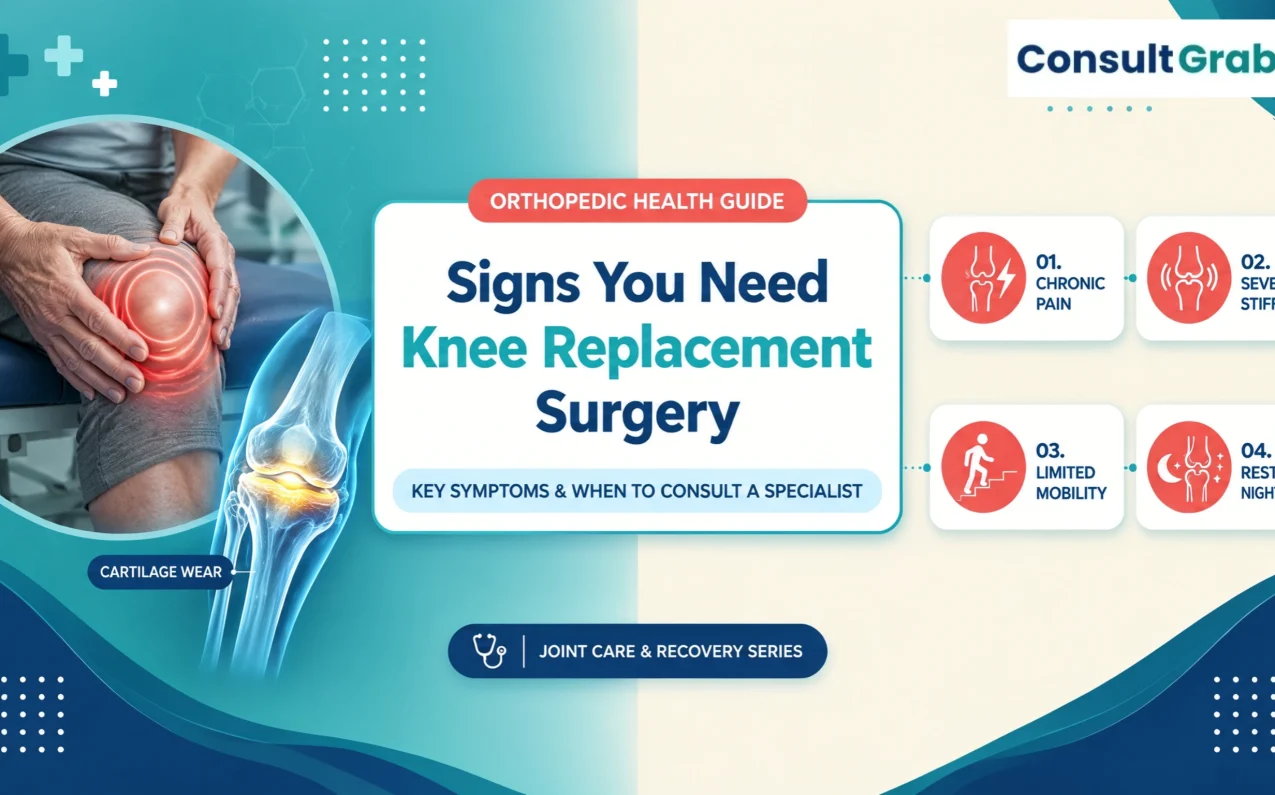
What Are the 5 Signs You Need Knee Replacement Surgery?
You should seriously consider surgery when most of these five signs are present together.
Sign 1: Constant knee pain that limits movement
- Pain that does not go away
- Trouble walking freely
- Difficulty climbing stairs
- Difficulty standing up from a sitting position
- A walking distance that keeps getting shorter
Sign 2: Daily life has become much harder
- Routine activities have dropped sharply
- Simple tasks at home or outside now feel difficult
Sign 3: Non-surgical treatment has not worked
Non-surgical treatment means care without an operation. If you have tried all of these and the pain still has not eased, surgery may be the next step:
- Physiotherapy
- Weight reduction
- Anti-inflammatory medicines (pain and swelling relievers)
Supplements - Knee injections
Sign 4: Your knee is changing shape
- Bowing: the knees curve outward, like a bow
- Knocking: the knees bend inward and touch
- This usually shows the damage is getting worse
Sign 5: The X-ray shows advanced arthritis
Arthritis means wear and swelling in the joint. Look for these on the X-ray:
- Bone touching bone (“bone on bone”)
- Less space in the joint
Read More: Is Knee Replacement Surgery Safe?
Need Expert Medical Guidance? Talk to a Specialist Today
Share your details and our care team will call you back with the right specialist and clear next steps.
Why Does Surgery Help When These Signs Appear?
It can improve your knee alignment and help you move better.
- The knee is put back into a better position.
- After the operation, patients can expect better movement.
Does Every Arthritis Patient Need Knee Replacement?
No. It depends on how advanced the arthritis is: mild, moderate, or severe.
What if arthritis is mild or moderate?
- It can often be managed without surgery.
- Options include medicines, supplements, injections, weight reduction, and physiotherapy.
What if arthritis is severe?
- Surgery becomes a stronger option, especially when other signs on this list are also present.
Is Age a Factor in Knee Replacement?
No. Age alone does not decide whether you need knee replacement.
- A person in their mid-50s may not need it.
- A person under 50 may still benefit if they have severe pain, trouble walking and climbing stairs, reduced daily activity, and severe arthritis on X-ray.
- Your condition matters more than your age.
What Is Robotic Knee Replacement?
It is surgery where advanced robotic technology assists the surgeon. The robot does not perform the surgery on its own.
Who is in control?
- The surgeon leads the entire operation.
- The technology supports the surgeon.
How does the robot help?
- Planning the surgery
- Cutting the bone
- Balancing the ligaments
- Getting the knee alignment right
- Fixing the implant (the artificial joint part) in place
What is the benefit?
- More precision for the patient
- A better chance of a good outcome
- No need to fear the surgery because it is robotic
Read More: What are the do’s and don’ts after a knee replacement surgery
How Do Doctors Decide If You Need Knee Replacement?
They look at all factors together, never just one.
- Your pain level
- Your age
- How severe the arthritis is
- A physical examination of your knee
- An X-ray
- Your daily physical activities Together, these help plan the right treatment for you.
How Can ConsultGrab Help With Knee Pain Decisions?
ConsultGrab connects patients with orthopedic surgeons for severe knee pain, arthritis, or joint damage.
- We understand your case in detail.
- We connect you with the right specialist.
- We explain your treatment options clearly.
- We support you through the whole process, so you never feel alone.
Read More: How to Sleep After Total Knee Replacement Our focus is accurate guidance, transparent information, and a smooth, stress-free journey.
Need Expert Medical Guidance? Talk to a Specialist Today
Share your details and our care team will call you back with the right specialist and clear next steps.
Frequently Asked Questions
No. Knee pain can come from an old injury, a ligament sprain, a meniscus injury, or even the hip.
Constant pain with limited movement, reduced daily activity, failed non-surgical treatment, knee bowing or knocking, and advanced arthritis on X-ray.
When several of these signs appear together and other treatments have not eased your pain.
Yes. Mild or moderate arthritis can often be managed with medicines, supplements, injections, weight reduction, and physiotherapy.
It means the joint space has shrunk and the bones are touching, a sign of advanced arthritis.
Not necessarily. Age alone does not decide it. Severe pain, trouble moving, and severe arthritis on X-ray matter more.
No. The surgeon performs the surgery. The robot only assists with planning, bone cutting, ligament balancing, alignment, and implant fixing.
It adds precision and can help achieve a better outcome.
It usually shows the damage in the knee is getting worse.
No. Get a clinical examination and an X-ray so the cause is found early.