

Introduction
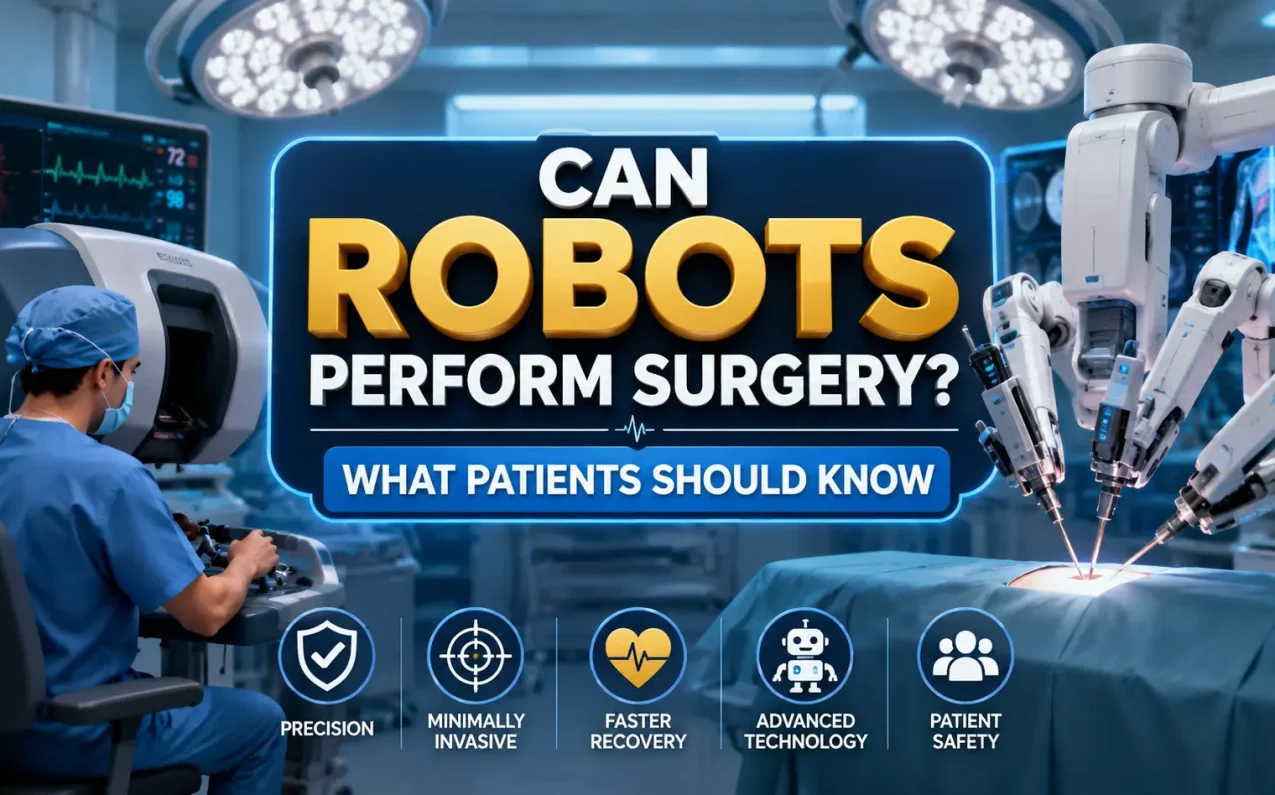
The idea of a robot performing surgery may sound like science fiction, but researchers in the United States have now made it a reality. For the first time, humanoid robots successfully completed two live gallbladder removal procedures — not on human patients, but on animals in a controlled research setting. While this milestone is still far from everyday clinical use, it raises important questions for patients everywhere, including those in India who are planning surgical treatment. Understanding what this technology can and cannot do today helps patients make informed decisions about their own care.
How the Study Was Conducted
Table of Contents
ToggleThe research team modified commercially available Unitree G1 humanoid robots, each standing approximately five feet tall and weighing around 60 pounds, adding adapters so the machines could grip standard laparoscopic instruments. This is dramatically lighter and more compact than conventional surgical robots, which can weigh close to 1,800 pounds and require significant hospital infrastructure to install.
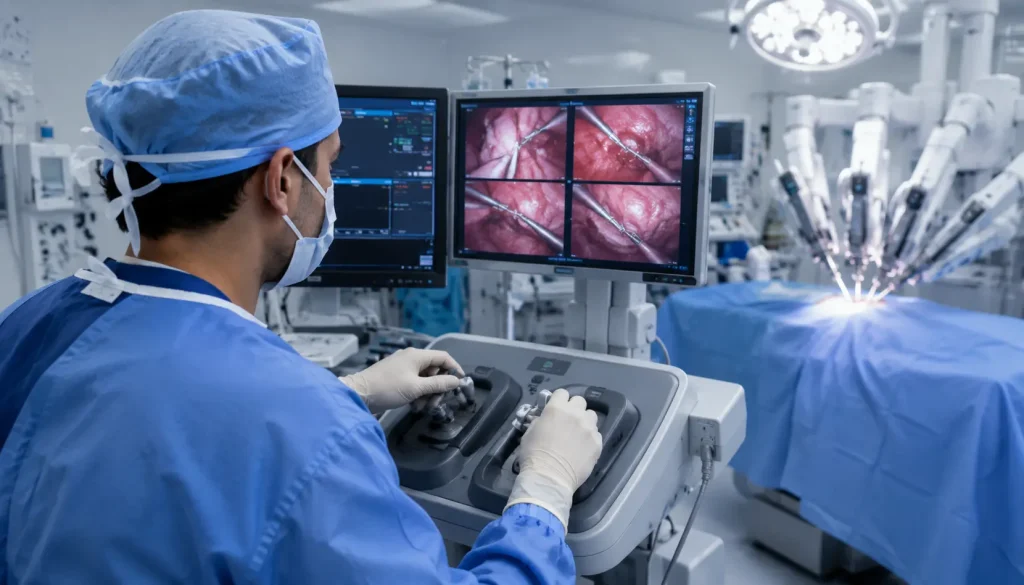
Surgeons controlled the robots from a remote console. The robots then replicated those movements at the operating table. The procedures involved delicate surgical tasks including moving tissue, dissecting around the gallbladder, placing surgical clips, and completing the removal. The trial was designed as a proof of concept — to determine whether a general-purpose humanoid robot could physically handle standard surgical tools well enough to complete an operation.
What Researchers Discovered
The robots successfully completed both procedures, demonstrating that humanoid machines can operate within a standard surgical environment using existing tools. However, the research team also encountered clear challenges that must be resolved before this technology could be considered for use on human patients.
Researchers had to recalibrate the robots several times during surgery, and the operations took considerably longer than procedures performed with established surgical systems. Latency — the delay between a surgeon’s movement at the control console and the robot’s response at the operating table — also emerged as a critical concern. Even a fraction of a second’s delay could affect surgical precision, particularly during delicate procedures.
The study was published in the journal Nature, lending significant scientific credibility to the findings.
What This Means for Patients
This research is early-stage and was conducted on animals, not humans. Patients should not expect humanoid robot-assisted surgery to be available at hospitals in the near future. However, the study does carry important longer-term implications.
Who may eventually benefit:
- Patients in rural or remote areas who currently lack access to specialist surgeons
- Patients requiring minimally invasive procedures where robotic precision is advantageous
- Patients in regions with surgical workforce shortages
What remains early-stage:
- The robots required recalibration mid-procedure
- Procedure times were significantly longer than standard
- Communication latency remains an unsolved technical challenge
What is already in clinical use:
Traditional robotic surgery systems — such as those used for prostate, gynaecological, and certain orthopaedic procedures — are already well-established in leading hospitals. These are not humanoid robots but purpose-built surgical platforms with decades of clinical validation.
For patients currently planning surgery in India, the most important consideration remains selecting a qualified surgeon at a reputable, well-equipped hospital — not waiting for emerging technologies that are still years away from clinical readiness.
When to Speak With a Specialist
If you are planning a surgical procedure and want to understand whether robotic-assisted surgery is appropriate for your specific condition, speaking with a qualified specialist is essential. Relevant situations include:
- You have been advised to undergo minimally invasive surgery and want to understand your options
- You are seeking a second opinion on your treatment plan
- You want to compare surgical approaches across different hospitals
- You have concerns about access to specialist care in your city or region
Patients navigating complex treatment decisions often benefit from structured guidance. ConsultGrab supports patients by connecting them with verified specialists, assisting with appointment booking, and providing transparent information to help families make confident, informed choices — without confusion or unnecessary delay.
Future Research and Next Steps
Researchers eventually aim to develop what they describe as an autonomous surgical assistant — a robot capable of recognizing which instrument a surgeon needs, or completing a limited task under human supervision. However, this remains a long-term research goal rather than an immediate development.
Before human trials can be considered, researchers must improve robotic reliability, reduce latency, demonstrate consistent performance across many repeated procedures, and establish clear safety and accountability frameworks. Cybersecurity for remotely operated surgical systems is also an open challenge — any connection between a surgeon and a remote robot must be protected against interference.

Conclusion
Humanoid robots completing live surgery is a genuine scientific milestone. It demonstrates that general-purpose machines can work within a standard operating room using existing tools — something that was not previously proven. However, the gap between a successful animal trial and routine clinical use in human patients is significant. Patients planning surgical treatment today should focus on accessing qualified surgeons and reputable hospitals rather than waiting for emerging technologies. The future of robotic surgery is promising, but the present standard of care remains human expertise supported by proven medical infrastructure.
Can robots perform surgery on their own?
Currently, no robot performs surgery independently on human patients. In recent research, humanoid robots completed gallbladder procedures on animals under full remote control by human surgeons. The robots copied the surgeon's movements but made no medical decisions. Fully autonomous surgical robots for human use remain a long-term research goal, not a present clinical reality.
Yes. Traditional robotic surgery systems are available at select advanced hospitals in India, particularly in major cities including Delhi. These are purpose-built surgical platforms used for procedures such as prostate surgery, gynaecological surgery, and certain cancer-related operations. They differ significantly from the experimental humanoid robots described in this research.
For certain procedures, robotic-assisted surgery offers advantages including greater precision, smaller incisions, reduced blood loss, and faster recovery. However, safety depends on the specific procedure, the surgeon's experience, and the hospital's infrastructure. Patients should discuss the benefits and risks of any surgical approach with a qualified specialist.
Laparoscopic surgery is a minimally invasive surgical technique where a surgeon makes small incisions and uses a camera and thin instruments to operate inside the body. It is commonly used for gallbladder removal, hernia repair, and various abdominal procedures. Recovery times are generally shorter than with open surgery.
Based on current research, humanoid robot surgery on human patients is likely many years away. Researchers must first resolve issues including recalibration requirements, procedure duration, communication latency, and cybersecurity. Extensive human trials with strict regulatory approval would also be required before clinical adoption.
Original Research Source
This article is based on findings from a scientific research study and related media reporting.
Primary Research: Published in Nature (July 2026) — UC San Diego Jacobs School of Engineering
Media Coverage: https://www.foxnews.com/tech/humanoid-robots-perform-live-surgery-world-first
The content has been independently rewritten, analyzed, and simplified for educational purposes to help patients and families better understand the research findings.