

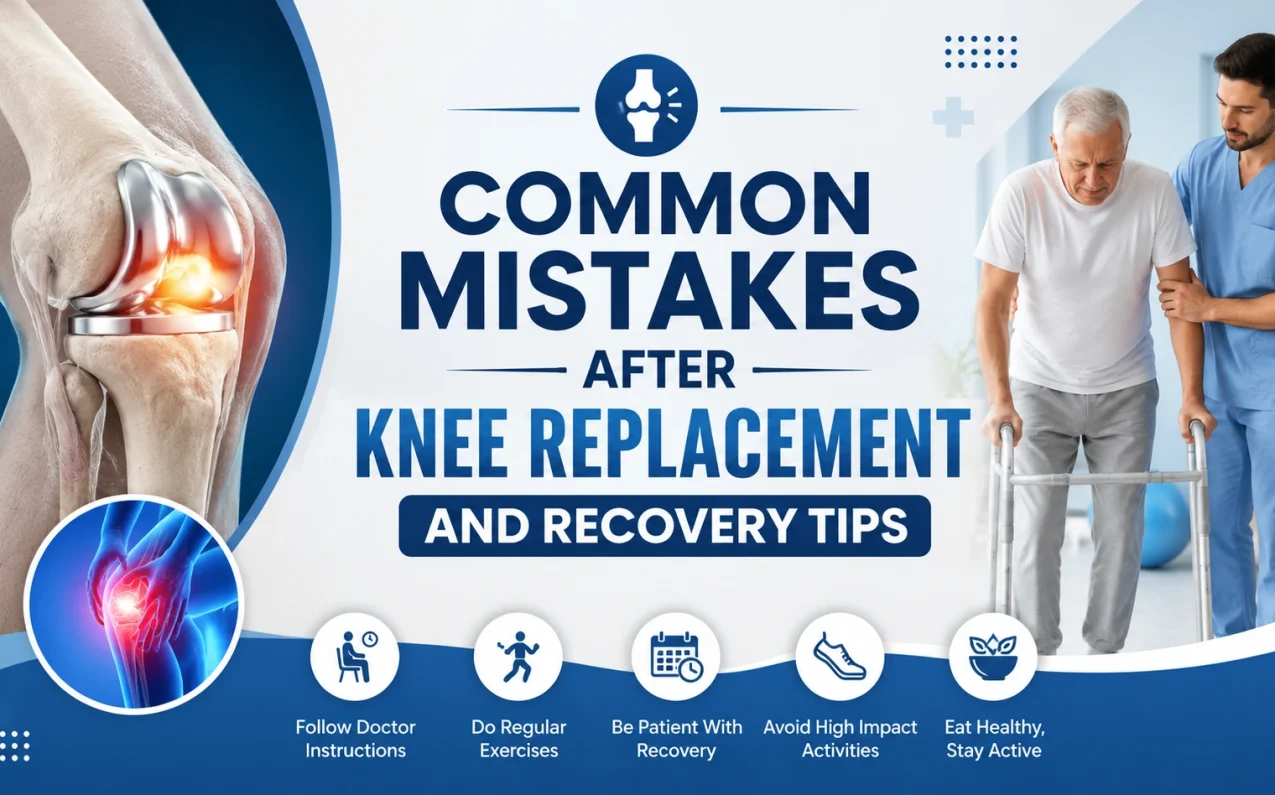
Knee replacement surgery can significantly improve mobility, reduce long-term knee pain, and help people return to their daily routine. However, the success of the surgery depends not only on the procedure itself but also on how well patients follow the recommended recovery plan.
Many people unintentionally make mistakes during the healing period that can delay recovery, increase discomfort, or affect rehabilitation. Understanding what to avoid after knee replacement can help you recover safely and regain confidence in your movement.
This guide explains the most common mistakes after knee replacement surgery, what to expect during recovery, and how proper rehabilitation supports long-term results.
What Is Knee Replacement Surgery?
Table of Contents
ToggleKnee replacement is a surgical procedure performed when the damaged part of the knee joint is removed and replaced with specially designed metallic implants. The goal of the surgery is to reduce pain, improve joint function, and help patients perform everyday activities more comfortably.
Recovery after knee replacement does not happen overnight. It takes time, proper care, and a structured rehabilitation program to achieve the best possible outcome.
READ MORE: Learn how to recover safely with our guide on Common Mistakes After Knee Replacement and Recovery Tips
Understanding the Two Phases of Knee Replacement Recovery
Recovery is generally divided into two important phases.
Phase 1: Acute Recovery (First 2–3 Weeks)
The first few weeks after surgery are focused on wound healing and protecting the operated knee. This is the period when patients need to be most careful with their daily activities and incision care.
Phase 2: Rehabilitation (Approximately 3–6 Weeks)
Once the initial healing begins, rehabilitation becomes the primary focus. During this stage, exercises and physiotherapy help restore muscle strength, improve knee support, and gradually increase mobility.
Common Mistakes People Make After Knee Replacement
1. Ignoring Wound Care Instructions
One of the most common mistakes is not taking proper care of the surgical wound.
During the first few weeks, the skin around the incision is still healing. In older adults, the skin is often softer and more fragile, making careful wound care even more important.
Patients are generally advised to:
- Keep the surgical dressing dry.
- Avoid wetting the incision unless specifically instructed.
- Follow dressing instructions carefully, whether a waterproof dressing or a standard dressing has been applied.
Keeping the wound protected supports proper healing and reduces unnecessary complications.
2. Skipping Physiotherapy
Many people believe that once the surgery is complete, recovery will happen naturally. In reality, physiotherapy is one of the most important parts of knee replacement recovery.
Rehabilitation helps:
- Strengthen the muscles around the knee.
- Improve joint stability.
- Support smoother walking.
- Help patients return to normal daily activities sooner.
Missing physiotherapy sessions or avoiding prescribed exercises can slow overall recovery.
3. Expecting to Walk or Run Too Soon
Another common mistake is expecting immediate results.
Although knee replacement improves mobility, the body still needs time to heal. Recovery differs from one patient to another because bone quality, muscle strength, and overall health vary.
Most patients require several weeks before progressing to higher levels of activity. Returning to activities such as running should only happen after adequate healing and rehabilitation.
4. Stopping the Use of a Walker Too Early
Many patients feel encouraged once they begin walking and decide to stop using their walker before they are ready.
During the first two to three weeks, a walker provides important support while the muscles regain strength.
As rehabilitation progresses and muscle control improves, walking aids are gradually reduced until patients can walk independently.
Using support for the recommended period helps promote a safer recovery
5. Sitting on the Floor Too Soon
Some patients try to resume floor sitting or similar positions shortly after surgery.
The first six weeks are especially important for protecting the new knee joint. During this period, patients should avoid sitting on the floor or adopting deep knee-bending positions.
After adequate recovery, some individuals may gradually return to these activities depending on their rehabilitation progress and medical guidance.
6. Assuming Any Remaining Pain Means the Surgery Failed
Many patients become concerned if they continue to experience mild discomfort after surgery.
In most cases, knee replacement significantly reduces the original joint pain.
Any remaining discomfort is often related to muscle weakness during the rehabilitation period rather than the artificial knee itself. Strengthening the surrounding muscles through rehabilitation plays a major role in reducing this residual pain.
7. Neglecting Blood Sugar Control
For people living with diabetes, maintaining healthy blood sugar levels during recovery is especially important.
Good sugar control during the first two months supports healing and overall recovery.
Apart from this, patients are generally able to continue a normal diet unless their healthcare team recommends otherwise.
How Proper Guidance Can Support Recovery
Recovering from knee replacement involves much more than the operation itself. Understanding rehabilitation, following recovery instructions, and receiving timely guidance can make the healing journey smoother and more confident.
At ConsultGrab, we help patients connect with experienced orthopedic specialists through our verified healthcare network. Our care team provides treatment guidance, appointment assistance, and support throughout the treatment journey, helping patients understand their recovery plan and make informed healthcare decisions.
Whether you are planning knee replacement surgery or looking for guidance during recovery, receiving the right information at the right time can help you move forward with greater confidence.
Conclusion
Most mistakes after knee replacement happen because patients underestimate the importance of recovery. Ignoring wound care, skipping physiotherapy, stopping walking support too early, returning to strenuous activities before healing, or neglecting blood sugar control can all slow rehabilitation.
Every patient heals differently, but following a structured recovery plan, protecting the surgical site, strengthening the muscles, and staying consistent with rehabilitation can help achieve better mobility and long-term improvement after knee replacement surgery.
The first stage of recovery usually lasts around two to three weeks, followed by a rehabilitation period that generally continues for approximately three to six weeks
Yes. Physiotherapy is an essential part of recovery because it strengthens the muscles supporting the knee, improves mobility, and helps patients return to daily activities more safely.
Most patients use a walker during the first two to three weeks. As muscle strength improves through rehabilitation, walking aids are gradually discontinued based on individual recovery.
Some patients may eventually return to running after recovery, but this depends on individual healing and rehabilitation progress. Recovery timelines vary from person to person.
Yes. While knee replacement usually reduces the original knee pain, mild residual discomfort may remain during rehabilitation because the muscles are still regaining strength