

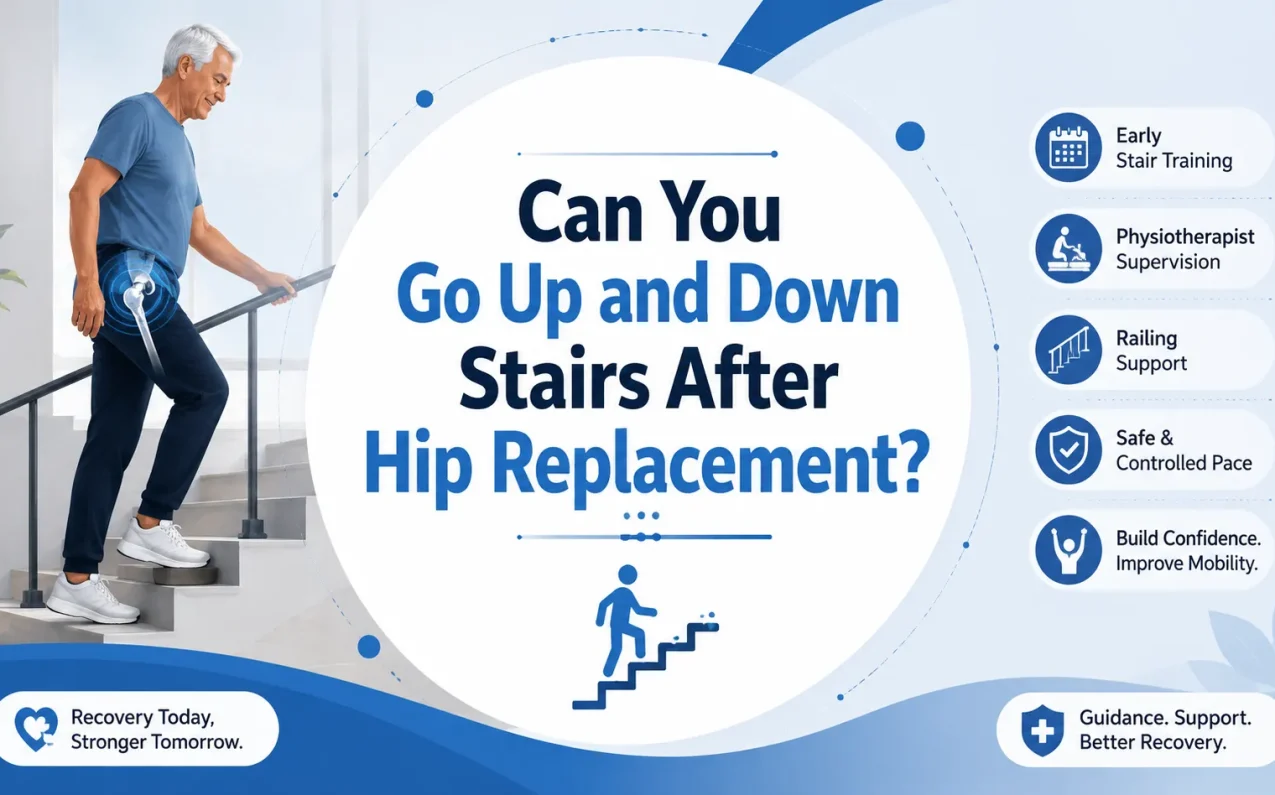
One of the most common and practical questions patients ask before hip replacement surgery is whether they will be able to use stairs again. For many people, stairs are an unavoidable part of daily life, especially in multi-storey homes.
The reassuring answer is yes—most patients are able to go up and down stairs after hip replacement. In fact, stair use is often introduced very early during recovery, with the right guidance and precautions. Before understanding stair use during recovery, it is helpful to understand the procedure itself. Read our detailed guide on What Is Hip Replacement Surgery? Procedure, Recovery & Risks Guide to learn about the surgery process, recovery phases, and possible risks.
Is Stair Climbing Allowed After Hip Replacement?
Table of Contents
ToggleYes, most patients are encouraged to start stair training very early after hip replacement surgery. In many cases, patients are guided to climb stairs as early as the second day after surgery, depending on their comfort and overall condition.
This early stair practice is always done safely:
- With railing support
- Under the supervision of a physiotherapist
- At a slow and controlled pace
Usually, patients are asked to practice 8–10 steps comfortably, rather than long staircases. The focus at this stage is on learning the correct technique and gaining confidence, not on climbing a large number of stairs.
When Do Patients First Practice Stairs?
In most cases, stair use is assessed and practised before hospital discharge, often on Day 1 or Day 2 after surgery. A physiotherapist guides the patient through each step and ensures they can manage stairs safely.
If a patient lives in a home with multiple floors, stair practice is given special priority during the hospital stay, so the patient feels prepared and confident before returning home.
Early mobilisation—including stair training—is a planned part of modern joint replacement recovery. It is not rushed, but it is encouraged deliberately because movement plays a key role in healing.
Why Early Stair Training Is Important
Encouraging movement soon after surgery has clear benefits. Early stair training helps to:
- Reduce the risk of blood clots
- Prevent muscle stiffness and weakness
- Restore independence and balance
- Speed up overall recovery
Learning to manage stairs early helps patients return to daily routines more smoothly once they are home.
What Does Stair Climbing Feel Like After Surgery?
Many patients are surprised by how quickly they can manage stairs after hip replacement.
The reason is that the arthritic pain that limited movement before surgery is gone. What patients feel in the early recovery phase is usually surgical soreness and muscle fatigue, which is expected and improves gradually.
For those who lived with hip arthritis for years, this difference between pre-surgery pain and post-surgery recovery is often one of the most noticeable and encouraging changes.
Does Everyone Recover at the Same Pace?
No. Recovery varies from person to person.
Stair ability depends on factors such as:
- Age
- Overall health
- Muscle strength
- Severity of the hip problem before surgery
Some patients regain confidence quickly, while others take more time. Both are normal. The key is progressing at a pace that feels safe and comfortable.
What If Your Home Has Many Stairs?
If your home has multiple floors or a large number of steps, climbing many stairs at once may feel challenging in the early days. However:
- Stair use is not permanently restricted
- Patients are allowed to increase stair climbing gradually
- Comfort and confidence improve with time
As recovery progresses, most patients find that stairs become easier and daily movement feels more natural.
Are There Long-Term Restrictions on Stairs?
No. There is no long-term restriction on stair climbing after hip replacement.
With healing, improved strength, and proper rehabilitation, patients are generally able to use stairs according to their comfort level and return to normal daily activities.
How ConsultGrab Supports Patients Through Recovery
At ConsultGrab, we believe recovery is just as important as surgery itself.
We act as a strong bridge between patients and trusted medical specialists by:
- Providing free expert guidance
- Connecting patients with verified orthopedic specialists
- Assisting with appointments, treatment planning, and cost transparency
- Supporting patients throughout their treatment and recovery journey
Our goal is to ensure every patient receives clear information, trusted guidance, and confidence at every step.
.
Final Thoughts
Yes, stair climbing is allowed after hip replacement, and in most cases, it begins within the first couple of days under supervision. With correct technique, gradual progression, and proper support, patients can safely return to independent movement and daily life.
If you are planning hip replacement surgery or want expert guidance for treatment and recovery, ConsultGrab helps you connect with trusted orthopedic specialists and supports you at every step of your journey.
Frequently Asked Question
Yes, stair climbing is allowed after hip replacement surgery. Most patients begin stair training within one to two days after surgery. This is done safely with handrail support and under physiotherapist supervision to ensure correct technique and balance during early recovery.
Patients usually attempt stairs on Day 1 or Day 2 after hip replacement surgery. Stair use is often assessed before hospital discharge, especially if stairs are part of daily life at home. Early stair practice supports mobility and prepares patients for safe movement after returning home.
Most patients report that arthritic pain is gone after surgery. Early stair use may cause mild surgical soreness or muscle fatigue, which is normal and improves gradually. This discomfort is different from pre-surgery joint pain and is usually manageable with proper guidance.
Stairs should be climbed slowly using a handrail and the technique taught by a physiotherapist. Patients usually practice 8 to 10 steps at a controlled pace rather than long staircases. Learning correct movement early helps prevent strain and builds confidence during recovery.
No, there are no long-term restrictions on stair climbing after hip replacement. As strength and balance improve, patients can increase stair use according to comfort. Recovery varies by individual, but most people return to normal stair use with time and proper rehabilitation support.