

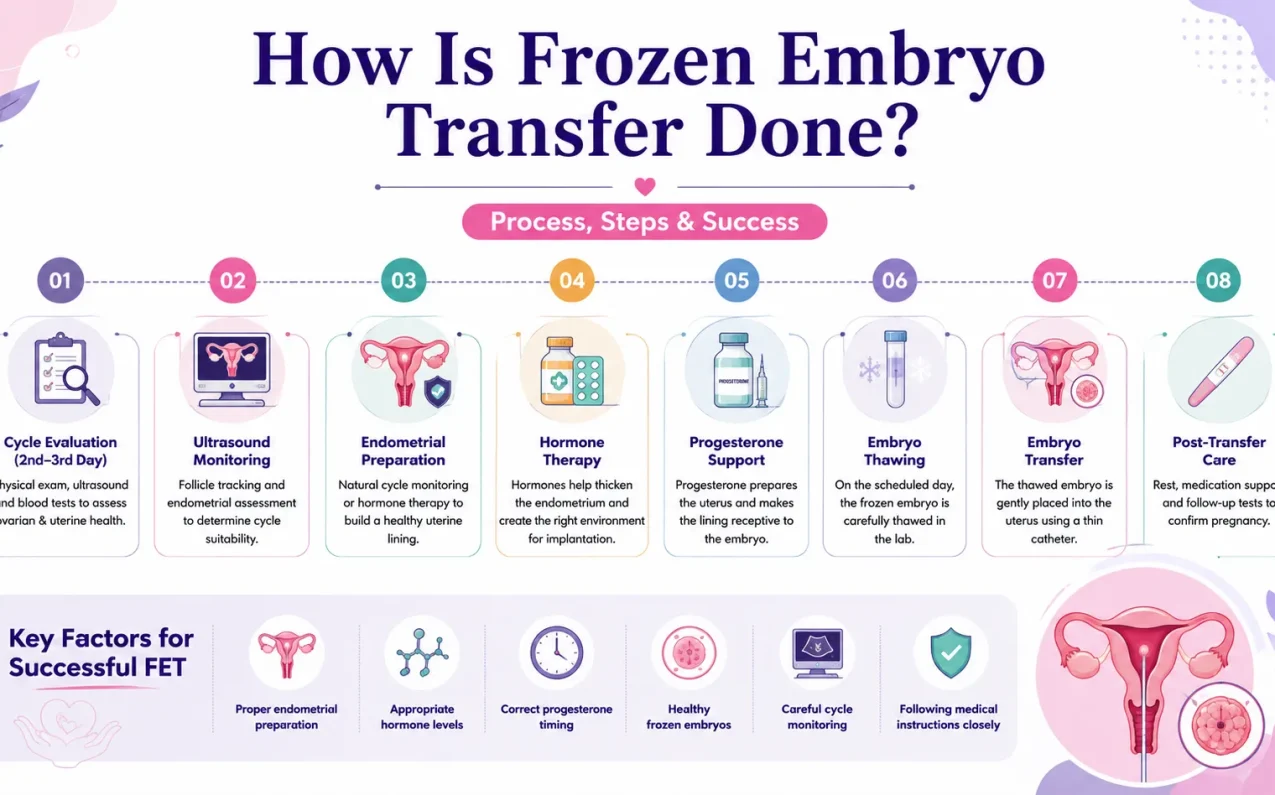
Frozen Embryo Transfer (FET) is an important step in many fertility treatment journeys. During IVF treatment, multiple embryos may be created using retrieved eggs and sperm. While some embryos may be transferred in the same cycle, the remaining healthy embryos can be preserved through freezing for future use.
When a couple decides to use these preserved embryos later, a Frozen Embryo Transfer procedure is planned. Understanding how the process works can help reduce anxiety and improve confidence before treatment.
In this guide, we explain how frozen embryo transfer is done, how the uterus is prepared, and what factors doctors evaluate before scheduling the transfer. Choosing experienced fertility specialists can also play a significant role in treatment planning and success rates. If you are looking for expert guidance, you can explore the Best Doctors for IVF in Delhi to find qualified fertility specialists who can help determine the most suitable approach for your individual fertility journey.
What Is Frozen Embryo Transfer?
Table of Contents
ToggleFrozen Embryo Transfer is a fertility procedure in which previously frozen embryos are thawed and placed inside the uterus during a carefully prepared menstrual cycle.
These embryos may have been frozen after an earlier IVF cycle and can be used in a future attempt without repeating the entire egg retrieval process.
Frozen embryos are commonly used when:
- Additional embryos remain after a previous IVF cycle
- Pregnancy is planned in a later cycle
- A second or third IVF attempt is needed
- The uterus requires additional preparation before embryo transfer
First Step: Evaluation at the Beginning of the Cycle
When planning a frozen embryo transfer, the treatment process typically begins during the early days of the menstrual cycle.
Patients are often advised to visit the fertility specialist around the second or third day of their period. During this visit, the medical team may perform:
- Physical examination
- Transvaginal ultrasound examination
- Necessary blood tests
- Assessment of ovarian and uterine health
These evaluations help determine whether the current cycle is suitable for embryo transfer.
Why Some Cycles May Be Delayed
Not every menstrual cycle is ideal for embryo transfer.
Sometimes, doctors may identify a fluid-filled ovarian cyst during the ultrasound examination. These cysts can affect hormone levels and may interfere with proper cycle preparation.
Depending on the situation, doctors may recommend:
Hormonal Medication
A short course of hormone-regulating medication may be prescribed to help normalize hormone levels and allow the cyst to resolve naturally before proceeding with treatment
Cyst Aspiration
In situations where time is limited, doctors may remove the fluid from the cyst using a needle-guided procedure. This process is commonly performed under appropriate medical supervision and helps prepare the patient for the next stage of treatment.
How Is the Uterus Prepared for Frozen Embryo Transfer?
The most important goal before embryo transfer is preparing the uterine lining, known as the endometrium.
A healthy endometrium increases the chances of successful implantation.
Different treatment protocols may be used depending on individual circumstances.
1. Natural Cycle Preparation
In a natural cycle approach:
- Ovulation is monitored naturally
- Regular ultrasound examinations track follicle development
- Endometrial growth is evaluated
- Transfer timing is coordinated according to ovulation
Once the lining reaches the desired condition and ovulation timing is confirmed, progesterone support is started before embryo transfer.
2. Hormone Replacement Cycle
In some cases, doctors prescribe hormone medications from the beginning of the cycle.
These medications help:
- Build the uterine lining
- Improve endometrial thickness
- Create a suitable environment for implantation
The response to treatment is monitored through ultrasounds and blood tests before proceeding further.
Why Is Progesterone Important Before Embryo Transfer?
Progesterone plays a critical role in preparing the uterus for implantation.
Before a frozen embryo transfer, progesterone medication is generally required to make the endometrium receptive to the embryo.
The duration of progesterone support may vary depending on the stage of the embryo being transferred.
For example:
- Day-3 embryo transfers may require a shorter progesterone schedule.
- Day-5 embryo transfers (blastocyst transfers) usually require a longer period of progesterone preparation.
Proper timing of progesterone administration is one of the most important factors in successful embryo transfer planning.
When Is the Embryo Transfer Date Scheduled?
The embryo transfer date is usually finalized after doctors confirm that:
- The uterine lining is adequately prepared
- Blood test results are within the desired range
- Hormone levels are appropriate
- The uterus is ready for implantation
Once all parameters are satisfactory, the frozen embryo is thawed and the transfer procedure is scheduled.
Can a Frozen Embryo Transfer Cycle Be Cancelled?
Yes, occasionally a cycle may need to be postponed or cancelled.
One common reason is when progesterone levels become elevated before progesterone treatment is officially started. In such situations, the uterine environment may not be optimal for implantation.
Rather than proceeding under unfavorable conditions, doctors may recommend preparing again in the next cycle to improve the chances of success.
Factors That Support a Successful Frozen Embryo Transfer
Several factors contribute to the success of a frozen embryo transfer:
Proper endometrial preparation
Appropriate hormone levels
Correct progesterone timing
Healthy frozen embryos
Careful cycle monitoring
Following medical instructions closely
In addition to these factors, adopting evidence-based fertility strategies and staying informed about modern treatment developments may help optimize outcomes. For a deeper understanding of proven methods and recent innovations, explore these important tips to increase IVF success rates and the latest advancements in fertility treatment.
Because every patient responds differently, treatment plans are usually individualized.
How ConsultGrab Supports Patients During Fertility Treatment
Navigating fertility treatment can feel overwhelming, especially when decisions about embryo transfer timing, medication protocols, and treatment planning are involved.
ConsultGrab helps patients connect with experienced fertility specialists and trusted treatment centers for expert guidance throughout the process.
Our care team assists patients by:
- Understanding individual fertility concerns
- Connecting patients with relevant fertility experts
- Explaining available treatment options clearly
- Supporting appointment scheduling and treatment coordination
- Helping patients make informed healthcare decisions
Our goal is to make the fertility treatment journey more transparent, organized, and patient-focused.
Conclusion
Frozen Embryo Transfer is a carefully planned procedure that uses embryos preserved from a previous IVF cycle. Before transfer, doctors evaluate hormone levels, uterine lining development, and overall cycle readiness to create the best possible conditions for implantation.
Whether a natural cycle or hormone-supported approach is used, proper preparation of the endometrium and accurate progesterone timing remain key components of the process.
Understanding each stage of frozen embryo transfer can help patients approach treatment with greater confidence and clarity while working closely with their fertility team. Since financial planning is also an important part of the fertility journey, many patients benefit from learning about the IVF cost in India and the factors that influence treatment expenses before making treatment decisions.
Frequently Asked Questions (FAQs)
Frozen Embryo Transfer (FET) is a fertility procedure in which previously frozen embryos created during an IVF cycle are thawed and transferred into the uterus. The procedure allows patients to use stored embryos in a future menstrual cycle without undergoing another egg retrieval process.
Patients are typically advised to visit their fertility specialist on the second or third day of their menstrual cycle. During this visit, doctors may perform a physical examination, transvaginal ultrasound, and blood tests to assess hormone levels and determine whether the cycle is suitable for frozen embryo transfer.
Before a Frozen Embryo Transfer, the uterine lining (endometrium) must be prepared to support embryo implantation. This may be done through a natural cycle by monitoring ovulation or through hormone medications that help develop an optimal endometrial lining before embryo transfer.
Progesterone is essential because it makes the endometrium receptive to embryo implantation. Fertility specialists usually start progesterone support before embryo transfer, and the duration may vary depending on whether a Day 3 embryo or a Day 5 blastocyst is being transferred.
Yes, a Frozen Embryo Transfer cycle may be postponed if conditions are not ideal for implantation. For example, ovarian cysts, abnormal hormone levels, or elevated progesterone before treatment begins can lead doctors to delay the transfer and prepare for a better cycle in the future.