

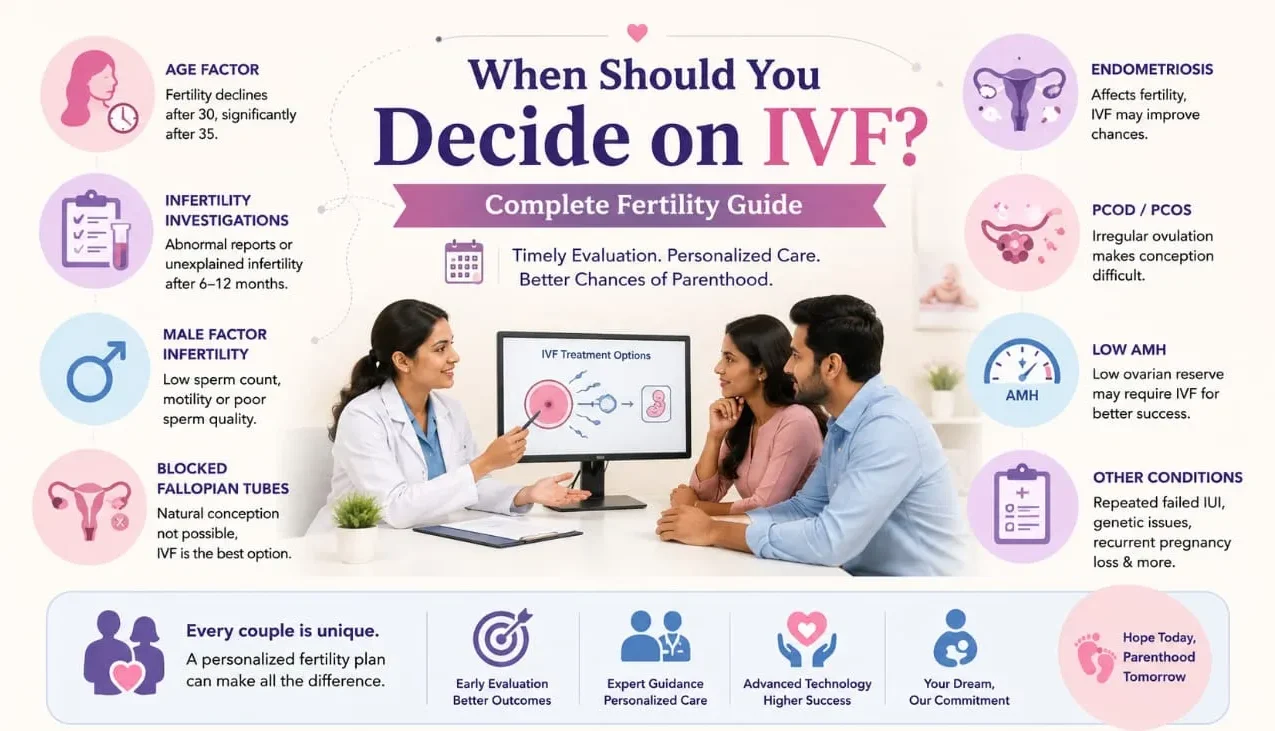
Many couples struggling to conceive eventually hear a recommendation for IVF treatment. At that point, a common question arises:
“Do we really need IVF, or should we continue trying naturally?”
The answer depends on several factors, including age, fertility investigations, underlying medical conditions, and previous treatment outcomes.
While IVF has become one of the most successful fertility treatments available today, it is not always the first step. In many situations, fertility specialists recommend a gradual approach, starting with natural conception attempts and progressing to advanced treatments only when necessary. Couples who have been advised to consider IVF often benefit from consulting with experienced fertility specialists to understand their treatment options and success prospects. Exploring the Best Doctors for IVF – In Vitro Fertilization in Delhi can help patients make informed decisions and receive personalized fertility guidance.
Understanding when IVF becomes the right option can help couples make informed decisions and avoid losing valuable time in their fertility journey.
Pregnancy Does Not Always Happen Immediately
Table of Contents
ToggleMany people assume that pregnancy should happen as soon as they start trying. However, even healthy couples with no known fertility problems may take several months to conceive naturally.
When a woman has regular menstrual cycles and the couple has regular unprotected intercourse during the fertile period, pregnancy can occur within a few months. Some couples conceive within the first month or two, while others may take six months or longer despite everything appearing normal.
This variation is often completely normal.
How Long Should You Try Naturally Before Seeking Treatment?
The recommended duration for natural conception attempts often depends on age.
If You Are Younger Than 30 Years
For younger couples with no known fertility concerns, it is generally reasonable to try naturally for up to one year.
If pregnancy does not occur despite regular attempts over this period, fertility evaluation may be necessary to identify any underlying issues.
If You Are 35 Years or Older
Fertility potential naturally declines with age. Because of this, waiting for an entire year may not always be advisable.
Women above 35 years of age are often advised to seek fertility evaluation after approximately six months of unsuccessful attempts to conceive naturally.
Early assessment can help identify potential problems sooner and improve treatment planning.
Why Fertility Investigations Are So Important
One of the biggest misconceptions about infertility is that normal reports always mean normal fertility.
In reality, some couples receive normal test results yet still struggle to conceive.
This happens because not every fertility-related issue can be identified through routine investigations. Certain conditions become apparent only through more detailed evaluation.
That is why fertility specialists typically recommend a step-by-step diagnostic approach before deciding whether IVF is necessary.
The Usual Treatment Journey Before IVF
In many cases, IVF is not the first treatment recommended.
Instead, couples often progress through several stages of fertility care.
Natural Conception Attempts
The first step is usually continued natural attempts during the fertile window.
Timed Intercourse
If pregnancy does not occur naturally, timed intercourse may be suggested.
This approach focuses on identifying ovulation and planning intercourse during the most fertile days of the menstrual cycle.
IUI (Intrauterine Insemination)
When timed intercourse is unsuccessful, IUI may be considered.
During IUI, processed sperm are placed directly inside the uterus around ovulation. This can improve the chances of fertilization compared with natural conception alone.
Further Evaluation Through Laparoscopy and Hysteroscopy
If conception still does not occur after IUI, additional investigations may be necessary.
Laparoscopy
Laparoscopy allows doctors to evaluate:
- Whether the fallopian tubes are open
- The condition of the reproductive organs
- The relationship between the ovaries and fallopian tubes
- The possibility of endometriosis
- Other pelvic conditions that may affect fertility
Hysteroscopy
Hysteroscopy is used to examine the uterine cavity and identify problems that may interfere with implantation.
This procedure can help detect:
- Uterine adhesions
- Polyps
- Structural abnormalities within the uterus
When all these evaluations appear normal and pregnancy still does not occur, IVF may become the next logical treatment option.
When IVF Is Commonly Recommended
There are several situations where IVF may provide significantly higher chances of pregnancy compared to natural conception or simpler fertility treatments.
1. Unexplained Infertility
Sometimes every fertility investigation appears normal, yet pregnancy does not occur.
In such situations, couples may continue trying naturally, but there is no certainty regarding when conception will happen.
When repeated treatment attempts fail despite normal findings, IVF may offer a more predictable path toward pregnancy.
2. Male Fertility Problems
Male fertility plays a major role in conception.
A semen analysis is usually one of the first fertility tests performed.
IVF may be recommended when:
- Sperm count is low
- Sperm movement (motility) is poor
- Sperm shape (morphology) is abnormal
- No sperm are detected in the semen sample
- DNA fragmentation levels are significantly elevated
These factors can make natural fertilization difficult and reduce the chances of pregnancy.
3. Blocked Fallopian Tubes
Healthy fallopian tubes are essential for natural conception because they allow the egg and sperm to meet.
IVF is often recommended when:
- One or both tubes are blocked
- Tubal function is severely impaired
- Hydrosalpinx is present
- Egg and sperm cannot meet naturally
Since fertilization occurs outside the body during IVF, the treatment can bypass tubal problems entirely.
4. Endometriosis
Endometriosis is a condition in which tissue similar to the uterine lining grows outside the uterus.
It can affect the ovaries, fallopian tubes, and surrounding pelvic structures, making natural conception more challenging.
In many cases, fertility specialists may recommend IVF when endometriosis significantly affects reproductive potential.
5. Fibroids, Adenomyosis, and Uterine Abnormalities
The uterus plays a crucial role in embryo implantation and pregnancy.
Certain conditions can alter the structure of the uterus and reduce fertility, including:
- Fibroids
- Adenomyosis
- Severe endometriosis-related changes
- Distortion of the uterine cavity
When these conditions affect fertility, IVF may be advised as part of the treatment strategy.
6. Increasing Age and Low AMH
AMH (Anti-Müllerian Hormone) is often used to assess ovarian reserve.
Women with:
- Increasing reproductive age
- Low AMH levels
- Reduced egg reserve
may have a limited fertility window.
In such cases, fertility specialists may recommend only a short period of natural conception attempts before moving to IVF.
Delaying treatment can sometimes reduce the chances of success.
7. PCOD with Ovulation Problems
PCOD commonly affects ovulation.
Many women with PCOD conceive naturally or with medications designed to stimulate ovulation. In fact, not every woman with PCOD or PCOS requires IVF treatment. If you are wondering whether IVF is necessary in your specific situation, this detailed guide on Does PCOD/PCOS Require IVF? Fertility Treatment Guide explains when IVF may be recommended and when other fertility treatments may be sufficient.
However, IVF may be recommended when:
- Ovulation does not occur despite treatment
- Fertility medications fail to produce the desired response
- Pregnancy does not occur after other treatment methods
8. Extremely Low Ovarian Reserve
Some women experience severely diminished ovarian reserve even at a relatively young age.
In these situations:
- AMH levels may be very low
- Ovulation may not occur regularly
- Egg numbers may be significantly reduced
Specialized fertility treatments may be attempted first.
If sufficient eggs cannot be obtained, donor egg IVF may be considered
9. Women Born Without a Uterus
A small number of women are born without a uterus.
Although carrying a pregnancy is not possible in these cases, biological parenthood may still be achievable through IVF combined with surrogacy.
Eggs can be retrieved, fertilized, and the resulting embryos may be transferred through a medically approved surrogacy process.
10. Serious Medical Conditions
Some women have health conditions that make pregnancy unsafe.
Examples may include:
- Serious heart disease
- Advanced kidney disease
- Other major medical illnesses
In certain situations, IVF combined with surrogacy may offer a safer path to parenthood.
IVF and Surrogacy: When Both May Be Needed
For some patients, IVF and surrogacy become part of the same treatment plan.
This may occur when:
- A woman does not have a uterus
- Pregnancy poses significant health risks
- Medical conditions make carrying a pregnancy unsafe
In these situations:
- Eggs are collected through IVF.
- Fertilization occurs in the laboratory.
- Embryos are created.
- The embryo is transferred through an approved surrogacy arrangement.
This allows intended parents to pursue biological parenthood despite complex medical circumstances.
How ConsultGrab Supports Patients Considering IVF
Choosing the right fertility treatment can feel overwhelming, especially when multiple options are available.
At ConsultGrab, we help patients connect with experienced fertility specialists and trusted healthcare providers so they can make informed decisions about their reproductive health.
Our team assists patients by:
- Understanding fertility reports and investigations
- Connecting patients with appropriate fertility specialists
- Explaining treatment options clearly
- Coordinating appointments with trusted hospitals and doctors
- Providing guidance for IVF consultations
- Supporting patients exploring surrogacy options when medically appropriate
We believe every patient deserves transparent information, expert guidance, and compassionate support throughout their fertility journey.
Final Thoughts
IVF is not necessary for every couple struggling to conceive. Many couples achieve pregnancy through natural conception, timed intercourse, IUI, or treatment of underlying fertility problems.
However, IVF becomes an important treatment option when fertility investigations reveal conditions such as male factor infertility, blocked fallopian tubes, endometriosis, uterine abnormalities, low ovarian reserve, ovulation disorders, or certain medical conditions that make natural conception difficult.
Before starting treatment, many couples also want to understand the financial aspects of their fertility journey. Reviewing a detailed guide on How Much Does IVF Cost in India? Full Patient Guide can help you understand the factors that influence IVF expenses and prepare for treatment more confidently.
The most important step is identifying the underlying cause and choosing the right treatment at the right time.
If you are unsure whether IVF is appropriate for your situation, seeking expert fertility guidance can help you understand your options and move forward with confidence..
Frequently Asked Questions (FAQs)
IVF treatment may be considered when pregnancy does not occur despite regular unprotected intercourse, appropriate fertility investigations, and other treatments such as timed intercourse or IUI. IVF is also recommended for specific fertility conditions, including male infertility, blocked fallopian tubes, endometriosis, low ovarian reserve, and ovulation disorders.
Couples under 30 years of age are generally advised to try for pregnancy naturally for up to one year. Women above 35 years may consider fertility evaluation after six months of unsuccessful attempts. Early assessment helps identify fertility issues and allows timely treatment planning.
Yes. Some couples experience unexplained infertility, where routine fertility investigations appear normal but pregnancy does not occur. In such cases, IVF may be recommended after natural conception attempts, timed intercourse, IUI, and additional evaluations fail to achieve pregnancy.
IVF is often recommended when one or both fallopian tubes are blocked or severely damaged. Since fertilization occurs outside the body during IVF treatment, the procedure bypasses the fallopian tubes and can improve the chances of achieving pregnancy.
es. IVF and surrogacy may be used together when a woman cannot safely carry a pregnancy or does not have a uterus. Eggs are retrieved, fertilized in a laboratory, and the resulting embryo is transferred through a medically approved surrogacy process to achieve parenthood.