

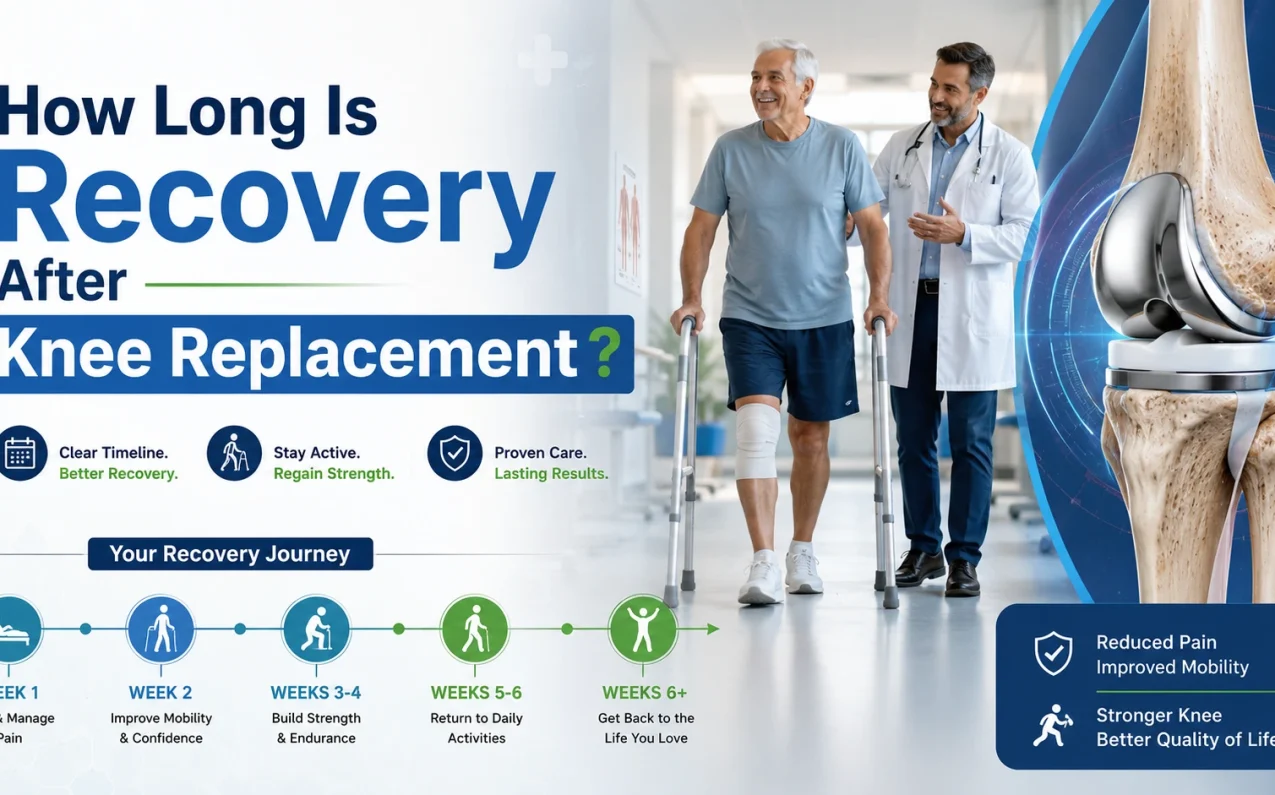
Knee pain can gradually turn everyday activities into a struggle. Walking, climbing stairs, standing for long periods, or even getting out of bed may become difficult when the knee joint is severely damaged. In many cases, this damage is caused by osteoarthritis — a condition where the protective cartilage inside the knee slowly wears away over time.
When medications, physiotherapy, injections, and lifestyle changes no longer provide relief, doctors may recommend knee replacement surgery as a long-term solution.
But one of the biggest concerns patients have before surgery is:
“How long does recovery actually take after knee replacement surgery?”
The answer depends on several factors, including the patient’s overall health, pain tolerance, rehabilitation routine, and how consistently post-surgery instructions are followed. However, understanding the overall recovery journey can help patients prepare both physically and mentally.
Understanding Why Knee Replacement Is Needed
Table of Contents
ToggleThe knee joint contains smooth cartilage that helps the bones move comfortably without friction. In osteoarthritis, this cartilage gradually breaks down. As the cushioning disappears, the bones move closer together, leading to stiffness, swelling, pain, and difficulty in movement.
Over time, severe arthritis can affect mobility and quality of life significantly. Depending on the severity of joint damage and the patient’s condition, doctors may recommend different surgical approaches. Understanding the types of knee replacement surgery can help patients make more informed treatment decisions.
Knee replacement surgery is generally considered when:
- Knee pain becomes constant
- Walking becomes difficult
- Stiffness limits movement
- Daily activities are affected
- Other treatment methods no longer help
During the procedure, damaged portions of the knee joint are removed and replaced with artificial components designed to recreate smooth joint movement.
What Happens During Knee Replacement Surgery?
A total knee replacement is a major orthopedic procedure. During surgery, the damaged surfaces of the knee are carefully reshaped and replaced with artificial components, commonly made from metal-based materials.
The procedure typically involves:
- Resurfacing parts of the kneecap
- Removing damaged sections from the thighbone and shinbone
- Fitting artificial joint components over the prepared surfaces
- Securing the implants to provide stability and movement
The goal is to restore mobility, reduce pain, and improve overall function of the knee. While knee replacement surgery is considered highly successful for many patients, it is still important to understand the possible surgical risks and recovery challenges involved. Learning about the risks and complications of knee replacement surgery can help patients prepare better and make informed treatment decisions.
Although the surgery is highly effective for many patients, recovery requires patience and commitment.
The First Few Weeks After Surgery
Recovery begins immediately after the operation.
Most patients notice three things very quickly:
- Significant swelling
- Pain around the knee
- Warmth and inflammation in the operated area
This happens because knee replacement surgery involves substantial work inside the joint. The body naturally reacts to the surgical trauma with swelling and inflammation.
The first two weeks are usually the most challenging part of recovery.
Common Experiences During Early Recovery
Patients may experience:
- Difficulty bending the knee
- Pain while walking
- Swelling around the joint
- Stiffness after resting
- Dependence on support while walking
Walking generally starts early with assistance and support devices like crutches or walkers. Controlled movement is encouraged because keeping the knee active is an important part of recovery.
At this stage, the primary focus is usually on:
- Managing pain
- Reducing swelling
- Gradually improving movement
- Preventing stiffness
How Long Does the Pain Last?
Pain after knee replacement surgery is completely normal.
For many patients, discomfort remains noticeable for several weeks after surgery. The intensity usually starts reducing gradually after the first two weeks.
While every patient heals differently, many people begin noticing improvements in:
- Walking ability
- Knee flexibility
- Swelling reduction
- Daily movement
between the second and sixth week after surgery.
Recovery does not happen overnight. It improves step by step.
Why Rehabilitation Is So Important
One of the most critical parts of knee replacement recovery is rehabilitation.
Movement exercises and guided physiotherapy play a major role in restoring knee function. Patients are usually encouraged to continue moving the knee regularly during recovery to avoid stiffness and improve flexibility.
The period between the second and sixth week is often considered extremely important for regaining mobility.
Consistent rehabilitation may help patients:
- Improve joint movement
- Build strength gradually
- Reduce stiffness
- Walk more comfortably
- Return to daily activities faster
Skipping exercises or avoiding movement out of fear can slow down recovery.
When Can Patients Walk Normally Again?
Walking recovery varies from person to person. Some individuals start moving with support shortly after surgery, while others may take longer to regain confidence and balance.
Most patients experience gradual improvements over the first few weeks as:
- Pain decreases
- Swelling reduces
- Knee movement improves
As recovery progresses, patients should also focus on long-term mobility, joint care, and lifestyle adjustments after surgery. Understanding life after knee replacement surgery, including recovery and long-term care can help patients maintain better knee function and improve overall quality of life.
However, complete recovery may continue over several months depending on the patient’s condition and rehabilitation progress.
Preparing for a Smooth Recovery
A successful knee replacement journey is not only about surgery — it is also about proper planning and post-operative care.
Patients should clearly understand:
- Expected recovery timelines
- Rehabilitation requirements
- Pain management plans
- Follow-up care
- Mobility goals
Having the right medical guidance during this phase can make the overall experience much smoother and less stressful.
How ConsultGrab Supports Patients During Knee Replacement Treatment
At ConsultGrab, we understand that choosing knee replacement surgery can feel overwhelming. Patients often have concerns about recovery time, hospital selection, treatment planning, and finding the right orthopedic specialist.
Our role is to simplify the process by helping patients connect with trusted medical specialists and verified hospitals in Delhi.
We assist patients with:
- Knee replacement consultation support
- Guidance for treatment planning
- Appointment coordination
- Hospital and treatment comparisons
- Access to experienced orthopedic specialists
Our care coordination team works to ensure patients feel informed and supported throughout their treatment journey.
Final Thoughts
Knee replacement surgery can significantly improve mobility and quality of life for people struggling with severe knee arthritis. However, recovery takes time, consistency, and proper rehabilitation.
The first few weeks are usually the most difficult, but gradual improvements in movement and pain are expected as healing progresses.
Understanding the recovery process beforehand helps patients prepare better and approach surgery with realistic expectations.
If you or a loved one is considering knee replacement treatment and wants guidance regarding specialists, hospitals, or treatment options, ConsultGrab can help you take the next step with confidence.
Frequently Asked Questions (FAQs)
Recovery after knee replacement surgery varies from patient to patient, but the first six weeks are usually the most important phase. Patients commonly experience pain, swelling, and stiffness during early recovery. Gradual improvement in walking, knee movement, and daily activities typically occurs with proper rehabilitation and physiotherapy.
Knee replacement surgery is generally recommended for patients suffering from severe knee osteoarthritis, chronic knee pain, stiffness, or joint damage. The procedure helps replace damaged portions of the knee joint with artificial components to improve mobility, reduce pain, and enhance overall quality of life.
During the first few weeks after knee replacement surgery, patients commonly experience swelling, pain, warmth around the knee, and difficulty walking. Doctors usually encourage controlled movement and rehabilitation exercises to improve flexibility, reduce stiffness, and support faster recovery of the knee joint.
Yes, physiotherapy is considered an essential part of knee replacement recovery. Regular movement exercises and guided rehabilitation help improve knee flexibility, strengthen muscles, reduce stiffness, and restore walking ability. Consistent physiotherapy can significantly improve overall recovery outcomes after knee replacement surgery.
ConsultGrab helps patients connect with experienced orthopedic specialists and verified hospitals in Delhi for knee replacement treatment. The platform provides treatment guidance, appointment support, hospital comparison assistance, and coordinated care support to help patients make informed healthcare decisions with confidence.