

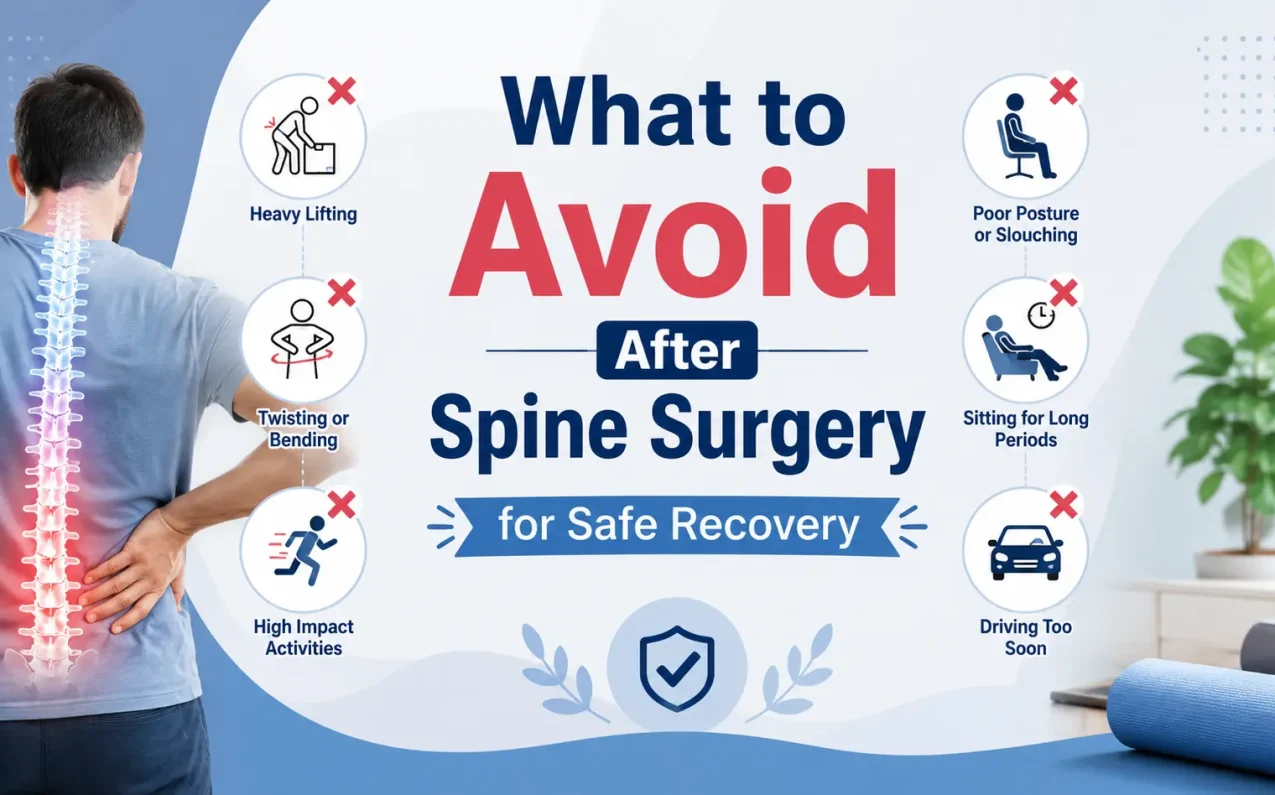
Spine surgery is a major step toward relieving pain and restoring mobility. However, the success of the procedure does not depend on surgery alone—the recovery phase plays an equally critical role. Knowing what to avoid after spine surgery can help protect your healing spine, prevent complications, and ensure long-term results.
If you are planning your treatment, choosing the best doctors for spine surgery in Delhi can also make a significant difference in both surgical outcomes and recovery.
This guide brings together essential precautions and practical insights to help you recover safely and confidently.
Why Post-Surgery Care Matters
Table of Contents
ToggleAfter spine surgery, your body begins a delicate healing process. The spine needs time to stabilize, tissues must repair, and in some cases, bones need to fuse properly. Even small mistakes during recovery can place stress on the surgical area and delay healing.
That’s why avoiding certain movements and habits is just as important as following prescribed treatments.
1. Avoid Excessive Bending, Twisting, and Lifting
Movements like bending, twisting, and lifting put the most strain on your spine—especially during the early recovery phase. Understanding when surgery becomes necessary can also give better context to these precautions, as explained in when spine surgery is needed – all about it by Consult Grab.
- Bending forward: While the body naturally uses the hips for most bending (around 80%), improper bending techniques can still stress the lower back. Avoid frequent forward bending such as picking items from the floor or leaning over sinks.
- Twisting: Rotational movements can disrupt healing tissues. Instead of twisting your waist, turn your entire body together.
- Lifting: Avoid lifting anything heavier than 5–10 pounds initially. Even light lifting with poor posture can be harmful.
Helpful tip: If something falls, you can carefully bend using your hips and knees—but avoid repetitive or careless movements.
2. Stay Away from High-Impact Activities
High-impact activities create strong forces on your spine and should be avoided until fully cleared.
Avoid:
- Running, jumping, or intense workouts
- Contact sports like football or basketball
- Activities with vibrations such as biking on rough terrain or long vehicle rides
Instead, focus on:
- Gentle walking on flat surfaces
- Light stretching (as advised)
- Low-impact activities like stationary cycling
ments.
3. Avoid Prolonged Sitting and Poor Posture
Sitting for long periods increases pressure on your spine and may slow recovery.
- Limit sitting to 20–30 minutes at a time
- Take frequent breaks to stand or walk
- Use chairs with proper lumbar support
- Avoid soft or low seating that forces your spine to curve
Sleeping posture also matters:
- Avoid sleeping on your stomach
- Sleep on your back with support under your knees
- Or on your side with a pillow between your legs
4. Avoid Smoking, Alcohol, and Poor Nutrition
Your lifestyle choices directly affect healing.
- Smoking: Reduces blood flow and delays healing significantly
- Alcohol: Interferes with medications and increases risk of falls
- Poor diet: Slows tissue repair and weakens recovery
Focus on:
- Protein-rich foods for tissue repair
- Calcium and vitamin D for bone strength
- Anti-inflammatory foods like fruits and vegetables
- Staying well hydrated
5. Avoid Returning to Normal Activities Too Soon
One of the most common mistakes is rushing back into daily routines.
- Desk jobs may resume in a few weeks with modifications
- Physically demanding jobs may require several months
- Household chores like cleaning or lifting should be avoided initially
Even everyday activities—like laundry, driving, or long travel—can strain your spine if resumed too early.
Recovery requires patience. Gradual progress is the key to long-term success.
A Smarter Way to Recover
Every spine condition and surgery is different. Recovery plans should always be personalized based on your specific case, procedure, and overall health.
This is where guided support becomes essential.
Expert Guidance for Better Treatment and Recovery
At ConsultGrab, the focus is on helping patients make informed decisions at every stage of their healthcare journey. From connecting you with experienced specialists to explaining treatment and recovery steps clearly, the goal is to ensure you never feel uncertain or alone. If you are looking for trusted medical care, you can also find the best hospitals and doctors for world-class treatment to ensure the highest quality outcomes.
Whether it’s understanding post-surgery precautions, planning follow-ups, or exploring the right treatment options, having the right guidance can make recovery smoother and more confident.
Frequently Asked Questions (FAQs)
After spine surgery, patients should avoid bending, twisting, and lifting heavy objects. These movements can strain the healing spine and disrupt recovery. Instead, use proper body mechanics, such as bending at the hips and knees, and keep movements slow and controlled to protect the surgical area.
Prolonged sitting increases pressure on the spine and may delay healing after spine surgery. Patients should limit sitting to 20–30 minutes at a time, use proper lumbar support, and take frequent breaks to stand or walk. Maintaining correct posture is essential for a smooth recovery process.
High-impact exercises like running, jumping, or contact sports should be avoided after spine surgery. These activities can put excessive stress on the spine. Instead, patients should focus on low-impact activities such as walking, gentle stretching, or guided physiotherapy, as recommended by their healthcare provider.
Lifestyle habits like smoking, alcohol consumption, and poor nutrition can negatively affect spine surgery recovery. Smoking reduces blood flow, alcohol may interfere with medications, and an unhealthy diet slows healing. A balanced diet with protein, calcium, and vitamins supports faster tissue repair and recovery.
The timeline for returning to normal activities after spine surgery varies based on the procedure and individual health. Light activities and desk work may resume in a few weeks, while physically demanding tasks may take months. Gradual progression and medical guidance are essential for safe recovery.