


In recent years, surrogacy has become an increasingly discussed topic in India due to growing awareness about infertility, pregnancy-related medical complications, delayed parenthood, and advancements in reproductive technology. Many people commonly describe surrogacy as “renting a womb,” but medically and legally, the process is far more structured, ethical, and carefully regulated.
Surrogacy is a medical arrangement in which a woman carries and gives birth to a child on behalf of another individual or couple who are unable to carry a pregnancy themselves due to specific medical conditions. The term “surrogate” originates from the Latin word subrogate, meaning “to substitute” or “to act in place of another.” In the medical context, a surrogate mother carries the pregnancy for the intended parents through a legally approved and medically supervised process.
With advancements in IVF (In Vitro Fertilization) and Assisted Reproductive Technology (ART), surrogacy has evolved into a highly specialized fertility treatment option. The embryo is created using the egg and sperm of the intended parents and is then transferred into the uterus of the surrogate mother. This means the child’s genetic identity comes entirely from the intended parents, while the surrogate mother supports the pregnancy medically until childbirth. Patients who want a deeper understanding of the medical procedure, eligibility requirements, and legal regulations can also read our detailed guide on What Is Surrogacy? India Guide: Process & Legal Rules.
Parenthood is a dream for many families. However, some individuals and couples face medical conditions that make it difficult or impossible to carry a pregnancy naturally. In such situations, surrogacy can provide a medically supported path toward becoming parents.
At ConsultGrab, we help patients connect with experienced fertility specialists, IVF experts, and trusted hospitals in Delhi to guide them through every stage of the surrogacy journey with clarity and confidence.
What is Surrogacy?
Surrogacy is a medical process in which another woman carries a pregnancy for the intended parents. In simple terms, it involves a surrogate mother carrying a baby on behalf of a couple or individual who cannot carry a pregnancy themselves due to medical reasons.
The embryo is created through IVF (In Vitro Fertilization) using the egg and sperm of the intended parents. Once the embryo is formed, it is transferred into the uterus of the surrogate mother, who carries the pregnancy until
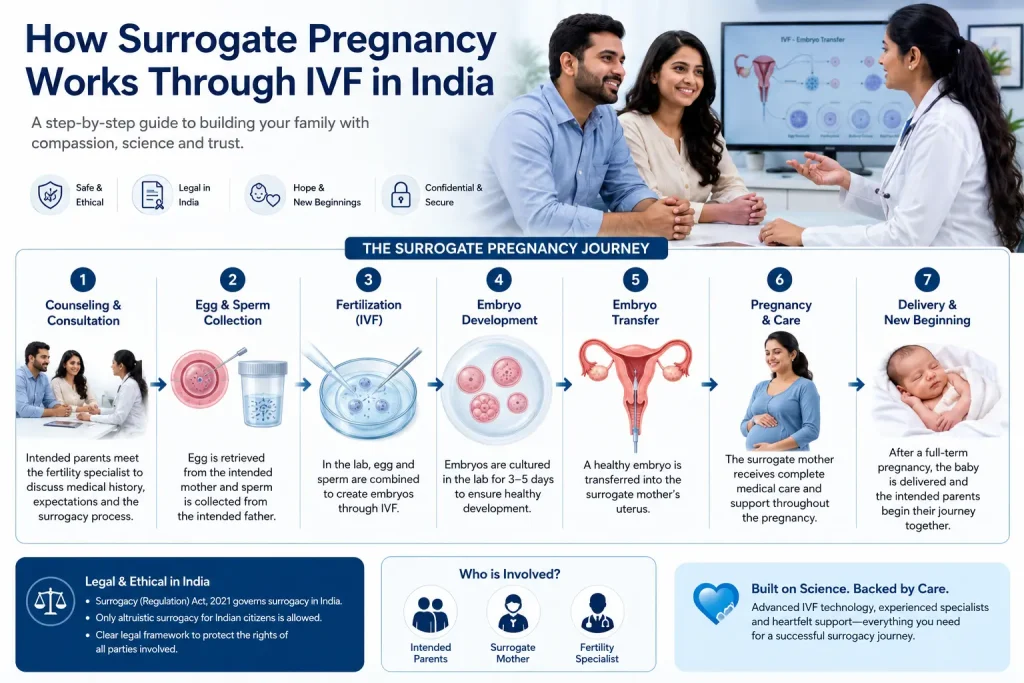
delivery. Patients who want to understand each medical and legal stage involved in detail can also explore our complete guide on Surrogacy Process in India Step by Step. The surrogate mother acts only as the carrier of the pregnancy and does not contribute genetically to the child.
When is Surrogacy Recommended?
Doctors may recommend surrogacy in situations where:
- The uterus is medically unable to support pregnancy
- Pregnancy may create serious health risks for the woman
- There are certain reproductive complications
- Repeated pregnancy failures have occurred despite treatment
- Carrying a pregnancy is medically unsafe
In such cases, fertility specialists may suggest IVF surrogacy after detailed medical evaluation.
Does the Surrogate Mother Share Traits with the Baby?
One of the most common concerns people have is whether the surrogate mother passes her genes to the child.
In gestational surrogacy, the child’s genetic makeup comes entirely from the intended parents whose egg and sperm are used to create the embryo. The surrogate mother does not pass her physical characteristics or biological traits to the baby.
The child’s features such as:
- Skin tone
- Hair color
- Eye color
- Height potential
- Facial structure
- Physical characteristics
are determined by the genetic parents.
However, the surrogate mother’s nutrition and overall health during pregnancy remain extremely important because they support the healthy development and growth of the baby throughout pregnancy.
Who can Become a Surrogate Mother?
According to current legal requirements in India, a surrogate mother generally must:
- Be within the approved age group
- Have previously delivered at least one healthy child
- Undergo proper medical screening
- Participate willingly in the process
- Meet all legal and eligibility conditions
Medical evaluation and legal verification are important parts of the process before surrogacy can begin. Since surrogate eligibility, medical care, and IVF procedures can also influence overall treatment expenses, many intended parents also explore the financial aspects before proceeding. For a detailed breakdown of expenses and treatment-related charges, read our guide on Surrogate Mother Cost in India: Complete Guide (2026).
Is Surrogacy Legal in India?
Surrogacy in India is regulated under updated ART and surrogacy laws. The process is permitted only within the legal framework established by the government. The complete procedure involves:

Calculate Cost Now
- Legal documentation
- Medical approvals
- Verification of all parties involved
- Magistrate-level authorization
- Registration with authorized ART or IVF centers
This legal structure is designed to protect the interests of the intended parents, surrogate mother, and child.
Patients who want a more detailed understanding of current regulations, eligibility rules, and legal approvals can also explore our complete guide on Is Surrogacy Legal in India Now? Legal Guide 2026.

Start Your Parenthood Journey Today
Important Legal Steps in the Surrogacy Process
The surrogacy process involves multiple levels of approval and documentation.
1. Medical Evaluation
A medical board reviews the medical condition of the intended parents and the recommendation provided by the fertility specialist. Based on this evaluation, a medical indication certificate may be issued.
2. Verification of Documents
The surrogate mother, her family, and the intended parents undergo document verification. Identity documents, marriage-related records, and other required papers are examined carefully.
3. Eligibility Certification
After verification, eligibility certificates are issued to the concerned parties according to legal requirements.
4. IVF and Embryo Transfer
Once approvals are completed, the IVF process begins. Embryos are created and transferred into the surrogate mother’s uterus under specialist supervision.
What Does the Surrogacy Process Include?
The overall surrogacy treatment may involve several medical stages, including:
- Fertility assessment
- Hormonal stimulation
- Egg retrieval
- Embryo creation
- Embryo freezing if required
- Embryo transfer
- Pregnancy monitoring
- Delivery planning
The treatment approach can vary depending on individual medical conditions and specialist recommendations.
Are There Risks or Complications in Surrogacy?
Surrogacy itself is a medically supervised process. Any pregnancy-related complications are managed by IVF specialists and obstetricians.
Like any pregnancy, monitoring is important throughout the journey. Delivery may happen naturally or through Cesarean section, depending on medical requirements.
Choosing an experienced and legally registered fertility center plays a major role in ensuring safe treatment and proper medical care.
Understanding the Financial Aspect of Surrogacy
The primary expenses involved in surrogacy are generally related to the IVF treatment process itself. Costs may vary depending on:
- The fertility center
- Medical protocols used
- Number of IVF cycles
- Embryo procedures
- Pregnancy-related medical care
Because surrogacy treatment costs can differ significantly based on medical requirements and fertility procedures, many intended parents also look for a detailed cost breakdown before starting treatment. Patients who want to understand the overall expenses, IVF-related charges, and financial planning involved can explore our detailed guide on Surrogate Mother Cost in India: Complete Guide (2026).
Since treatment plans differ from patient to patient, discussing the expected medical process and treatment planning with fertility experts is important before proceeding.
Importance of Choosing the Right Fertility and Medical Guidance Team
Surrogacy is both a medical and emotional journey. Proper guidance can help intended parents understand:
- Medical eligibility
- Legal procedures
- IVF treatment planning
- Documentation requirements
- Pregnancy monitoring
- Hospital coordination
Working with experienced fertility specialists and authorized centers helps patients move through the process with greater clarity and confidence.
How ConsultGrab Supports Patients Seeking Surrogacy Guidance
At ConsultGrab, we help patients connect with trusted fertility specialists, IVF experts, and verified hospitals in Delhi for surrogacy-related consultation and treatment guidance.
Our support includes:
- Specialist consultation assistance
- Guidance regarding fertility treatment options
- Hospital and IVF center coordination
- Appointment booking support
- Treatment planning assistance
- Transparent communication throughout the process
We understand that every patient’s situation is unique, and our goal is to help families make informed healthcare decisions with proper medical support.
Final Thoughts
Surrogacy offers hope to individuals and couples facing medical challenges related to pregnancy. With proper medical care, legal compliance, and expert fertility guidance, the process can provide a safe and structured pathway toward parenthood.
Understanding the medical, legal, and emotional aspects of surrogacy is important before beginning the journey. Consulting experienced fertility professionals can help patients better understand the available options and treatment process.
To learn more about surrogacy consultation and fertility guidance, visit:
Calculate Cost Now
Frequently Asked Questions (FAQs)
Surrogate pregnancy in India is done through IVF treatment, where an embryo created using the intended parents’ egg and sperm is transferred to a surrogate mother. The process includes medical screening, legal approvals, eligibility checks, embryo transfer, and pregnancy monitoring under authorized fertility specialists.
No, in gestational surrogacy, the surrogate mother does not share genetic traits with the baby. The embryo is created using the egg and sperm of the intended parents through IVF. The child’s genetic characteristics, including appearance and biological traits, come entirely from the genetic parents.
Surrogacy may be recommended for individuals or couples facing infertility, repeated pregnancy failure, uterine conditions, or medical complications that make pregnancy unsafe. Eligibility is determined through medical evaluation, fertility specialist recommendations, and legal approval under India’s updated surrogacy and ART regulations.
Yes, surrogacy is legal in India when conducted according to current ART and surrogacy laws. The process requires medical indication certificates, eligibility verification, legal agreements, and treatment through authorized IVF or fertility clinics registered under government-approved regulations.
The surrogacy process typically includes fertility assessment, IVF treatment, egg retrieval, embryo creation, embryo transfer, pregnancy monitoring, and delivery planning. Patients also undergo legal documentation and medical screening. Working with experienced fertility specialists and authorized hospitals helps ensure a safe and structured treatment journey.