

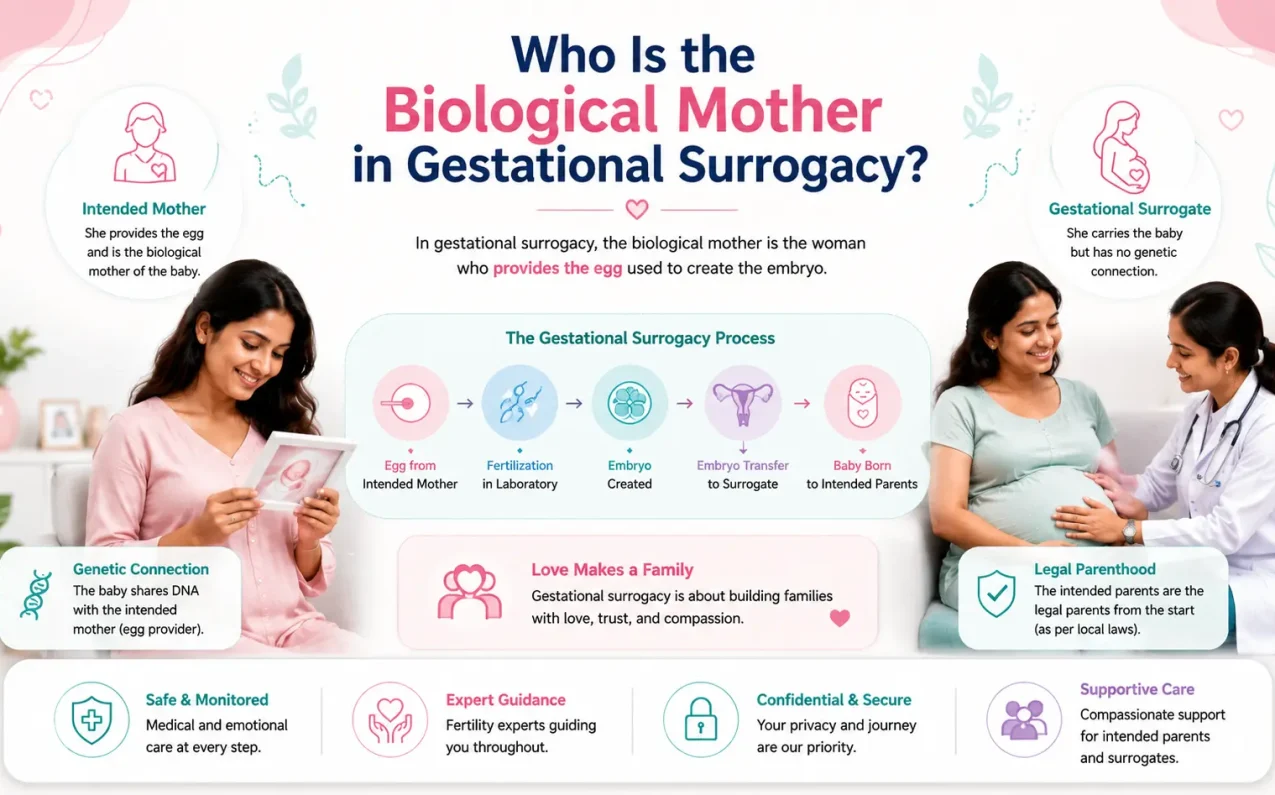
Surrogacy has become an important fertility option for couples facing infertility, pregnancy complications, or medical conditions that make natural pregnancy difficult. However, one question that many people still ask is: Who is the biological mother in gestational surrogacy?
The confusion usually happens because people often misunderstand the role of the surrogate mother in the pregnancy process. To understand the answer clearly, it is important to first understand the two major types of surrogacy and how they differ medically and genetically.
Understanding the medical process is also important for intended parents who want clarity on treatment planning and expenses, especially when reviewing a detailed Surrogacy Cost Breakdown in India before starting the journey.
Types of Surrogacy Based on Genetic Connection
Surrogacy is generally classified into two main categories based on the genetic relationship between the surrogate mother and the baby:
- Traditional Surrogacy
- Gestational Surrogacy
This classification helps explain whether the surrogate mother is biologically related to the child or only carries the pregnancy.
Traditional Surrogacy
Traditional surrogacy is also known as genetic surrogacy because the surrogate mother is biologically connected to the child.
In this process:
- The surrogate mother’s own egg is used
- Sperm from the intended father or a donor is used for fertilization
- Fertility procedures such as IVF, ICSI, IMSI, intrauterine insemination, or artificial insemination may be used
Since the surrogate mother provides the egg, she becomes the biological or genetic mother of the baby.
Because of this biological connection, traditional surrogacy is often considered more legally and emotionally complicated. In some places, concerns related to genetic motherhood and parental rights have made traditional surrogacy more restricted.
Gestational Surrogacy
Gestational surrogacy is the most commonly preferred form of surrogacy today.
In this process:
- The surrogate mother does not provide her egg
- An embryo is created separately using eggs and sperm from the intended parents or donors
- Advanced fertility treatments such as IVF, ICSI, or IMSI are used to create the embryo
- The embryo is transferred into the surrogate mother’s uterus
The surrogate mother carries the pregnancy and gives birth to the baby, but she is not genetically related to the child because her egg is not used in embryo formation.
This is the main reason why gestational surrogacy is medically and legally different from traditional surrogacy.
Who Is the Biological Mother in Gestational Surrogacy?
In gestational surrogacy, the biological mother is generally the woman whose egg is used to create the embryo.
This means:
- If the intended mother’s egg is used, she is the biological mother
- If a donor egg is used, the donor becomes biologically related to the child
The surrogate mother’s role is to carry and support the pregnancy inside her uterus until childbirth.
Although the surrogate mother is not genetically connected to the baby, her health and nutrition remain extremely important during pregnancy because the baby’s growth and development depend on a healthy pregnancy environment.

Calculate Cost Now
Why Gestational Surrogacy Is More Common
Gestational surrogacy has become more common because it creates a clear separation between biological parenthood and pregnancy support.
Many intended parents prefer gestational surrogacy because:
- The surrogate mother has no genetic link to the child
- It reduces legal and emotional complexities
- Advanced IVF techniques have improved success rates
- It provides a more structured fertility process
Many people still confuse traditional surrogacy with gestational surrogacy, even though both involve different medical and genetic relationships. Understanding the What is the Surrogate Vs Gestational Surrogate: Key Differences can help intended parents make more informed fertility decisions.
Today, most fertility specialists recommend gestational surrogacy in cases where pregnancy is medically difficult or impossible for the intended mother.
Important Role of the Surrogate Mother
Even though the surrogate mother is not biologically related to the baby in gestational surrogacy, her role remains extremely important throughout the pregnancy journey.
The surrogate mother supports:
- Baby’s growth and development
- Pregnancy health and nutrition
- Prenatal care and medical monitoring
- Safe delivery of the child
Her uterus provides the environment where the baby grows safely during pregnancy.
Medical and Legal Understanding
Surrogacy involves several medical, emotional, and legal responsibilities. Before starting the process, intended parents usually need proper consultation regarding:
- Fertility evaluation
- IVF and embryo transfer procedures
- Medical eligibility
- Pregnancy-related care
- Insurance and medical expenses
- Legal documentation and surrogacy regulations
Since surrogacy in India is legally regulated, intended parents should also understand the approval and documentation process required before treatment begins. Reading a detailed guide on the How to Take Permission for Surrogacy in India? Full Guide can help couples stay prepared and avoid unnecessary delays.
Understanding these aspects helps intended parents make informed decisions and avoid confusion during the journey.
Calculate Cost Now
Surrogacy Consultation and Guidance
For many families, understanding surrogacy procedures, fertility treatments, and medical requirements can feel overwhelming. Proper medical guidance plays an important role in making the process smoother and more transparent.
Platforms like ConsultGrab help connect patients with experienced fertility specialists and trusted healthcare consultation support in India. From understanding treatment options to appointment coordination and guidance throughout the surrogacy process, professional support can help intended parents move forward with greater confidence.
Start Your Parenthood Journey Today
Conclusion
Gestational surrogacy and traditional surrogacy are medically different processes mainly because of the genetic relationship between the surrogate mother and the child.
In traditional surrogacy, the surrogate mother is biologically related to the baby because her egg is used during fertilization. However, in gestational surrogacy, the surrogate mother is not genetically connected to the child because the embryo is created using eggs and sperm from the intended parents or donors.
This is why, in gestational surrogacy, the biological mother is generally considered to be the woman whose egg is used to create the embryo.
With proper medical guidance, fertility consultation, and legal understanding, gestational surrogacy can provide a safe and structured path to parenthood for many families.
Frequently Asked Questions (FAQ)
In gestational surrogacy, the biological mother is usually the woman whose egg is used to create the embryo through IVF treatment. The surrogate mother carries the pregnancy in her uterus but is not genetically related to the baby because her egg is not used during fertilization
No, the surrogate mother is not genetically related to the baby in gestational surrogacy. The embryo is created using eggs and sperm from the intended parents or donors through IVF procedures, and the surrogate mother only carries the pregnancy until childbirth.
: In traditional surrogacy, the surrogate mother’s egg is used, making her biologically related to the child. In gestational surrogacy, the surrogate mother does not provide the egg, so she has no genetic connection with the baby. Gestational surrogacy is more commonly preferred in modern fertility treatments.
: Gestational surrogacy is more common because it creates a clear separation between biological parenthood and pregnancy support. Since the surrogate mother has no genetic relationship with the child, the process is generally considered medically, legally, and emotionally less complicated for intended parents.
In gestational surrogacy, fertility specialists create an embryo using IVF techniques with eggs and sperm from the intended parents or donors. The embryo is then transferred into the surrogate mother’s uterus, where the baby develops throughout the pregnancy until birth