

Micro-TESE Treatment in India
We provide independent guidance to help patients understand the Micro-TESE treatment, procedure requirements, and estimated medical expenses in India.
Our platform helps you connect with registered fertility centres and qualified reproductive specialists as per current regulations.
- Guidance on Micro-TESE eligibility and who it’s suitable for
- Information about registered fertility centres
- Understanding the Micro-TESE procedure and treatment cycle
- Estimated cost breakdown explanation
- Assistance in connecting with qualified fertility specialists
- Support with appointment request coordination
- Basic guidance on pre-treatment tests and documentation
Get Cost Estimate
The cost of Micro-TESE in India usually falls between ₹50,000 and ₹1,50,000 for the surgery alone. If it’s combined with IVF and ICSI (which most patients need together), the full treatment typically costs between ₹1,25,000 and ₹3,50,000, depending on the clinic and city.
This includes the surgery itself, anesthesia, the lab work needed to find sperm under a microscope, and the ICSI procedure that follows.
The final cost can change based on:
- The clinic and city you choose
- Whether ICSI is included in the same package
- The type of anesthesia used
- Any extra tests needed before the surgery
Micro-TESE is one specific procedure within male infertility treatment. If you’re exploring other fertility treatment costs too, see our guides onIUI Treatment Cost in India andCost of IUI with Donor Sperm in India.
What Is Micro-TESE?
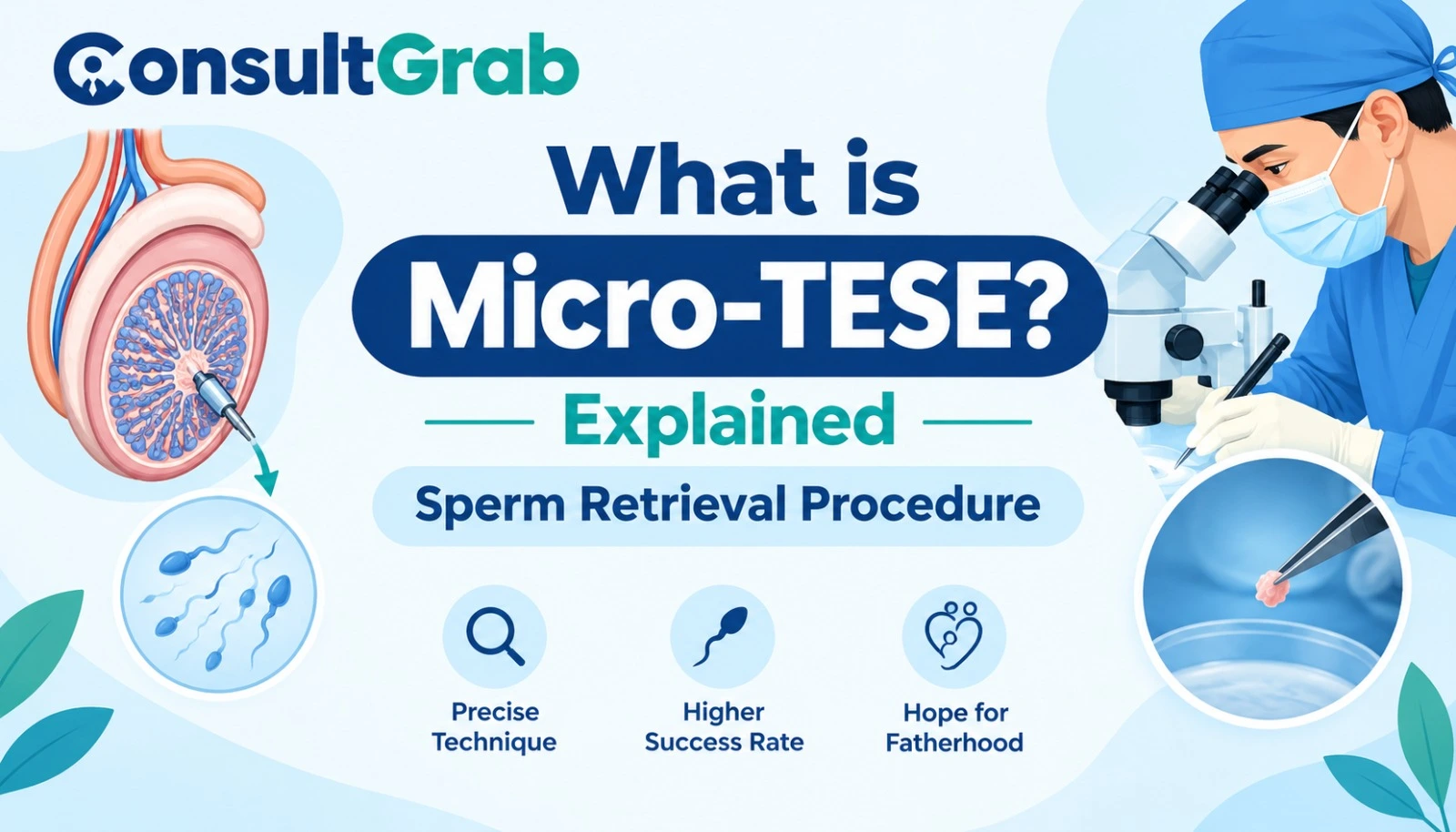
Micro-TESE is a surgery that finds sperm directly inside the testicles, for men whose sperm count is zero.
- “TESE” stands for Testicular Sperm Extraction
- “Micro” means the surgery is done using a powerful surgical microscope
- The surgeon opens the testicle and looks closely for small tubes (called tubules) that are more likely to contain sperm
- Once these sperm-containing tubules are found, the sperm inside them is carefully removed
- This sperm is then used with a technique called ICSI (Intracytoplasmic Sperm Injection), where a single sperm is injected directly into an egg to help create an embryo — the same lab step used in a full IVF Cost in India cycle
In simple words: for men who have no sperm in their semen at all, Micro-TESE searches inside the testicle itself, since sperm may still be forming there in small amounts.

How We Help You ?
We help you:
- Free Expert Guidance from Our Care Team
- Quick Appointment Booking Support
- Understanding the Surrogacy Legal Framework
- Process clarity
- Required Documentation Guide
- To connect to registered fertility centers
- Arranging an initial consultation
Our goal is to enable you to make informed decisions.
Still Confused ?
Micro-TESE Cost — Full Breakdown
PLACEHOLDER TABLE — using researched estimates below. Replace with your actual clinic-specific figures if you have them, for maximum accuracy.
| Expense Category | What It Covers | Estimated Cost (INR) |
|---|---|---|
| Doctor Consultation | Initial evaluation and test review | ₹1,000 – ₹3,000 |
| Pre-Surgery Tests | Hormone tests, semen analysis, genetic screening | ₹5,000 – ₹15,000 |
| Anesthesia | General or local anesthesia for the surgery | ₹5,000 – ₹15,000 |
| Micro-TESE Surgery | The surgery itself, using the surgical microscope | ₹40,000 – ₹1,20,000 |
| Lab Sperm Processing | Finding and preparing sperm from the tissue | ₹5,000 – ₹15,000 |
| ICSI (if combined) | Injecting sperm into the egg for fertilisation | ₹70,000 – ₹1,50,000 |
| Estimated Total Cost | Micro-TESE Alone / With IVF-ICSI |
₹50,000 – ₹1,50,000 (surgery only) ₹1,25,000 – ₹3,50,000 (with IVF-ICSI) |
Get Free Assistance!
Micro-TESE vs Regular TESE — What's the Difference?
Micro-TESE and regular TESE both look for sperm inside the testicle, but the way they do it — and how well they work — is quite different.
- Regular TESE removes tissue samples from the testicle without a microscope. This means more tissue has to be removed to have a good chance of finding sperm
- Micro-TESE uses a powerful microscope, so the surgeon can see and target the exact tubules most likely to contain sperm — meaning far less tissue needs to be removed
- Because of this precision, research studies have shown Micro-TESE finds sperm in noticeably more men than regular TESE does, especially in more difficult cases
- Micro-TESE also causes less damage to the testicle and carries a lower risk of affecting the body’s natural testosterone levels afterward
- Regular TESE usually costs less upfront, but Micro-TESE is generally considered more cost-effective overall, since it succeeds more often and reduces the chance of needing a repeat procedure
| Comparison Factor | Regular TESE | Micro-TESE |
|---|---|---|
| Uses a Surgical Microscope | No | Yes |
| Tissue Removed | More | Much less |
| Best For | Obstructive azoospermia | Non-obstructive azoospermia (harder cases) |
| Chance of Finding Sperm | Lower in difficult cases | Higher, even in difficult cases |
| Risk to Testosterone Levels | Slightly higher | Lower |
Still Confused ?
Who Needs Micro-TESE?
Micro-TESE is usually recommended for men who have zero sperm in their semen — a condition called azoospermia — specifically when the cause is inside the testicle itself, not a blockage.
Doctors commonly suggest it for:
- Non-Obstructive Azoospermia: The testicle is not producing enough sperm to reach the semen naturally
- Klinefelter Syndrome: A genetic condition that can severely reduce sperm production
- Sertoli Cell-Only Syndrome: A condition where sperm-producing cells are missing in most areas of the testicle, though small pockets may still exist
- Maturation Arrest: A condition where sperm cells start developing but do not fully mature
- Cancer Survivors: Men whose sperm production has been affected by past chemotherapy or radiation treatment
- After a Failed Regular TESE: Some men who did not find sperm through regular TESE may still find sperm through Micro-TESE, because of its more precise, targeted approach
Advantages of Micro-TESE
- Higher Chance of Finding Sperm: Because the surgeon can see the tubules clearly under the microscope, more sperm-containing areas can be identified and used
- Less Tissue Damage: Since only the most promising areas are removed, much less testicular tissue is taken compared to regular TESE
- Lower Impact on Testosterone: Removing less tissue also means a lower chance of affecting the body’s natural hormone production afterward
- Better Long-Term Value: Even though it can cost more upfront, the higher success rate often means fewer repeat procedures are needed — which can make it more cost-effective in the long run
The Micro-TESE Procedure: Step by Step
- Pre-Surgery Counselling: The doctor reviews your reports and explains the procedure, including the possibility that sperm may not be found. This honest conversation happens before the surgery, not after.
- Anesthesia: You are given anesthesia so you feel no pain during the procedure.
- Opening the Testicle: The surgeon carefully opens the testicle to access the tissue inside.
- Searching Under the Microscope: Using high magnification, the surgeon looks for larger, healthier-looking tubules, which are more likely to contain sperm.
- Extracting the Tissue: Small amounts of tissue from the identified tubules are carefully removed.
- Finding the Sperm in the Lab: The tissue is examined in the lab to locate usable sperm.
- ICSI (Same Day or Frozen for Later): If sperm is found, it is either used the same day with ICSI, or frozen for a future cycle.
- Closing the Incision: The surgical area is closed, and you move to recovery.
The full procedure usually takes around 2 to 3 hours.
Recovery and Risks
Most men go home the same day or the following morning.
- You can usually eat and move around within a couple of hours after the anesthesia wears off
- Most people return to light work within 3 to 4 days
- Sexual activity is usually safe to resume after about 2 to 3 weeks, once your doctor confirms you’ve healed well
- Mild bleeding, swelling, or discomfort at the surgery site can happen, but serious complications are rare
- There is a small chance that no sperm is found during the surgery, even with the microscope — this is why counselling before the procedure is so important, so you know all possible outcomes in advance
Still Confused ?
What Affects the Cost of Micro-TESE?
- City and Clinic: Costs are usually higher in metro cities like Delhi, Mumbai, and Bengaluru compared to smaller cities
- Whether ICSI Is Included: Some clinics offer Micro-TESE and ICSI as one combined package, while others charge separately
- Anesthesia Type: General anesthesia can cost more than local anesthesia with sedation
- Sperm Freezing: If sperm is retrieved and frozen for a future cycle, there may be an additional storage fee
- Number of Attempts: In rare cases where sperm isn’t found the first time, a repeat procedure adds to the overall cost
How ConsultGrab Can Help
Choosing the right clinic for a procedure like Micro-TESE matters — the surgeon’s experience and the lab’s skill in finding sperm can make a real difference to your outcome.
ConsultGrab connects you with experienced fertility specialists and registered clinics who have real experience performing Micro-TESE. We help you understand your options, compare costs honestly, and prepare properly before your procedure — so you can move forward with confidence.
If your situation involves fertility challenges on both sides, we can also guide you through other paths, such as Surrogacy with Donor Egg.

Doctor's Advice on IUI Cost in Delhi
Dr. Nidhi Sharma — MBBS, DGO, DNB | Leading IVF & Fertility Specialist | 20+ Years of Experience
Before choosing Micro-TESE, it helps to have an honest conversation with your doctor about your specific test results and what to expect. Every case is different — some men have a very high chance of success, while for others, the outcome is harder to predict in advance. A short counselling session before the procedure, where your doctor reviews your hormone levels and test results with you, is an important step that shouldn’t be skipped.
Get Free Assistance!
Still Confused ?
Fertility Specialists Associated With ConsultGrab

Dr. Nidhi Sharma
MBBS, DGO, DNB | Leading IVF & Fertility Specialist | Experience: 20+ years

Dr. Thara Fotedar
MD - Physician | General Physician | 25 Years Experience Overall

Dr. Kriti Tiwari
MBBS, M.S. Obstt. & Gynaecology, FNB – Reproductive Medicine | IVF & Fertility Specialist | Experience: 10+ Years
Note: The information provided in this article has been reviewed by experienced IVF and fertility specialists associated with ConsultGrab. However, treatment recommendations may vary depending on individual medical conditions.
Related Articles & Resources
Explore expert articles, guides, and resources to help you make informed decisions.


Frequently Asked Questions (FAQs)
The cost usually depends on the clinic and city, and typically includes the surgery, anesthesia, lab work, and ICSI if combined together.
Men with non-obstructive azoospermia — meaning no sperm reaches the semen because the testicle isn't producing enough — are the main candidates.
The procedure is done under anesthesia, so you won't feel pain during it. Mild soreness afterward is normal and manageable.
Most men return to light activity within 3 to 4 days, and can resume normal sexual activity after about 2 to 3 weeks.
Micro-TESE uses a surgical microscope to find sperm more precisely, causing less tissue damage and generally finding sperm in more cases than regular TESE.
No. Even with the microscope, there's a chance sperm may not be found. This is why counselling before the procedure is important.
Yes. Many men with Klinefelter Syndrome have had sperm successfully retrieved through Micro-TESE.
Micro-TESE removes very little tissue compared to regular TESE, so the risk to natural testosterone production is generally lower.
Yes, some men whose sperm production was affected by past chemotherapy or radiation may still be able to retrieve sperm through Micro-TESE.
In that case, some couples explore Cost of IUI with Donor Sperm as an alternative path to parenthood.