

Last Updated: October 2026
Recovery after knee replacement surgery can take several months or longer. Follow your hospital’s care advice, do your prescribed exercises, and avoid risky movements like kneeling or heavy lifting. Know the warning signs of infection and blood clots.
Need Expert Medical Guidance? Talk to a Specialist Today
Table of Contents
ToggleShare your details and our care team will call you back with the right specialist and clear next steps.
How Long Does It Take to Recover From Knee Replacement Surgery?
Recovery can take several months or longer.
• The time depends on your age and overall health.
• A good recovery depends on following the hospital’s advice on caring for your knee.
• Every patient heals at a different pace, so avoid comparing yourself with others.
Read More: Life After Knee Replacement Surgery: Recovery, Mobility, and Long-Term Care
How Do You Prepare for Knee Replacement Surgery?
Start preparing before the operation. A healthier body and an easier home make recovery smoother.
Prepare your body
• Eat a healthy diet.
• Manage your weight.
• Exercise.
• Stop smoking, if you smoke.
Prepare your home
• Keep the things you use often within easy reach.
• Stock your freezer with cooked meals so you don’t have to cook when you return from hospital.
Read More: Is Knee Replacement Surgery Safe?
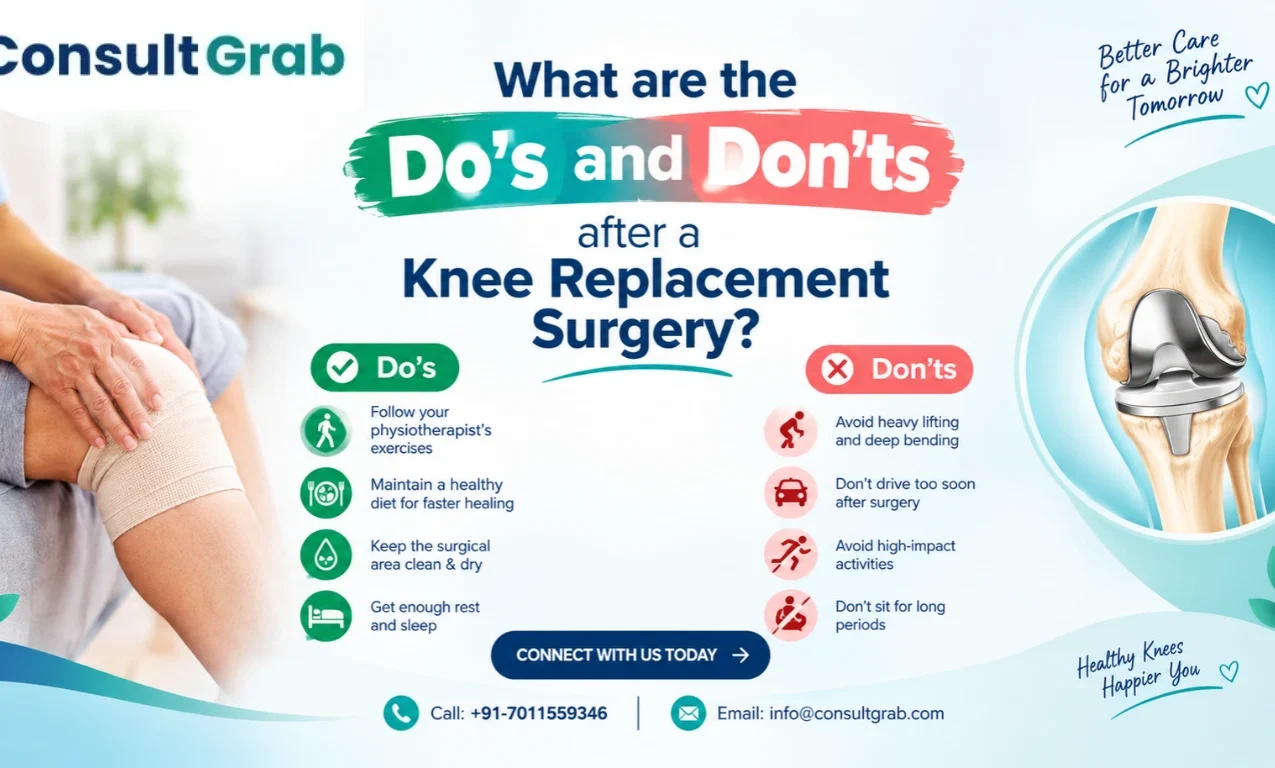
Do's After Knee Replacement Surgery
Move gently and often, keep your leg raised, and follow your physiotherapist’s plan.
Use support when walking
• Use crutches or walking sticks at first.
• Move down to one crutch or one stick when you feel confident.
Keep moving
• Get up and walk around for 5 minutes every hour.
• This helps prevent blood clots (lumps of blood that can block blood flow).
Reduce swelling
• Keep your leg raised as much as possible.
Do your exercises
• Follow the exercises your physiotherapist (a specialist in movement and recovery exercises) has recommended.
Be careful with movement
• Try to avoid twisting your knee, bending down or reaching up.
Don'ts After Knee Replacement Surgery
Avoid crossing your legs, kneeling, long standing, heavy lifting and driving until your doctor says it’s safe.
What not to do
- Do not sit with your legs crossed during the first 6 weeks.
- Do not sleep with a pillow under your new knee.
- Do not kneel on your new knee until your doctor says you can.
- Do not stand for long periods.
- Do not lift or move anything heavy for the first 3 months.
- Do not drive until your doctor advises it is safe.
Driving tip
- Check with your motor insurance company too, before you start driving again.
Need Expert Medical Guidance? Talk to a Specialist Today
Share your details and our care team will call you back with the right specialist and clear next steps.
How Can You Manage Pain After Knee Replacement?
Take the medicines the hospital advises and use ice packs for swelling.
- Before you leave hospital, you’ll be told which painkillers or other medicines you can take at home.
- Taking painkillers before your physiotherapy exercises can make them easier to do.
- Ice packs can help reduce swelling.
What Follow-Up Care Will You Need?
Stitches or clips come out after about 10 days, and a check-up happens about 6 weeks after surgery.
- A nurse will remove your stitches or clips after about 10 days.
- You’ll have a follow-up appointment about 6 weeks after your operation.
- This visit checks that you are recovering well.
What Are the Warning Signs After Knee Replacement Surgery?
Pain in the leg, fever, chills, wound discharge, or worsening redness and swelling can signal infection or a blood clot.
Get urgent medical help if you have:
- Throbbing or cramping pain in your leg
- A high temperature
- Chills and feeling shivery
- Oozing or pus from your wound
- Redness, tenderness, swelling, or knee pain that is not getting better or is getting worse
These could be signs of an infection or a blood clot.
Read More: Risks and Complications of Knee Replacement: What Every Patient Should Know
When Is It an Emergency?
Call emergency services or go to the emergency department straight away if leg pain and swelling come with breathing trouble or chest pain.
- This combination could mean a blood clot in the lung, called a pulmonary embolism.
- It needs to be treated immediately.
How Can ConsultGrab Help With Knee Replacement?
ConsultGrab connects patients with orthopedic surgeons and supports them through the whole treatment journey.
- We help people with severe knee pain, arthritis or joint damage reach the right specialist.
- We understand your case in detail and explain treatment options clearly.
- We give support at every step so you never feel alone.
- Our focus is accurate guidance, transparent information and a smooth, stress-free journey.
Read More: Is Knee Replacement Surgery Safe?
Need Expert Medical Guidance? Talk to a Specialist Today
Share your details and our care team will call you back with the right specialist and clear next steps.
Frequently Asked Questions
Several months or longer, depending on your age and health.
Walk around for 5 minutes every hour to help prevent blood clots.
Move down to one crutch or stick when you feel confident, and follow your care team's advice.
No. Avoid crossing your legs for the first 6 weeks.
Only when your doctor says you can.
Avoid lifting or moving heavy objects for the first 3 months.
Only when your doctor says it is safe. Check with your motor insurer as well.
Keep your leg raised and use ice packs.
A nurse removes stitches or clips after about 10 days.
About 6 weeks after your operation.
Leg pain, high temperature, chills, wound pus, or worsening redness, swelling or pain.