

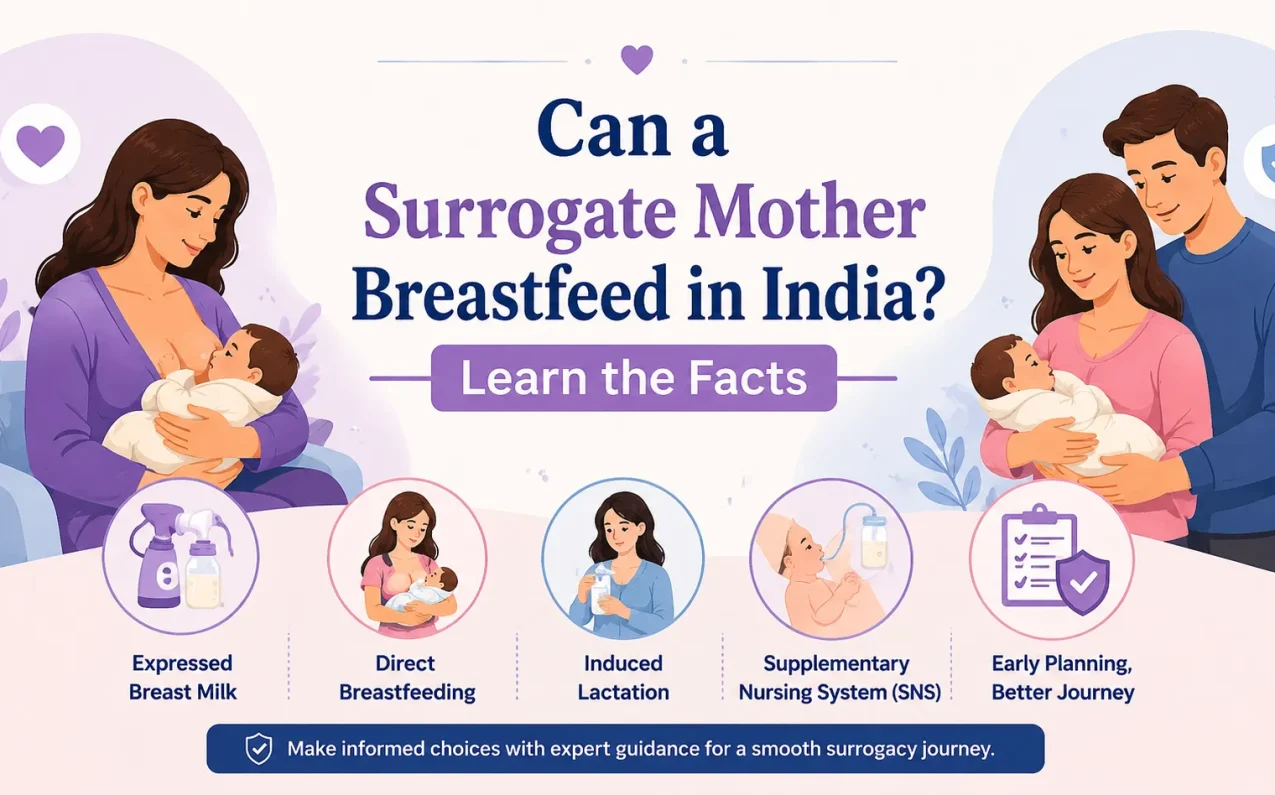
Surrogacy has helped many intended parents achieve their dream of building a family when pregnancy is not medically possible. While most people understand the basic concept of surrogacy, there are still several questions that create confusion during the journey.
One such question is:
Can a surrogate mother breastfeed the baby in India?
The answer is not as simple as a yes or no. From a medical perspective, a surrogate mother may be capable of producing breast milk after childbirth. However, the practical arrangement depends on the agreement between the intended parents and the surrogate, as well as the plans made before the baby’s birth.
Understanding how breastfeeding works in surrogacy can help intended parents make informed decisions and avoid emotional, legal, or practical misunderstandings later. It is equally important to understand the financial aspects of the process, as treatment planning, medical care, and related services can influence the overall surrogacy journey.
If you are evaluating your options, our guide on Surrogacy Cost in Delhi: Complete Guide for Intended Parents can help you better understand the expenses involved before starting the process.
In this guide, we explain the reality of surrogate breastfeeding in India, the available options, and how intended parents can prepare for feeding and bonding with their newborn.
Understanding Breastfeeding After Surrogacy
A surrogate mother carries and delivers the baby on behalf of the intended parents. Since she experiences pregnancy and childbirth, her body naturally undergoes the hormonal changes that typically prepare a woman for milk production after delivery.
This means that after giving birth, a surrogate may be physically capable of producing breast milk.
However, whether the surrogate actually breastfeeds the baby is a separate decision that depends on:
- Mutual agreement between all parties
- Medical advice
- Feeding plans made before delivery
- Emotional considerations
- Terms included in the surrogacy arrangement
Because feeding arrangements and parental responsibilities are often discussed as part of the overall surrogacy process, it is important to understand the legal framework that governs surrogacy in India. Our guide on What Are the Surrogacy Act in India? Complete Legal Guide explains the key regulations, eligibility requirements, and legal considerations that intended parents should know before starting their journey.
Therefore, while breastfeeding may be possible, it is not automatically part of every surrogacy journey.
Is a Surrogate Mother Physically Able to Produce Breast Milk?
In most cases, yes.
After childbirth, hormonal changes naturally stimulate milk production. Because a surrogate experiences pregnancy and delivery, her body may begin producing breast milk just like any other woman who has recently given birth.
This means the surrogate may be able to:
- Produce breast milk after delivery
- Express milk using a breast pump
- Feed the newborn directly if agreed upon
- Provide breast milk for a temporary period after birth
The exact amount of milk produced can vary from person to person.For intended parents exploring surrogacy, understanding the surrogate’s role is only one part of the journey. It is also important to understand the financial aspects involved, and our guide on Surrogate Mother Cost in India 2026 – Check Surrogacy Price explains the key cost factors associated with surrogacy planning in India.
Why Do Intended Parents Have Concerns About Breastfeeding?
Many intended parents have emotional questions regarding breastfeeding arrangements.
Common concerns include:
Emotional Bonding
Some parents worry that direct breastfeeding may create a stronger emotional connection between the surrogate and the baby.
While emotional attachment varies from individual to individual, many intended parents prefer arrangements that maintain clear emotional boundaries from the beginning.
Transition After Birth
Surrogacy is designed so that parental responsibility transfers to the intended parents after delivery. Some families feel more comfortable establishing caregiving and feeding routines themselves immediately after birth.
Clarity and Planning
Without proper planning, misunderstandings regarding feeding arrangements can arise. This is why discussions about breastfeeding should happen well before delivery.
Clear communication is especially important in altruistic surrogacy arrangements, where expectations and responsibilities should be understood by all parties from the start. To better understand the framework governing these arrangements, read our guide on What Is Altruistic Surrogacy? Meaning, Laws & Eligibility.
Common Feeding Arrangements in Surrogacy
Different families choose different approaches based on their comfort level, medical guidance, and personal preferences.
Option 1: Expressed Breast Milk from the Surrogate
One of the most common arrangements is for the surrogate to express breast milk using a pump rather than directly breastfeeding the baby.
In this arrangement:
- The surrogate pumps and stores breast milk.
- The milk is transferred to the intended parents.
- The baby receives breast milk through a bottle.
This approach offers several advantages:
- The baby receives breast milk.
- Intended parents can participate directly in feeding.
- Clear emotional boundaries are maintained.
- Feeding schedules become easier to manage.
For many families, this creates a practical balance between nutrition and parental involvement.
Option 2: Direct Breastfeeding by the Surrogate
In some situations, intended parents and the surrogate may mutually agree that direct breastfeeding will occur for a limited period.
This decision is highly personal and should be discussed carefully before delivery.
Factors that may influence the decision include:
- Medical recommendations
- Feeding goals
- Emotional comfort of all parties
- Post-birth care arrangements
Since every surrogacy journey is unique, there is no single approach that suits every family.
Option 3: Intended Mother Breastfeeding Through Induced Lactation
Many people are surprised to learn that the intended mother may also be able to breastfeed her baby even though she did not carry the pregnancy.
This process is known as induced lactation.
What Is Induced Lactation?
Induced lactation is a medical process that helps stimulate milk production in a woman who has not experienced pregnancy.
Under medical supervision, the intended mother may follow a structured plan that can involve:
- Hormonal preparation
- Lactation-supporting medications
- Regular breast stimulation
- Pumping routines
The goal is to encourage the body to begin producing breast milk before the baby’s arrival.
For many intended mothers, this provides an opportunity to participate in breastfeeding and create a meaningful feeding experience with their newborn.

Calculate Cost Now
Can Induced Lactation Produce Enough Milk?
This is one of the most common questions among intended parents.
The reality is that milk production through induced lactation varies significantly.
Some mothers may produce substantial amounts of milk, while others may produce only a partial supply.
In many cases, induced lactation alone may not fully meet a newborn’s feeding requirements.
However, even when milk supply is limited, the process can still support:
- Feeding participation
- Skin-to-skin contact
- Parent-child bonding
- Emotional connection
Many families find these benefits extremely valuable.
The Supplementary Nursing System (SNS)
Modern lactation support offers another option known as the Supplementary Nursing System (SNS).
This method allows the intended mother to breastfeed while ensuring the baby receives adequate nutrition.
How Does SNS Work?
The system typically involves:
- A small feeding tube
- A container holding milk or infant formula
- Placement of the tube near the breast
When the baby suckles, milk flows through the tube while the baby remains latched to the intended mother’s breast.
As a result:
- The baby receives sufficient nutrition.
- Breastfeeding behavior is encouraged.
- Skin-to-skin contact is maintained.
- Parent-child bonding can be strengthened.
Many lactation professionals recommend SNS when milk supply alone may not be enough.
Why Early Planning Matters
Feeding decisions should never be left until the last moment.
Ideally, intended parents should discuss breastfeeding plans several months before delivery.
Early planning allows time to:
- Explore available feeding options
- Consult fertility specialists
- Understand lactation possibilities
- Prepare feeding supplies
- Establish clear expectations
A well-planned feeding strategy can make the transition after birth smoother and less stressful. Since surrogacy involves medical, legal, and financial planning, many intended parents also review the surrogacy cost in India and complete cost breakdown early in the process to better understand treatment expenses, insurance requirements, and legal obligations before the baby arrives.
The Importance of Professional Guidance
Every surrogacy case is unique.
Factors such as medical history, fertility treatment, delivery plans, and newborn care requirements can influence breastfeeding arrangements.
For this reason, intended parents should seek guidance from:
- Fertility specialists
- Obstetric professionals
- Lactation consultants
- Neonatal care experts
Professional guidance ensures that feeding decisions are safe, practical, and aligned with the family’s goals.
Start Your Parenthood Journey Today
How ConsultGrab Supports Intended Parents
Navigating surrogacy involves much more than medical treatment alone. Intended parents often need guidance on fertility consultations, treatment planning, specialist selection, and understanding the practical aspects of the surrogacy journey.
At ConsultGrab, we help individuals and couples connect with experienced fertility specialists through our verified healthcare network.
Our team assists patients by:
- Connecting them with experienced fertility experts
- Helping schedule consultations
- Providing treatment guidance
- Explaining available options clearly
- Supporting patients throughout their parenthood journey
Whether you are exploring surrogacy for the first time or preparing for important decisions after conception, expert guidance can make the process significantly easier to understand.
Conclusion
So, can a surrogate mother breastfeed the baby in India?
From a biological perspective, a surrogate mother may be able to produce breast milk after delivery. However, the actual feeding arrangement depends on advance planning, mutual understanding, medical guidance, and the preferences of the intended parents.
Today, families have multiple options available, including expressed breast milk, induced lactation by the intended mother, and modern feeding support systems such as SNS.
The most important step is discussing these choices early with qualified fertility and lactation professionals. With proper planning and expert support, intended parents can make feeding decisions that prioritize both the baby’s well-being and the family’s comfort throughout the surrogacy journey.
Frequently Asked Questions (FAQs)
Yes, a surrogate mother may be able to breastfeed the baby after delivery because her body can naturally produce breast milk following childbirth. Whether breastfeeding occurs depends on the feeding plan agreed upon by the surrogate and the intended parents during the surrogacy process.
Yes, the intended mother may be able to breastfeed through a process called induced lactation. Under medical supervision, hormonal support, medications, and regular breast stimulation can help initiate milk production, allowing the intended mother to participate in breastfeeding and newborn bonding.
No, direct breastfeeding is not required in surrogacy. Many families choose to use expressed breast milk, where the surrogate pumps milk that is later fed to the baby through a bottle. This approach allows the baby to receive breast milk while maintaining clear caregiving arrangements.
A Supplementary Nursing System (SNS) is a feeding method that helps an intended mother breastfeed even when milk production is limited. A small tube delivers expressed breast milk or formula while the baby feeds at the breast, supporting nutrition, skin-to-skin contact, and parent-child bonding.
Intended parents should discuss breastfeeding and newborn feeding plans several months before delivery. Early planning with fertility specialists and lactation professionals helps clarify feeding options, prepare for induced lactation if desired, and ensure a smooth transition after the baby's birth.