

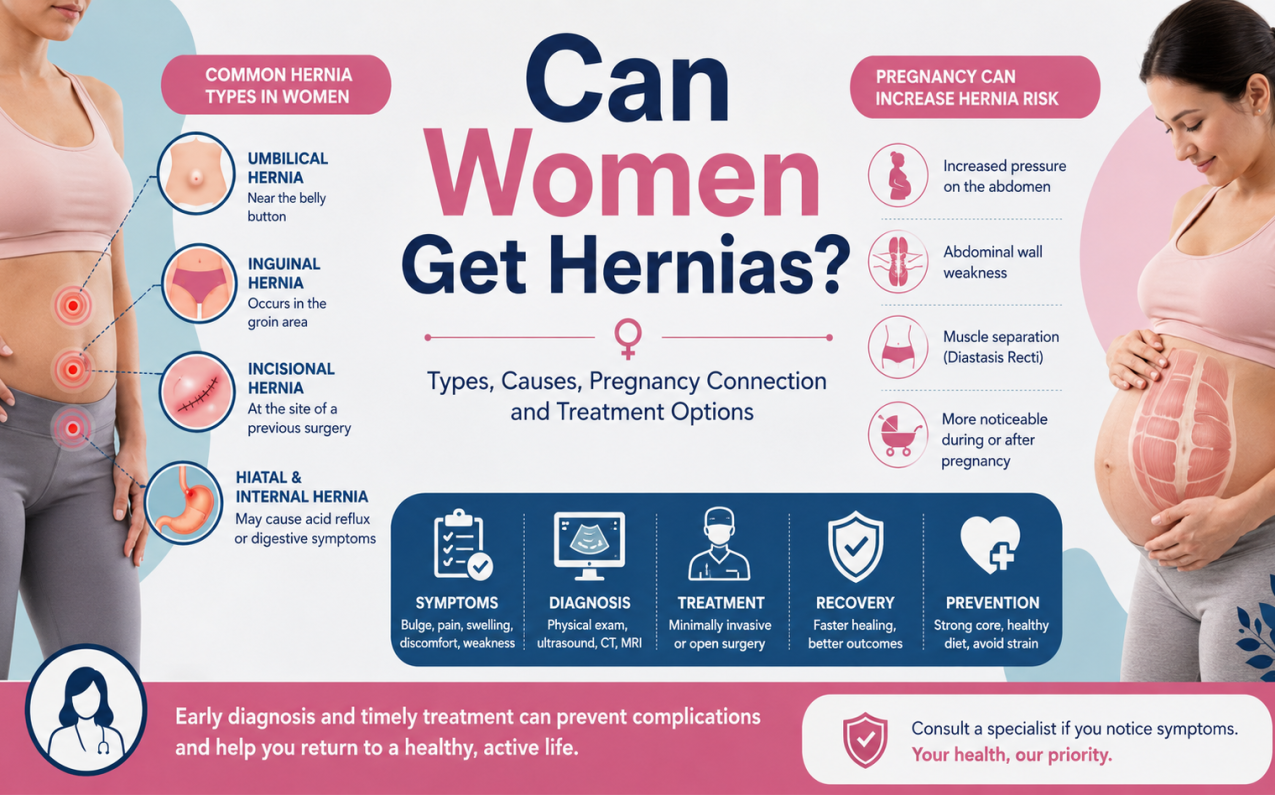
Women often associate hernias with a condition that mainly affects men, but the reality is different. Hernias can occur in both genders and may affect women at various stages of life, especially during pregnancy, after childbirth, or following abdominal surgery. If you are looking for guidance from Best Doctors for Hernia Surgery in Delhi, understanding the causes, symptoms, and treatment options is the first step toward making informed healthcare decisions.
A hernia develops when an internal organ or tissue pushes through a weak area in the surrounding muscle or connective tissue. Although some hernias are more common in men, certain types are frequently diagnosed in women. Early diagnosis and timely treatment can help prevent complications and improve quality of life.
Can Women Develop Hernias?
Table of Contents
ToggleYes, women can develop hernias.
A hernia is not limited to a specific gender. While inguinal hernias are statistically more common in men, women can also experience inguinal hernias as well as several other types of abdominal wall hernias.
Women may develop hernias due to factors such as:
- Pregnancy
- Obesity
- Previous abdominal surgeries
- Chronic coughing
- Heavy lifting
- Aging-related muscle weakness
- Repeated straining due to constipation
The symptoms and severity may vary depending on the type and location of the hernia.
Understanding How Hernias Occur
The abdominal wall consists of muscles and connective tissues that hold internal organs in place. When these tissues become weak or damaged, pressure from inside the abdomen can cause tissues or organs to protrude through the weakened area.
This protrusion creates a hernia, which may appear as a visible bulge or cause discomfort during daily activities.
Common risk factors include:
- Increased abdominal pressure
- Pregnancy-related stretching of abdominal muscles
- Surgical scars
- Genetic predisposition
- Poor muscle strength
- Significant weight gain
Types of Hernias Commonly Seen in Women
Umbilical Hernia
Although more frequently diagnosed in men, women can also develop inguinal hernias.
This type occurs in the groin area and may produce symptoms such as:
- Groin swelling
- Pain during physical activity
- A noticeable bulge
- Burning or aching sensations
Diagnosing inguinal hernias in women can sometimes be more challenging because symptoms may be less obvious than in men.
Incisional Hernia
An incisional hernia develops at the site of a previous surgical incision.
Women who have undergone:
- Cesarean section (C-section)
- Hysterectomy
- Abdominal surgery
may have a higher risk if the surgical wound heals with weakness in the abdominal wall.
Hiatal and Internal Hernias
Some women may experience internal hernias, including hiatal hernias, where part of the stomach pushes upward through the diaphragm.
These hernias may be associated with:
- Acid reflux
- Heartburn
- Hyperacidity
- Difficulty swallowing
- Chest discomfort
Proper medical evaluation is necessary to determine the exact cause of symptoms.
The Connection Between Pregnancy and Hernias
Pregnancy is one of the most important risk factors for hernias in women.
During pregnancy, the growing baby causes the abdominal wall to stretch significantly. This increased pressure can weaken muscles and connective tissues.
As pregnancy progresses, women may develop:
- Umbilical hernias
- Abdominal wall weakness
- Muscle separation (Diastasis Recti)
- Worsening of a pre-existing hernia
Women carrying multiple pregnancies or experiencing significant weight gain may have a greater risk of developing hernias.
Diastasis Recti vs. Hernia
Many women confuse Diastasis Recti with a hernia.
Diastasis Recti refers to the separation of the abdominal muscles that often occurs during pregnancy. While it is not technically a hernia, it can contribute to abdominal weakness and may increase the likelihood of hernia development.
Key differences include:
Diastasis Recti
Hernia
Muscle separation
Tissue protrusion
No hole in muscle wall
Weak opening in muscle wall
Usually not dangerous
May require surgical treatment
Common after pregnancy
Can occur at any time
A medical evaluation can accurately distinguish between the two conditions.
Symptoms of Hernias in Women
Symptoms vary depending on the hernia type and severity.
Common signs include:
- A visible bulge in the abdomen or groin
- Pain during lifting
- Pressure sensations
- Discomfort while standing
- Swelling near surgical scars
- Persistent abdominal weakness
- Burning or aching sensations
Some women experience symptoms only during physical activity, making diagnosis more challenging.
If you are wondering What are the 5 warning signs of a hernia?, the most common indicators include a visible bulge, pain, pressure, swelling, and discomfort that worsens with movement or straining.
What If You Already Have an Umbilical Hernia and Want to Become Pregnant?
Women who already have an umbilical hernia before pregnancy should consult a specialist before conception.
The decision regarding treatment depends on:
- Hernia size
- Symptoms
- Overall health
- Pregnancy plans
- Risk of complications
Small, asymptomatic hernias may be monitored, while symptomatic hernias may require repair before pregnancy.
Each case requires individualized medical assessment.
Is Hernia Treatment Different for Women?
In general, treatment principles are similar for men and women.
The chosen treatment depends on:
- Hernia type
- Symptom severity
- Patient age
- Pregnancy status
- Overall health condition
Watchful Waiting
Small hernias without symptoms may sometimes be monitored under medical supervision.
However, not all hernias are suitable for observation because some may enlarge over time.
Surgical Repair
Surgery remains the definitive treatment for many hernias.
Modern repair techniques include:
- Open surgery
- Laparoscopic surgery
- Robotic-assisted surgery
These procedures aim to strengthen the weakened abdominal wall and prevent recurrence.
Minimally Invasive Techniques
Laparoscopic surgery has become increasingly popular because it often offers:
- Smaller incisions
- Faster recovery
- Reduced postoperative discomfort
- Shorter hospital stays
The most suitable option depends on individual medical circumstances.
When Should You Consult a Specialist?
You should seek medical attention if you notice:
- A bulge near the belly button
- Groin swelling
- Persistent abdominal discomfort
- Pain during activity
- Symptoms around a surgical scar
- Worsening reflux symptoms
- Persistent abdominal weakness after childbirth
Prompt evaluation helps prevent complications such as incarceration or strangulation, which may require emergency treatment.
Ignoring symptoms can lead to worsening discomfort and increased treatment complexity.
How ConsultGrab Can Help
Finding the right specialist for hernia evaluation and treatment can sometimes feel overwhelming. ConsultGrab helps simplify the healthcare journey by connecting patients with experienced specialists and trusted hospitals across India.
Through ConsultGrab, patients can:
- Understand their diagnosis more clearly
- Connect with qualified hernia specialists
- Compare treatment options
- Access trusted hospital networks
- Receive appointment booking support
- Get guidance throughout the treatment process
The goal is to help patients make informed healthcare decisions while receiving transparent information and reliable support at every stage of their treatment journey.
Conclusion
Women can absolutely develop hernias, and several types—including umbilical, incisional, inguinal, and hiatal hernias—can affect females throughout different stages of life. Pregnancy, abdominal wall weakness, obesity, and previous surgeries are among the most common contributing factors.
The encouraging news is that hernias can often be diagnosed accurately and treated effectively using modern surgical and minimally invasive techniques. Early evaluation remains the best approach for preventing complications and ensuring optimal outcomes.
If you notice symptoms such as a bulge, swelling, persistent discomfort, or abdominal weakness, seeking professional medical advice is an important step toward proper diagnosis and treatment planning. Timely care can help protect your long-term health and support a faster return to normal daily activities.
Frequently Asked Questions (FAQs)
Yes. Although inguinal hernias are more frequently diagnosed in men, women can also develop them. Female inguinal hernias often occur in the groin area and may cause pain, swelling, or a visible bulge. Proper evaluation is important because symptoms can sometimes be subtle.
Pregnancy increases pressure on the abdominal wall as the baby grows. This stretching can weaken muscles and connective tissues, increasing the likelihood of umbilical hernias, abdominal wall weakness, and related conditions. Multiple pregnancies may further elevate the risk
Not necessarily. Small, symptom-free hernias may sometimes be monitored by a healthcare provider. However, symptomatic, enlarging, or complicated hernias often require surgical repair to prevent future complications and improve quality of life.
Common symptoms include a visible bulge, abdominal or groin swelling, pain during physical activity, pressure sensations, and discomfort around previous surgical scars. Some women may also experience digestive symptoms depending on the hernia type.
While modern hernia repair techniques are highly effective, recurrence is still possible. Factors such as obesity, smoking, chronic coughing, poor wound healing, or excessive strain on the abdominal wall may increase the risk of a hernia returning after treatment.