

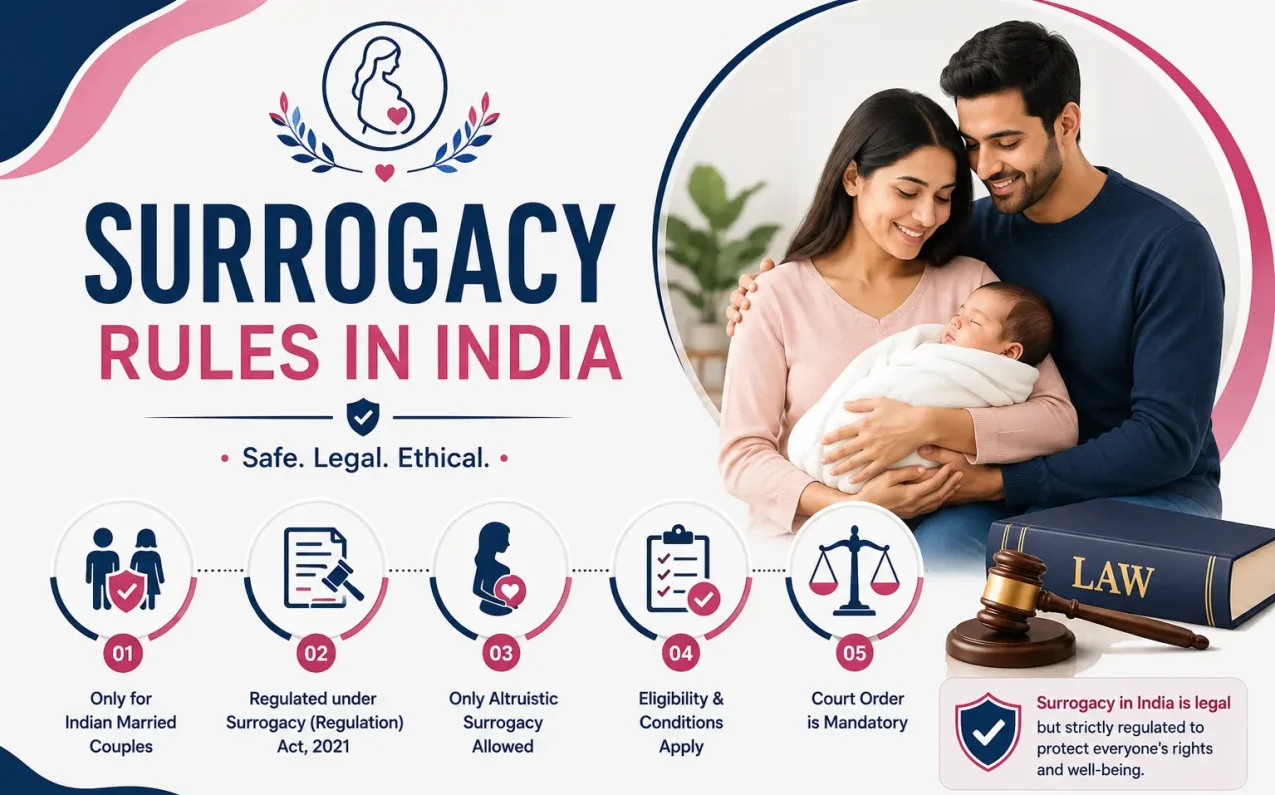
Surrogacy has become an important option for individuals and couples who are unable to conceive naturally or safely carry a pregnancy. However, many people are surprised to learn that surrogacy in India is no longer an open or commercially driven process.
Today, surrogacy in India is governed by strict regulations designed to protect surrogate mothers, intended parents, and children. Before beginning treatment, families must satisfy specific eligibility criteria, obtain medical approvals, complete legal documentation, and follow a regulated process through authorized fertility centers.
Recent reports highlighting concerns about illegal fertility networks and unauthorized reproductive procedures have further increased public attention on compliance and patient safety. As a result, understanding the legal framework has become more important than ever.
This guide explains how surrogacy works in India, who can apply, what approvals are required, and what restrictions intended parents should know before starting their journey.
Is Surrogacy Legal in India?
Table of Contents
ToggleYes, surrogacy is legal in India, but only under specific conditions.
The current framework allows surrogacy through a regulated and monitored process. Commercial arrangements are prohibited, and every surrogacy case must comply with eligibility requirements established by the authorities.
The purpose of these regulations is to:
- Protect women from exploitation.
- Ensure ethical reproductive practices.
- Regulate fertility treatments.
- Safeguard the rights of children born through surrogacy.
- Improve accountability among fertility clinics and healthcare providers.
As a result, intended parents cannot simply arrange a surrogacy agreement independently. Every stage must follow the prescribed legal process.
Why Are Surrogacy Rules Becoming More Important?
In recent years, authorities have increased scrutiny of fertility and reproductive healthcare services.
Investigations into unauthorized fertility operations and alleged irregularities within certain reproductive treatment networks have raised concerns about patient safety, legal compliance, and ethical medical practices.
These developments highlight why intended parents should only work with qualified fertility specialists and registered medical facilities.
Strict regulation helps ensure:
- Proper medical oversight
- Ethical treatment practices
- Transparent documentation
- Protection of surrogate mothers
- Legal security for intended parents
For families considering surrogacy, compliance is no longer optional—it is an essential part of the process. Understanding the current surrogacy rules can help intended parents navigate the journey safely and legally.
Who Can Apply for Surrogacy in India?
Eligibility for surrogacy is restricted and subject to official verification.
Generally, applicants must satisfy requirements relating to:
Age Criteria
Intended mother below 50 years.
Intended father below 55 years.
Marital Status
Eligibility is linked to specific legally recognized family structures under the current regulations.
Medical Need
Applicants must demonstrate a valid medical indication supporting the need for surrogacy.
Child-Related Conditions
Authorities also review whether the applicants satisfy the applicable child-related eligibility requirements before granting approval.
Meeting these conditions does not automatically guarantee approval. Every application is assessed individually.
Medical Assessment Before Approval
A surrogacy journey usually begins with a comprehensive medical evaluation.
Specialists may review:
- Fertility history.
- Previous treatment outcomes.
- Medical conditions affecting pregnancy.
- Existing reproductive health concerns.
- Alternative treatment options attempted previously.
Medical documentation forms a crucial part of the approval process and helps establish whether surrogacy is medically justified.
Understanding the Surrogacy Approval Process
Many intended parents assume that fertility treatment can begin immediately after choosing surrogacy. In reality, several formal approvals are required as part of the surrogacy process before treatment can move forward.
Step 1: Medical Certification
Relevant medical documentation must be obtained from the appropriate authority.
Step 2: Eligibility Review
Authorities verify:
- Age requirements.
- Marital status.
- Medical indication.
- Child-related eligibility conditions.
Step 3: Issuance of Eligibility Certificate
After verification, an eligibility certificate may be granted.
Step 4: Regulatory Permissions
Additional approvals may be required before treatment begins.
Step 5: Treatment Through Authorized Centers
The surrogacy procedure can proceed only through registered and compliant medical institutions.
Because approval certificates have a limited validity period, applicants should ensure that all steps are completed within the permitted timeframe.
Requirements for a Surrogate Mother
The law establishes strict eligibility requirements for women acting as surrogate mothers.
A surrogate mother must:
- Be between 25 and 35 years of age.
- Be married.
- Have at least one biological child.
- Fulfill applicable medical and legal requirements.
Importantly, a woman may act as a surrogate only once during her lifetime.
These safeguards are intended to protect her physical and emotional well-being.
Can a Relative or Friend Become a Surrogate?
Depending on the circumstances and applicable regulations, a surrogate may be a relative or an unrelated woman who satisfies the legal eligibility criteria.
However, regardless of personal relationships, all required approvals, medical evaluations, and legal documentation remain mandatory.
Personal arrangements cannot replace the legal process.
Egg Donation and Surrogacy Rules
Many people mistakenly assume that a surrogate mother can also provide her own eggs.
Under the current framework, the surrogate’s own eggs cannot be used in the surrogacy arrangement.
Fertility procedures must be carried out through authorized systems and approved medical facilities to ensure legal and medical compliance.
Important Legal Documents Required
Before treatment begins, several legal safeguards must be completed.
These generally include:
- Written informed consent.
- Surrogacy-related agreements.
- Medical documentation.
- Regulatory approvals.
- Identity and eligibility verification records.
Proper documentation protects all parties involved and helps prevent future disputes.
What Happens After the Child Is Born?
Following delivery, legal procedures are completed according to the applicable regulations.
The process generally includes:
- Handover of the child to the intended parents.
- Issuance of the birth certificate through the prescribed process.
- Completion of parentage-related legal formalities.
The framework is designed to provide clarity regarding parental rights and responsibilities from the beginning.
Activities Strictly Prohibited Under Indian Law
Certain practices are expressly prohibited.
Commercial Surrogacy
Financial arrangements involving payment for carrying a child are not permitted.
Sex Selection
Selection of an embryo based on gender is prohibited and may attract serious penalties.
Abandonment of a Child
Once the surrogacy process has progressed according to the legal framework, intended parents cannot abandon the child.
Violations can result in significant legal consequences.
Why Choosing the Right Fertility Center Matters
The increasing focus on fertility regulation demonstrates why intended parents should work only with registered clinics and experienced specialists.
Choosing the wrong provider may create:
- Legal complications.
- Treatment delays.
- Documentation issues.
- Regulatory non-compliance.
- Risks for both intended parents and surrogate mothers.
A well-guided process helps ensure that every medical and legal requirement is addressed correctly.
How ConsultGrab Supports Intended Parents
Surrogacy involves much more than medical treatment. It requires careful planning, specialist consultations, eligibility assessment, and guidance throughout the approval process.
At ConsultGrab, we help patients connect with trusted fertility specialists and experienced reproductive healthcare providers.
Our support includes:
- Specialist consultation coordination.
- Fertility treatment guidance.
- Understanding surrogacy eligibility requirements.
- Assistance with appointments and treatment planning.
- Access to verified healthcare networks.
Our goal is to help intended parents make informed decisions while navigating the surrogacy process with confidence.
Conclusion
Surrogacy remains a legally recognized path to parenthood in India, but it operates within a carefully regulated framework.
Eligibility criteria, medical certification, surrogate requirements, legal approvals, and compliance obligations all play an important role in the process.
As regulatory oversight continues to strengthen, intended parents should focus on obtaining accurate information, working with qualified specialists, and ensuring that every step follows the applicable legal requirements.
With the right guidance and proper planning, surrogacy can provide a structured and legally supported route toward building a family.
Frequently Asked Questions (FAQs)
Yes, surrogacy is legal in India under specific legal conditions. The process is regulated through strict surrogacy laws that define eligibility criteria, approval requirements, surrogate mother qualifications, and fertility clinic compliance. Commercial surrogacy is prohibited, and intended parents must follow the prescribed legal process before proceeding.
Eligibility for surrogacy in India depends on factors such as age, marital status, medical necessity, and other legal requirements. Authorities evaluate each application individually and issue eligibility certificates only after verifying that the intended parents meet the conditions established under the applicable surrogacy regulations.
A surrogate mother in India must satisfy specific legal and medical criteria. Generally, she should be between 25 and 35 years of age, be married, and have at least one biological child of her own. She must also provide informed consent and comply with all applicable surrogacy regulations.
No. Surrogacy procedures should be carried out through registered and authorized fertility clinics that comply with Indian regulations. Working with approved medical centers helps ensure legal compliance, proper documentation, ethical treatment practices, and protection for both intended parents and surrogate mothers.
Surrogacy regulations in India help protect surrogate mothers, intended parents, and children born through assisted reproductive procedures. These rules promote ethical medical practices, prevent exploitation, improve transparency in fertility treatments, and ensure that surrogacy arrangements are conducted through a legally regulated framework.