

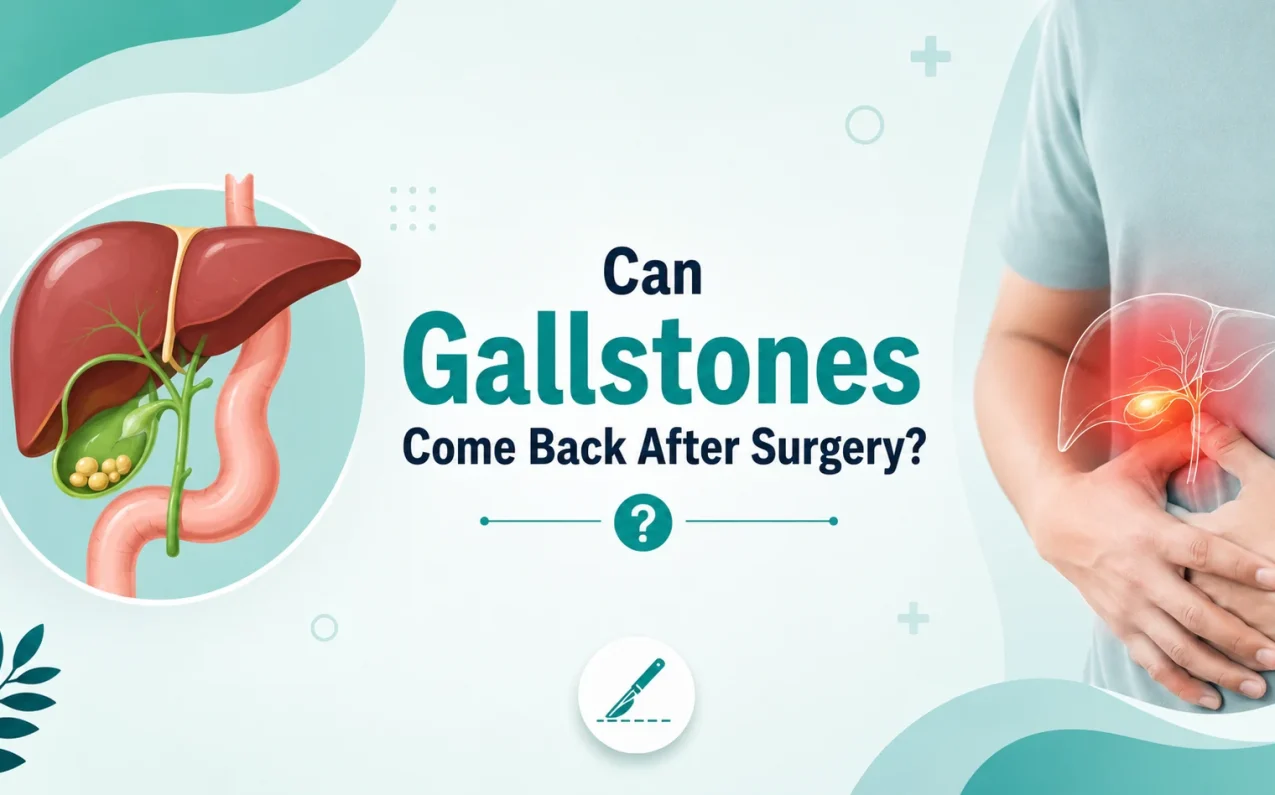
Gallbladder removal surgery is considered a definitive treatment for gallstones. Once the gallbladder is removed, most patients expect the problem to be resolved permanently. However, many people still wonder:
Can gallstones come back after gallbladder surgery?
The short answer is yes — but not in the gallbladder itself. Understanding how and why this happens helps patients take the right preventive steps after surgery. If you are experiencing persistent symptoms or want expert guidance on post-surgery care, consulting the best doctors for gallbladder treatment in Delhi can help identify the underlying cause and recommend appropriate treatment options.
What Happens After Gallbladder Removal?
Table of Contents
ToggleDuring gallbladder surgery, the gallbladder is completely removed. Since gallstones typically form inside this organ, new stones cannot form there once it is removed.
However, bile production does not stop after surgery. The liver continues to produce bile, which flows through a network of bile ducts into the intestine. These bile ducts remain in the body and can, in rare cases, develop stones later.
Can Gallstones Form Again After Surgery?
Yes, gallstones can reappear in the bile ducts after gallbladder removal. These are not gallbladder stones, but post-surgery bile duct stones.
This may happen when:
- Very small stones remain in the bile ducts at the time of surgery
- New stones form over time due to thickened bile
- Bile flow slows or its chemical balance changes
Although this condition is uncommon, it is a recognized medical possibility and is usually treatable when detected early.
Why Do Stones Reappear Even Without a Gallbladder?
Gallbladder removal fixes the storage problem, but it does not change how bile is produced. If bile becomes concentrated or its composition changes, crystals can still form inside the bile ducts.
Certain factors increase the risk, including:
- High-fat, low-fiber diet
- Obesity or rapid weight loss
- Lack of physical activity
- Poor hydration
- Digestive or metabolic imbalance
This is why post-surgery lifestyle care is essential, even after successful gallbladder removal.
Symptoms to Watch For After Surgery
Patients should not ignore symptoms that appear months or even years after surgery. In fact, some of these warning signs may be similar to the common symptoms of gallbladder stones, making proper medical evaluation important even after the gallbladder has been removed.
Symptoms may include:
- Persistent upper abdominal pain
- Yellowing of the eyes or skin
- Nausea or vomiting
- Fever or chills
- Dark urine
- Pale or clay-colored stools
- Bloating or indigestion after meals
- Unusual fatigue
Early evaluation helps prevent complications like bile duct blockage or infection.
How Are Post-Surgery Gallstones Diagnosed?
If symptoms suggest a bile duct problem, doctors may recommend:
- Imaging tests to check the bile ducts
- Blood tests to assess liver function or infection
Timely diagnosis allows treatment before serious complications develop.
How Can You Prevent Gallstones After Surgery?
While not all cases can be prevented, the risk can be significantly reduced by adopting healthy habits:
Follow a Balanced Diet
- Choose a high-fiber, low-fat diet
- Avoid fried, fatty, and processed foods
- Eat regular, well-balanced meals
Stay Active
- Regular physical activity supports digestion
- Exercise helps maintain healthy bile flow
Maintain a Healthy Weight
- Avoid crash diets or sudden weight loss
- Focus on steady, long-term weight management
Stay Well Hydrated
- Adequate water intake keeps bile thin and flowing
Surgery Solves the Problem — Habits Keep It Away
Gallbladder surgery removes the main source of gallstones, but long-term protection depends on daily lifestyle choices.
In simple terms:
Surgery treats the condition, but healthy habits protect the future.
How ConsultGrab Supports Patients After Surgery
Post-surgery concerns can be confusing and stressful. ConsultGrab acts as a trusted bridge between patients and the right medical specialists, ensuring clarity and support at every step.
We assist patients by:
- Explaining post-surgery risks and care clearly
- Connecting patients with relevant specialists through a verified hospital network in Delhi
- Helping with follow-up consultations and evaluations
- Offering transparent guidance on treatment options, costs, and understanding the gallbladder surgery cost in Delhi, including the factors that influence pricing and ways to save on treatment expenses
- Providing continuous support so patients never feel alone
Our goal is to make healthcare decisions simple, informed, and stress-free.
Our Commitment to Patient Care
At ConsultGrab, we believe:
- Every patient’s situation is unique
- Every medical decision should be informed
- Every treatment journey deserves trust and transparency
From recovery guidance to specialist coordination, our care team is committed to supporting patients at every stage.
Final Takeaway
- Gallstones do not return in the gallbladder after removal
- Stones can rarely form in the bile ducts
- Lifestyle habits play a major role in prevention
- Early symptoms should never be ignored
- Proper guidance ensures long-term peace of mind
If you need post-surgery guidance or help connecting with the right specialists, ConsultGrab is here to support your healthcare journey with confidence and care.
Frequently Asked Questions (FAQs)
Gallstones cannot return in the gallbladder once it is removed. However, in rare cases, stones may form in the bile ducts after surgery. This happens when bile thickens or small stones remain unnoticed. Early detection and proper post-surgery care reduce risks.
After gallbladder removal, the liver continues producing bile. If bile flow slows or its composition becomes imbalanced, crystals can form in the bile ducts. Lifestyle factors such as diet, hydration, weight changes, and physical inactivity play an important role in this process.
Symptoms may include persistent upper abdominal pain, jaundice, nausea, vomiting, fever, dark urine, pale stools, bloating, or unexplained fatigue. These signs should not be ignored after surgery, as early medical evaluation helps prevent bile duct blockage or infection.
Risk can be reduced by following a high-fiber, low-fat diet, staying physically active, maintaining a healthy weight, avoiding rapid weight loss, and staying well hydrated. Consistent lifestyle habits support healthy bile flow and lower the chances of bile duct stone formation.
Gallbladder surgery permanently removes the main source of gallstones and relieves most symptoms. While rare bile duct stones can still occur, surgery effectively solves the primary problem. Long-term prevention depends on healthy habits and proper post-surgery follow-up care.