

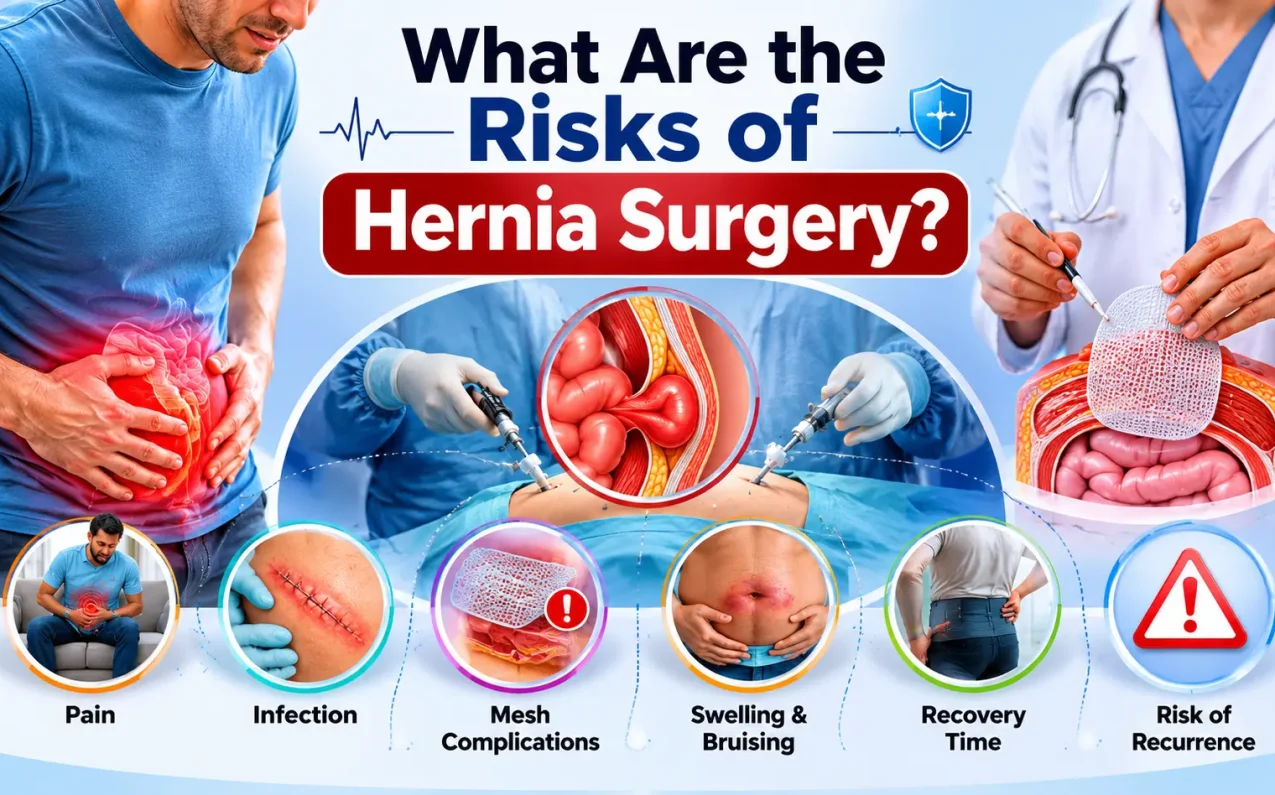
Hernia surgery is considered one of the most commonly performed and generally safe surgical procedures. It is often recommended when a hernia starts causing pain, discomfort, swelling, or affects daily activities. While most patients recover well without major problems, it is still important to understand the possible risks and complications before deciding on surgery.
Every patient’s condition is different, and discussing your case with a qualified surgeon can help you understand the safest treatment approach for you. If you are looking for expert support, consulting the best doctors for hernia surgery in Delhi can help you access personalized treatment plans, verified hospitals, advanced surgical options, and complete treatment guidance for informed decision-making.
Understanding Hernia Surgery
Table of Contents
ToggleA hernia occurs when an internal tissue or organ pushes through a weak area in the muscle wall. Groin hernias are among the most common types treated through surgery. The goal of surgery is to repair the weak area, reduce symptoms, and prevent further complications.
Modern hernia surgery techniques have improved recovery and success rates significantly. However, like all medical procedures, there are certain risks involved.
Common Risks of Hernia Surgery
1. Pain After Surgery
Mild pain and discomfort after surgery are normal. Most patients recover with simple pain medicines and rest. However, in a small number of cases, patients may develop long-term nerve-related pain around the surgical area.
This type of discomfort can sometimes continue for weeks or months. Surgeons usually take several precautions to reduce this risk, and treatment options are available if persistent pain occurs.
2. Numbness Around the Surgical Area
Some patients notice numbness in the upper thigh or groin area after surgery. This happens because small nerves near the surgical site may be affected during the procedure.
In many cases, the numbness becomes less noticeable over time and does not interfere with normal life.
3. Swelling and Temporary Discomfort
Swelling near the operated area is fairly common after hernia repair. Walking, bending, or regular movement may feel uncomfortable during the first few days.
Most patients gradually return to normal activities as healing improves.
4. Bleeding and Wound Infection
As with any surgery, there is a small chance of bleeding or infection at the incision site. Proper wound care, hygiene, and following post-surgery instructions can help reduce these risks.
Symptoms such as redness, fever, unusual swelling, or discharge should always be reported to the medical team immediately.
5. Risks Related to Surgical Mesh
In many hernia surgeries, surgeons use a medical mesh to strengthen the repaired area and reduce the chances of the hernia coming back.
Mesh repair is widely used because it provides long-term support and durability. However, since mesh is a foreign material, a very small number of patients may experience discomfort or complications related to it.
These complications are uncommon, but patients should discuss all available options with their surgeon before treatment.
6. Risk of Hernia Recurrence
Although modern techniques have improved success rates, no surgery can guarantee a zero percent recurrence risk. Factors such as the size of the hernia, lifestyle habits, healing ability, and overall health can affect long-term results.
Following recovery guidelines carefully can help lower the chances of recurrence.
7. Risks Related to Anesthesia
Hernia surgery is often performed under general anesthesia, though other options may sometimes be available depending on the patient’s condition.
Anesthesia is generally safe, but there can be small risks associated with it, especially in older adults or people with existing medical conditions.
Recovery After Hernia Surgery
Most patients recover smoothly and can resume light activities within a few days. Recovery time depends on the type of hernia, the surgical technique used, and the patient’s overall health.
Doctors may advise patients to:
- Avoid heavy lifting for some time
- Follow medication instructions carefully
- Attend follow-up appointments
- Watch for signs of infection or unusual pain
Proper post-operative care plays a major role in successful healing.
When Should You Consider Hernia Surgery?
Not every hernia requires immediate surgery, but symptomatic hernias usually need medical attention. Delaying treatment may increase discomfort and can sometimes lead to complications. In some situations, patients may also discuss hernia treatment without surgery with a specialist to understand whether non-surgical management options may be appropriate for their condition.
A specialist can evaluate:
- Hernia size
- Pain severity
- Daily activity limitations
- Overall health condition
- Best surgical or non-surgical options
Every patient’s condition is different, and discussing your case with a qualified surgeon can help you understand the safest treatment approach for you.
How ConsultGrab Supports Patients
Finding the right surgeon and hospital for hernia treatment can feel overwhelming. ConsultGrab helps patients connect with experienced specialists and trusted hospitals for proper evaluation and treatment guidance.
Our care team supports patients with:
- Expert consultation assistance
- Appointment booking support
- Treatment and cost comparison
- Guidance throughout the treatment journey
- Access to verified multi-specialty hospitals
We believe patients should feel informed, supported, and confident while making healthcare decisions.
Final Thoughts
Hernia surgery is generally safe and highly effective for treating painful or symptomatic hernias. While risks such as pain, numbness, infection, swelling, or mesh-related complications can occur, serious complications are uncommon.
The best way to reduce surgical risks is to consult experienced medical professionals, understand your treatment options clearly, and follow proper recovery guidance after surgery.
If you are experiencing hernia symptoms and need help finding the right specialist or hospital, ConsultGrab can guide you through every step of the treatment process
Frequently Asked Questions (FAQ)
Although hernia surgery is generally safe, some patients may develop long-term complications such as chronic pain, nerve irritation, scar tissue formation, or hernia recurrence. The risk often depends on the type of hernia, surgical method used, and the patient’s overall health and recovery process.
The most common risks of hernia surgery include infection, bleeding, swelling, pain, and reactions to anesthesia. Some patients may also experience temporary discomfort around the surgical site. In most cases, these complications are manageable with proper post-operative care and follow-up treatment from the surgical team.
Surgical mesh is commonly used in hernia repair to strengthen weakened abdominal muscles and reduce recurrence risk. While mesh is considered safe for most patients, rare complications such as infection, mesh migration, or discomfort may occur. Surgeons evaluate each patient carefully before recommending mesh-based hernia repair.
Patients can reduce hernia surgery risks by following recovery instructions carefully, avoiding heavy lifting, maintaining proper wound hygiene, and attending scheduled follow-up appointments. A healthy diet, controlled physical activity, and avoiding smoking can also support faster healing and lower the chances of complications or hernia recurrence.
Patients should contact a doctor immediately if they experience severe pain, fever, excessive swelling, redness, difficulty breathing, or discharge from the surgical site after hernia surgery. Early medical attention helps prevent serious complications and ensures proper recovery following the hernia repair procedure.