

Surrogacy has helped many individuals and couples experience parenthood despite infertility, medical complications, or pregnancy-related risks. However, one of the most common questions people ask before starting the process is:
“Whose egg is used in surrogacy?”
The answer depends on the fertility condition of the intended parents, medical recommendations, and current surrogacy regulations in India.
In some cases, the intended mother’s own egg is used. In other situations, donor eggs may be medically required. Understanding how this works is important for anyone considering IVF and surrogacy treatment.
Intended parents also frequently want to understand the financial aspect of fertility treatment, including IVF procedures, donor egg programs, medical screening, and surrogate-related expenses. Reviewing a detailed Surrogacy Cost Breakdown in India: Complete Guide for Intended Parents (2026) can help families better prepare for the overall treatment journey.
Understanding How Surrogacy Works
Table of Contents
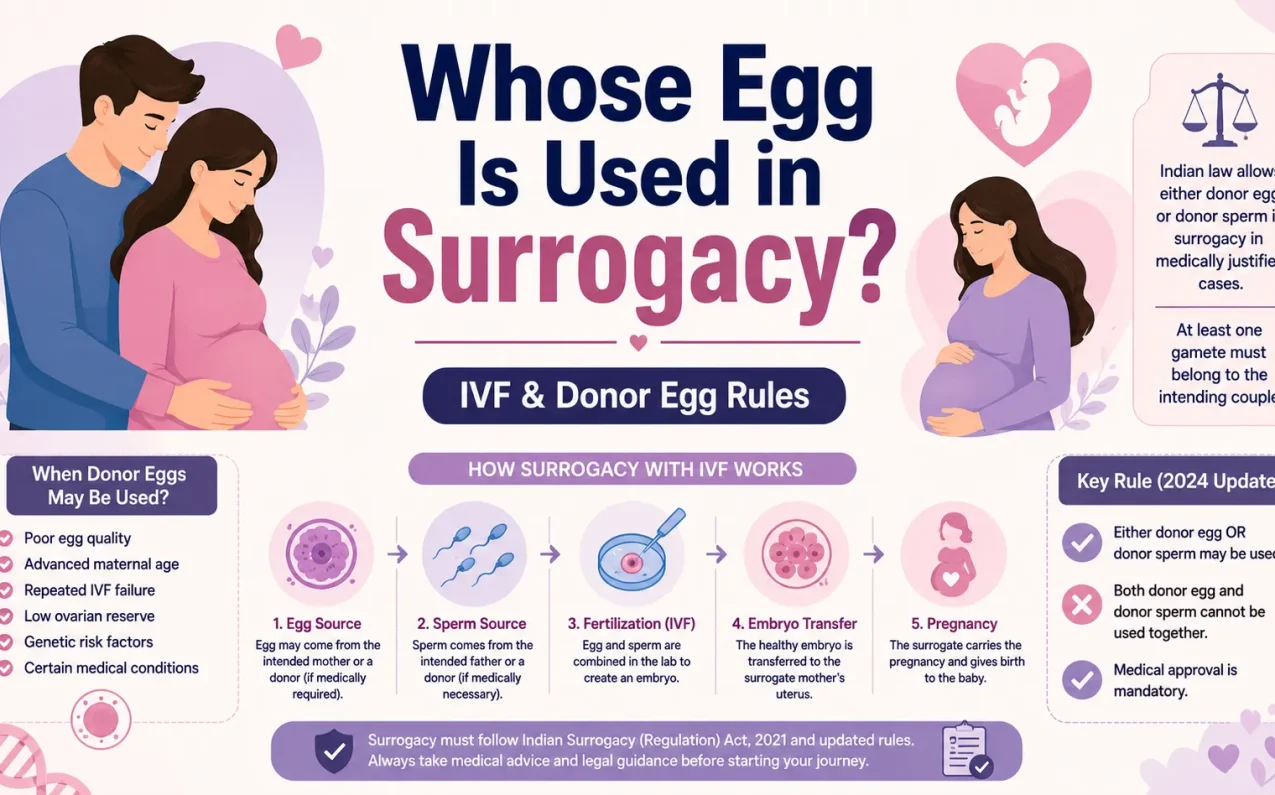
ToggleIn gestational surrogacy, an embryo is created through IVF (In Vitro Fertilization) and transferred into the surrogate mother’s uterus.
The embryo may be formed using:
- Intended mother’s egg and intended father’s sperm
- Donor egg with intended father’s sperm
- Intended mother’s egg with donor sperm
Under current Indian regulations, both donor egg and donor sperm cannot usually be used together in surrogacy arrangements. At least one gamete must belong to the intended couple.
The surrogate mother herself does not provide her own egg in gestational surrogacy.
Can Intended Parents Use Their Own Eggs?
Yes. Whenever medically possible, fertility specialists usually recommend using the intended mother’s own eggs and the intended father’s sperm.
This allows a biological connection between the child and the intended parents. Many intended parents also want clarity about genetic relationships in surrogacy and often ask whether a surrogate baby is biologically related to them. Understanding Is a Surrogate Baby Biologically Yours? Explained can help clarify how genetics, donor eggs, donor sperm, and IVF embryo creation work in modern surrogacy.
However, not every couple can proceed this way because fertility conditions vary from person to person.
Several medical situations may affect egg quality or fertility potential, including:
- Poor ovarian reserve
- Advanced maternal age
- Repeated IVF failure
- Genetic disorder risks
- Low-quality embryos
- Hormonal or reproductive complications
In these situations, fertility specialists may recommend donor eggs to improve pregnancy success rates.
When Are Donor Eggs Used in Surrogacy?
Donor eggs may be considered when pregnancy using self-eggs becomes medically difficult or unsafe.
Common situations include:
Poor Egg Quality
Some women produce eggs, but the eggs may not develop into healthy embryos during IVF treatment.
Increased Genetic Risks
Women above a certain age may face higher chances of chromosomal abnormalities affecting embryo development.
Repeated Failed IVF Cycles
Multiple unsuccessful IVF attempts can sometimes indicate that donor eggs may offer better implantation and pregnancy outcomes.
Certain Medical Conditions
Some reproductive or hormonal conditions can severely reduce fertility potential, making donor eggs medically necessary.
In such cases, fertility specialists carefully evaluate whether donor egg IVF is appropriate.
2024 Update on Donor Eggs and Donor Sperm in Surrogacy
Surrogacy regulations in India have evolved significantly in recent years.
Earlier amendments to surrogacy rules required intended couples to use their own gametes during surrogacy treatment. This created difficulties for couples facing genuine fertility-related medical complications where donor eggs or donor sperm were medically necessary.
After legal discussions and multiple petitions involving fertility patients, the government later introduced an important clarification in 2024.
Under the updated provisions:
- Either donor egg or donor sperm may be permitted in medically justified cases
- Both donor egg and donor sperm cannot be used together
- At least one gamete must belong to the intended couple
- Medical certification and approval are required before donor gamete use
- Surrogacy continues to remain regulated under specific legal and medical conditions
This update provided relief for many couples struggling with infertility while maintaining regulatory safeguards within the surrogacy process.
Because surrogacy regulations may continue evolving, intended parents should always seek updated medical and legal guidance before proceeding.
Does the Baby Have a Genetic Connection With the Intended Mother?
If the intended mother’s own egg is used, the baby shares a direct genetic connection with her.
If donor eggs are used, the genetic material comes from the donor egg provider. This is why many intended parents often ask important questions about legal and biological parenthood in surrogacy arrangements. Understanding Who Is the Biological Mother of a Surrogate Child? Explained can help clarify the role of genetics, egg donation, pregnancy, and fetal development in modern surrogacy.
Medical research increasingly highlights the importance of the intrauterine environment during pregnancy. The conditions inside the womb influence how genes function and develop throughout fetal growth.
This means pregnancy involves more than genetics alone. Maternal health, nutrition, hormones, and the pregnancy environment all contribute to fetal development.
Why Medical Guidance Is Important Before Surrogacy
Every surrogacy case is medically and emotionally different.
Before proceeding, intended parents should discuss:
- Egg quality and fertility testing
- IVF success probability
- Need for donor eggs or donor sperm
- Legal eligibility
- Embryo transfer procedures
- Medical risks and treatment planning
- Surrogacy regulations and documentation
Proper guidance helps reduce confusion and allows intended parents to make informed decisions with greater confidence.
Choosing Trusted Fertility and Surrogacy Support
Surrogacy requires coordination between fertility specialists, IVF experts, medical coordinators, and legal processes.
Having proper guidance throughout the journey can help intended parents better understand:
- Fertility treatment options
- IVF procedures
- Donor egg eligibility
- Surrogacy regulations
- Treatment planning
- Appointment coordination
- Medical documentation requirements
A transparent and patient-focused approach is especially important in emotionally sensitive fertility journeys.
Healthcare guidance platforms like ConsultGrab help connect patients with experienced fertility specialists and verified healthcare networks for surrogacy consultation and treatment guidance.
Conclusion
The egg used in surrogacy depends entirely on the fertility condition and medical circumstances of the intended parents.
In many cases, intended parents can use their own eggs and sperm. However, medically necessary donor egg or donor sperm use may be permitted under regulated conditions in India.
Recent updates in surrogacy regulations have provided greater clarity for couples facing infertility-related medical challenges, especially where donor gametes are required.
Because surrogacy laws, IVF protocols, and fertility regulations continue to evolve, intended parents should always seek proper medical consultation and updated treatment guidance before beginning the process.
With experienced fertility support and transparent medical coordination, surrogacy can become a safer and more informed path toward parenthood.
Frequently Asked Questions (FAQs)
In gestational surrogacy, the egg may come from the intended mother or from an egg donor, depending on the medical condition and fertility status of the intended parents. Under Indian surrogacy regulations, at least one gamete must belong to the intending couple, and donor egg use is allowed only in medically approved situations.
Yes, donor eggs may be used in surrogacy in India under specific medical conditions. Recent surrogacy rule updates allow either donor egg or donor sperm use if medically necessary and properly approved. However, both donor egg and donor sperm cannot usually be used together in the same surrogacy arrangement.
No, in gestational surrogacy the surrogate mother does not use her own egg. The embryo is created through IVF using the intended mother’s egg or a donor egg and then transferred into the surrogate’s uterus. This means the surrogate carries the pregnancy but is typically not genetically related to the baby.
Fertility specialists may recommend donor eggs in cases of poor egg quality, advanced maternal age, repeated IVF failure, low ovarian reserve, or increased genetic disorder risks. Donor egg IVF may improve embryo quality and pregnancy success rates for intended parents facing fertility-related medical complications.
If donor eggs are used, the baby’s genetic material comes from the egg donor rather than the intended mother. However, pregnancy still plays an important biological role in fetal development. Medical research shows the intrauterine environment during pregnancy significantly influences fetal growth and gene expression.