

Surrogacy has become an important fertility solution for individuals and couples facing infertility, medical complications, or situations where carrying a pregnancy is not medically possible. Over the past few years, awareness about surrogacy in India has increased significantly, and many people now want to understand who is legally eligible for surrogacy treatment under Indian law.
Understanding the legal requirements is extremely important because Indian surrogacy regulations define specific eligibility criteria for intended parents. If you want to understand the complete legal requirements in detail, you can also read our guide on Who Is Eligible for Surrogacy in India?
One of the most commonly searched questions today is:
Can a single male have a surrogate in India?
Table of Contents
ToggleThis topic has gained widespread attention because, in earlier years, some unmarried men were able to become fathers through surrogacy arrangements. However, after the introduction of stricter surrogacy regulations in India, the legal framework surrounding surrogacy eligibility changed considerably.
In this article, we explain the current legal status of surrogacy for single men in India, recent legal debates around the issue, and the important things intended parents should understand before considering surrogacy treatment.

Calculate Cost Now
Is Surrogacy for Single Men Allowed in India?
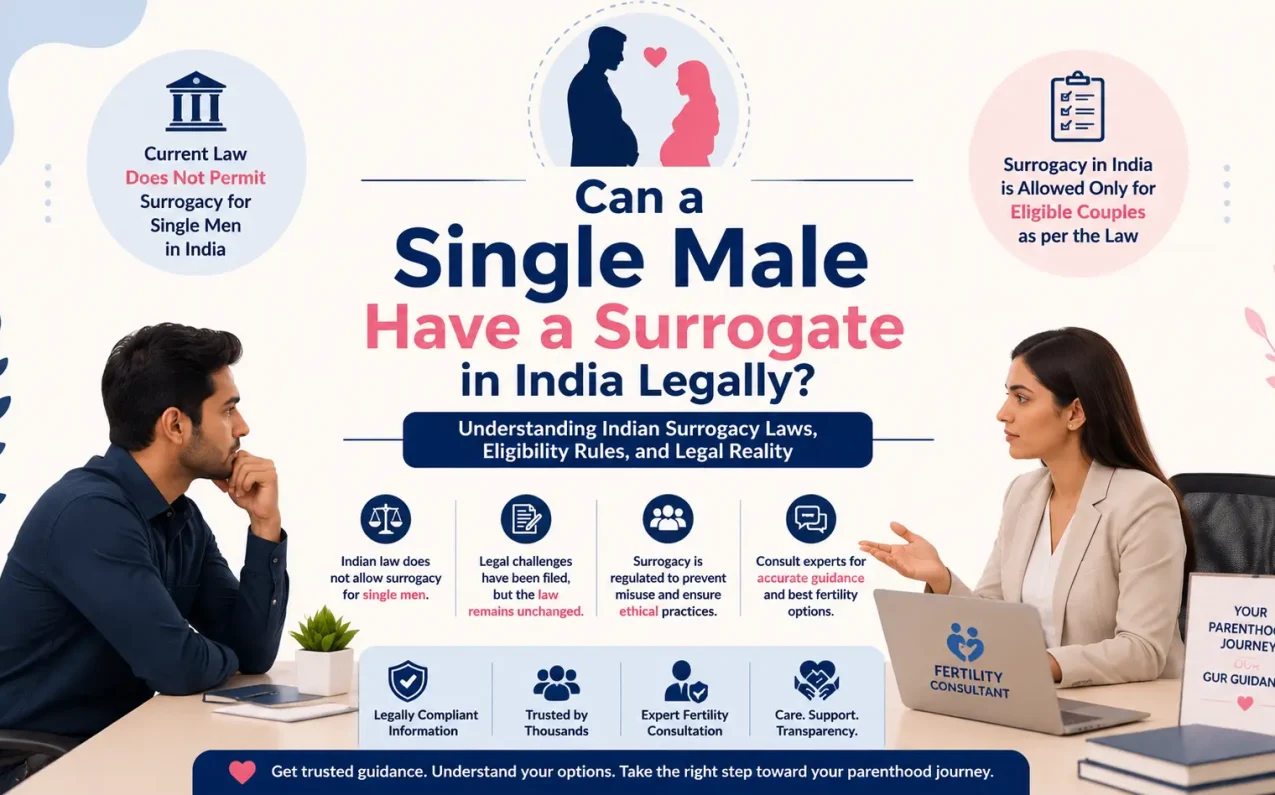
At present, Indian surrogacy regulations do not allow single men to pursue surrogacy treatment legally in India.
This restriction applies regardless of whether the individual is:
- Unmarried
- Divorced
- Widowed
- Living independently
- Belonging to any specific social or personal background
Under the current legal framework, single male applicants are not considered eligible for surrogacy treatment in India.
Why Is Surrogacy for Single Men Restricted?
India introduced strict surrogacy regulations to regulate fertility practices and reduce the risk of misuse, unethical arrangements, and commercial exploitation.
After these regulations came into effect, surrogacy eligibility criteria became much narrower and more structured. As a result, access to surrogacy for single men is currently not permitted under Indian law.
Before the present regulations were implemented, surrogacy practices in India were comparatively less regulated. During that period, some unmarried men were able to become parents through surrogacy. However, the legal situation today is very different.
Currently, Indian law does not provide legal approval for single men seeking surrogacy treatment.
Legal Challenges and Public Debate Around the Issue
The question of surrogacy eligibility for single men has also become part of wider legal and constitutional discussions in India.
In recent years, legal petitions reportedly challenged certain provisions of India’s surrogacy regulations before the Delhi High Court. These petitions questioned why single men and some other categories of individuals are excluded from accessing surrogacy services under the present law.
The legal arguments reportedly focused on issues such as:
- Reproductive autonomy
- Privacy rights
- Personal choice in parenthood
- Equality in access to reproductive options
Concerns were also raised regarding restrictions on commercial surrogacy and strict eligibility conditions linked to marital status and surrogate selection requirements.
These discussions brought renewed public attention to whether India’s surrogacy laws may evolve in the future to include broader categories of intended parents.
However, despite these legal debates and constitutional discussions, the current legal position remains unchanged at present.
Current Legal Position Remains the Same
As of now, Indian surrogacy regulations still do not permit surrogacy for single men.
Anyone considering surrogacy should therefore rely only on updated legal guidance, verified fertility consultation, and compliant medical procedures before making any parenthood-related decisions.
Calculate Cost Now
How Have Surrogacy Laws Changed Over Time?
Before the implementation of stricter surrogacy regulations, India had a more flexible surrogacy environment. During that period, unmarried individuals could sometimes pursue parenthood through surrogacy arrangements.
However, after legal reforms and stricter regulatory control, surrogacy laws became more structured and restrictive. Greater emphasis was placed on:
- Legal compliance
- Ethical fertility practices
- Medical regulation
- Restricted eligibility criteria
- Protection against commercial exploitation
To better understand these legal changes and the latest eligibility framework, you can also read our detailed guide on Surrogacy Laws in India (New Rules) 2026, which explains the current regulations, restrictions, and legal requirements for intended parents in India.
Because of these changes, surrogacy for single men is no longer legally permitted in India under the present framework.
Important Things Intended Parents Should Understand
Many people search online hoping to find alternative pathways or exceptions regarding surrogacy eligibility. However, intended parents should understand that surrogacy involves several important legal and medical considerations, including:
- Medical eligibility assessment
- Legal documentation
- Fertility regulations
- Ethical compliance
- Hospital approval procedures
Attempting surrogacy without proper legal eligibility may create complications related to treatment, documentation, or future parenthood processes.
This is why proper fertility consultation and legal understanding are extremely important before beginning any surrogacy journey.
Understanding Eligibility Before Starting Surrogacy Treatment
Every surrogacy case is different. Eligibility may depend on multiple medical and legal factors, including marital status, fertility conditions, medical necessity, and documentation requirements.
Because Indian surrogacy laws are highly regulated, many intended parents often feel confused about:
- Who qualifies for surrogacy
- Current legal requirements
- Medical approval procedures
- Fertility consultation steps
- Legal compliance and documentation
Receiving proper guidance from experienced fertility specialists and healthcare coordinators can help patients better understand the process and avoid unnecessary confusion.
Start Your Parenthood Journey Today
How ConsultGrab Supports Intended Parents
At ConsultGrab, we understand that fertility and parenthood decisions can often feel emotionally and legally overwhelming.
Our role is to help patients connect with trusted fertility specialists and experienced healthcare providers who can explain:
- Current surrogacy eligibility rules
- Fertility treatment pathways
- Medical evaluation procedures
- Consultation and appointment support
- Treatment planning guidance
We focus on transparent information, patient-centered support, and helping intended parents make informed healthcare decisions with confidence.
Calculate Cost Now
Final Conclusion
To summarize clearly, surrogacy for single men is currently not legally allowed in India under the existing surrogacy regulations.
Although surrogacy laws and eligibility rules have been debated in courts and public discussions, the present legal framework still does not permit single male applicants to pursue surrogacy treatment in India.
Anyone exploring fertility or surrogacy options should first seek accurate medical guidance, legal clarity, and professional consultation before making important parenthood decisions.
If you are looking for trusted fertility consultation support and guidance regarding surrogacy treatment pathways, ConsultGrab can help connect you with experienced specialists and verified healthcare networks in Delhi.
Frequently Asked Questions (FAQ)
No, under the current Indian surrogacy law, single men are not legally eligible for surrogacy treatment in India. The existing Surrogacy (Regulation) Act permits surrogacy only for specific eligible categories defined under the law. Single male applicants are presently excluded from accessing legal surrogacy services in India.
India introduced strict surrogacy regulations to prevent commercial exploitation and regulate fertility practices more effectively. After the implementation of the Surrogacy (Regulation) Act, eligibility criteria became more restrictive. As a result, Indian law currently does not permit single men to pursue surrogacy treatment within the country.
Yes, before stricter surrogacy laws were implemented in India, surrogacy practices were comparatively less regulated. During that period, some unmarried men were able to become parents through surrogacy arrangements. However, after the introduction of updated legal regulations, single men are no longer considered eligible for surrogacy treatment in India.
Yes, legal petitions have reportedly challenged certain provisions of India’s surrogacy regulations before the Delhi High Court. The petitions questioned the exclusion of single men from surrogacy eligibility and raised issues related to reproductive autonomy, privacy rights, and equality in access to parenthood options under Indian law.
Intended parents should understand that surrogacy in India involves strict legal, medical, and ethical requirements. Eligibility depends on current Indian surrogacy regulations, medical evaluation, documentation, and hospital compliance procedures. Consulting experienced fertility specialists and verified healthcare providers is important before starting any surrogacy process.