


Last Updated: October 2026
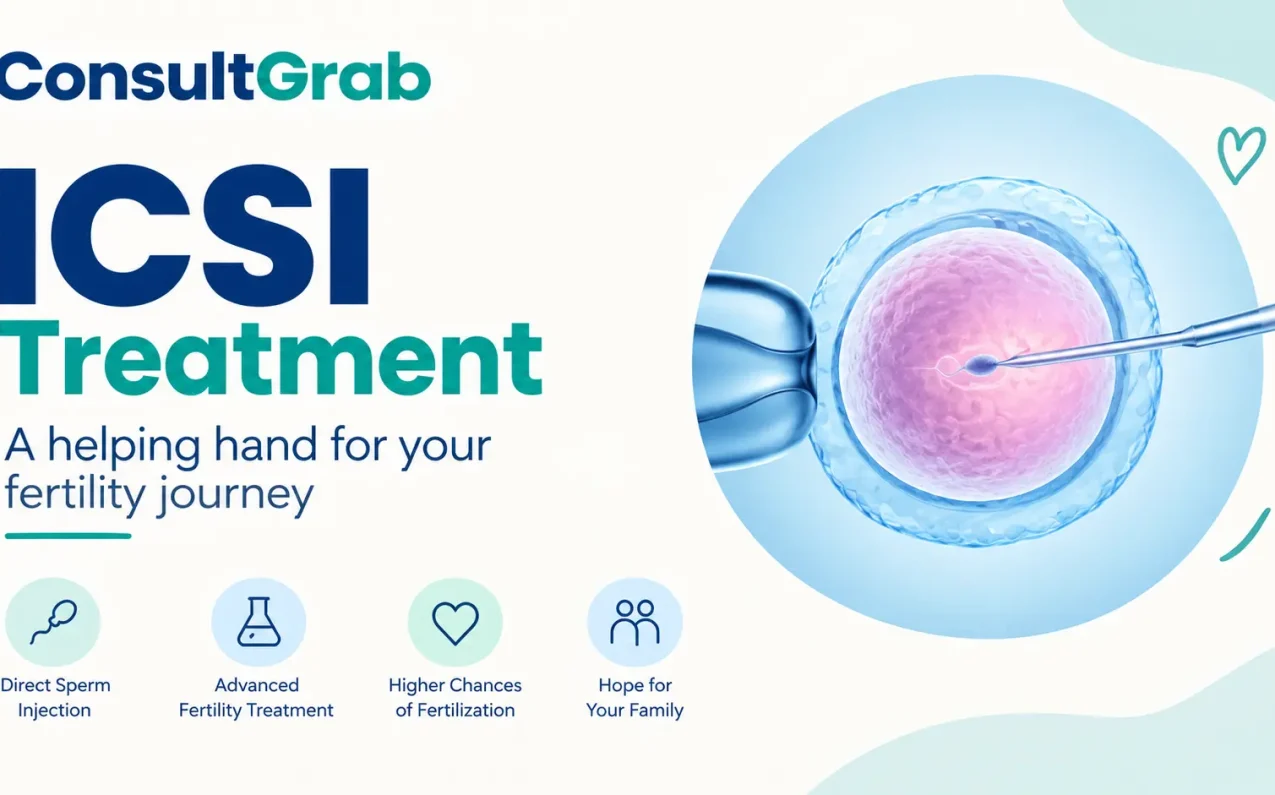
ICSI (Intracytoplasmic Sperm Injection) is an advanced fertility treatment and a specialized form of IVF (In Vitro Fertilization).
- One healthy sperm is picked and injected directly into a mature egg.
- This is done under a microscope, using a specialized technique.
- If fertilization happens, the embryo is watched in the laboratory.
- A suitable embryo is then placed in the woman’s uterus.
Start Your Journey Toward Parenthood Today
Table of Contents
ToggleOur specialists are here to guide you with compassion, expertise, and personalized care every step of the way.
What does ICSI stand for?
- Intracytoplasmic Sperm Injection.
- In simple words: placing a sperm inside the egg, instead of letting it find its own way in.
Is ICSI the same as IVF?
- ICSI is a type of IVF, not a separate treatment.
- In regular IVF, sperm and egg are placed together to fertilize on their own.
- In ICSI, the lab team places one sperm inside each suitable egg.
How Does ICSI Treatment Work?
ICSI follows seven main steps, from stimulating the ovaries to transferring the embryo.
- Ovarian stimulation: Fertility medicines help the ovaries produce several mature eggs.
- Egg retrieval: The mature eggs are collected through a short procedure.
- Sperm collection: A sperm sample is collected.
- Sperm selection: An embryologist (a lab specialist) picks healthy sperm.
- Sperm injection: One selected sperm is injected into each suitable egg.
- Embryo development: The fertilized eggs are monitored as they grow into embryos.
- Embryo transfer: A suitable embryo is placed in the uterus.
Read More: ICSI Treatment Cost in India (2026): Is It Better Than Standard IVF?
When Is ICSI Recommended?
ICSI is mainly recommended when sperm quality is a problem or earlier IVF has not worked.
Common situations where ICSI may be advised
- Low sperm count.
- Poor sperm movement (motility).
- Abnormal sperm shape.
- Fertilization failure in a previous regular IVF cycle.
- Sperm collected through a surgical procedure.
- Certain other fertility conditions.
Does every IVF patient need ICSI?
- No. ICSI is not necessary for every IVF patient.
- A fertility specialist decides after reviewing your case.
What does the doctor check before recommending ICSI?
- Medical history.
- Fertility test results.
- Egg quality.
- Sperm quality.
- Results of any previous treatment.
ICSI Success Rate: What Affects It?
ICSI can improve the chances of fertilization when sperm problems are present, but it cannot guarantee pregnancy.
Factors that affect ICSI success
- The woman’s age.
- Egg quality.
- Sperm quality.
- Embryo quality.
- The underlying cause of infertility
Why does success differ from couple to couple?
- Every couple has a different medical situation.
- That is why a personalized plan matters more than a general number.
What Are the Risks of ICSI?
Like other fertility treatments, ICSI carries some risks at different stages.
- Risks linked to ovarian stimulation.
- Risks linked to egg retrieval.
- Risks linked to embryo transfer.
Your treatment plan and expected outcomes should be discussed with a qualified fertility specialist.
Read More: Is ICSI More Risky Than IVF? A Simple Guide
How Can ConsultGrab Help?
ConsultGrab connects patients with trusted medical specialists, so every decision feels informed and confident.
- We understand your case in detail.
- We connect you with relevant specialists.
- We explain treatment options clearly.
- We support you through the whole process.
For families exploring other paths, we also guide patients through surrogacy in India, with medical and legal support.
Start Your Journey Toward Parenthood Today
Our specialists are here to guide you with compassion, expertise, and personalized care every step of the way.
Still Confused...... ??
Frequently Asked Questions (FAQs)
ICSI is an advanced form of IVF where one healthy sperm is injected directly into a mature egg.
ICSI is a type of IVF. The lab team places the sperm inside the egg instead of letting fertilization happen on its own.
It is mainly advised for low sperm count, poor sperm movement, abnormal sperm shape, or earlier IVF failure.
No. It can improve fertilization chances, but it does not guarantee pregnancy.
No. It can improve fertilization chances, but it does not guarantee pregnancy.
Risks are linked to ovarian stimulation, egg retrieval, and embryo transfer.



1 Comment
Best Sex Position and Time to Get Pregnant: What Ayurveda Says
[…] Read More: What Is ICSI Treatment? Process, Uses, Success & Risks (2026) […]