
A hernia is a condition that many people ignore in the beginning because the symptoms may seem mild. Some notice a small bulge near the abdomen or groin, while others experience discomfort only during physical activity. Because of fear of surgery, cost concerns, or lack of awareness, many patients search for ways to manage a hernia without an operation.
But can a hernia actually heal without surgery? And if surgery is delayed, what precautions should be taken to reduce complications? In this guide, we explain how hernias develop, whether non-surgical management is possible, and when medical attention becomes necessary. If you are considering treatment options or want expert medical advice, consulting the Best Doctors for Hernia Surgery in Delhi can help you understand the safest and most effective approach based on your condition. Understanding your options early can help reduce risks and support better long-term outcomes..
Understanding What a Hernia Is
The abdominal wall normally acts like a protective barrier that keeps internal organs and tissues in place. A hernia develops when a weak area or defect forms in this wall, allowing internal tissue — often part of the intestine or fatty tissue — to push outward.
This can create a visible bulge or swelling, especially during coughing, lifting, or straining.
Common areas where hernias may appear include:
- Groin region (inguinal hernia)
- Around the belly button (umbilical hernia)
- Previous surgical incision sites (incisional hernia)
- Upper stomach area near the diaphragm (hiatal hernia)
Some hernias remain small for years, while others gradually enlarge over time.
Why Hernias Can Become Dangerous
The main concern with a hernia is not just the swelling itself. The real danger occurs when the protruding tissue becomes trapped.
This condition can cut off the blood supply to the affected tissue, leading to a serious complication known as strangulation. If this happens, the trapped intestine may become damaged or die, which can quickly become life-threatening.
Warning Signs That Need Immediate Medical Attention
Seek urgent medical care if you experience:
- Sudden severe pain
- Redness or dark discoloration over the bulge
- Vomiting or nausea
- Fever
- Bloating or inability to pass stool
- A hernia that cannot be pushed back inward
These symptoms may indicate an emergency situation requiring immediate surgical treatment.
Can Hernia Be Treated Without Surgery?
This is one of the most searched health questions online.
The reality is important to understand clearly:
A hernia does not permanently close or repair itself without surgery because the muscle defect remains physically present. If you are unsure whether your symptoms may be related to a hernia, learning about the 5 Warning Signs of a Hernia can help you identify common symptoms and understand when medical attention may be necessary. No medicine, herbal treatment, exercise routine, yoga practice, or home remedy can completely repair the opening in the abdominal wall.
However, in certain situations, non-surgical management may help:
- Reduce discomfort
- Slow worsening of symptoms
- Lower pressure on the abdominal wall
- Improve day-to-day comfort while waiting for surgery
- Help patients who are temporarily unfit for surgery
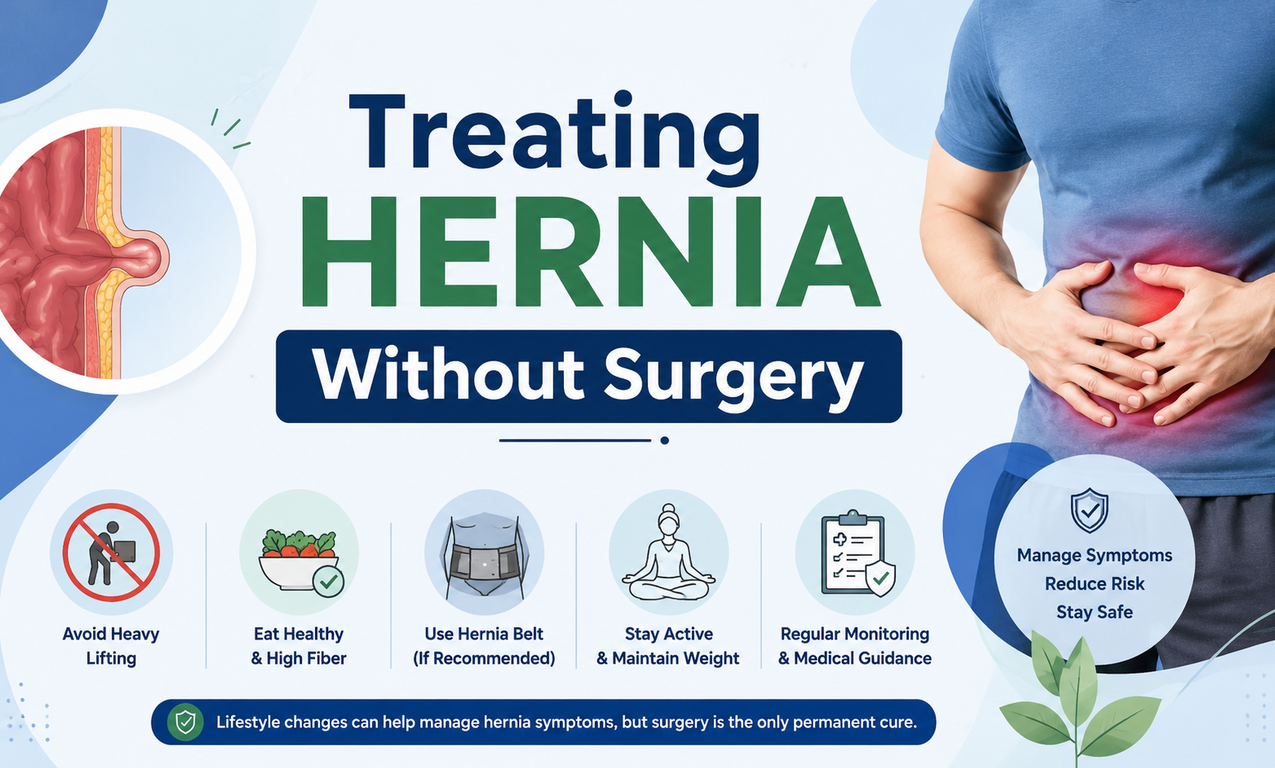
This approach is usually called conservative management or watchful waiting.
Non-Surgical Ways to Manage Hernia Symptoms
1. Avoid Activities That Increase Abdominal Pressure
A hernia tends to worsen when pressure inside the abdomen increases repeatedly.
To reduce strain:
- Avoid lifting heavy weights
- Prevent constipation and straining during bowel movements
- Avoid excessive coughing without treatment
- Use proper posture while exercising
- Avoid sudden twisting or jerking movements
- Maintain healthy body weight
Even small lifestyle adjustments can help reduce symptom progression.
2. Dietary Changes Can Help Certain Hernias
For patients with hiatal hernia, food habits often play a major role in symptom control.
Helpful measures may include:
- Eating smaller meals
- Avoiding lying down immediately after eating
- Limiting spicy and acidic foods
- Reducing caffeine intake
- Avoiding heavy late-night meals
- Including fiber-rich foods to prevent constipation
These changes may help reduce acid reflux, chest discomfort, and bloating.
3. Hernia Belts and Trusses
Some patients use supportive devices called hernia belts or trusses.
These are designed to apply gentle external pressure over the weakened area to keep the hernia reduced temporarily.
They may provide symptom relief in selected cases, especially when:
- The hernia can be pushed back inward
- Surgery is temporarily delayed
- Daily activity causes discomfort
However, proper fitting is extremely important.
Using a belt incorrectly over a trapped hernia can be risky and may worsen complications.
Long-term use may also lead to:
- Skin irritation
- Discomfort
- Reduced effectiveness over time
- Difficulty keeping the device in place
A support belt should only be used after medical evaluation.
4. Gentle Exercise and Movement
Some patients benefit from carefully supervised low-strain movement and breathing techniques.
Safe activities may include:
- Walking
- Light stretching
- Posture correction exercises
- Controlled breathing exercises
- Gentle physiotherapy-guided core strengthening
Exercises that aggressively increase abdominal pressure should be avoided.
5. Medications for Symptom Relief
Medication cannot repair a hernia itself, but certain medicines may help manage associated symptoms.
For example:
- Acid-reducing medications may help hiatal hernia symptoms
- Stool softeners may reduce straining
- Treatment for chronic cough can lower abdominal pressure
Any medication should be taken under professional medical guidance.
6. Watchful Waiting Under Medical Supervision
Not every hernia requires immediate surgery.
In some cases, especially when symptoms are mild, specialists may recommend regular monitoring.
This usually involves:
- Periodic physical examination
- Tracking changes in size or pain
- Monitoring for emergency warning signs
- Planning surgery if symptoms progress
Ignoring a hernia completely without monitoring is not considered safe.
Common Myths About Treating Hernia Without Surgery
Myth: Exercise Can Completely Cure a Hernia
Exercise may improve muscle tone and reduce discomfort in some individuals, but it cannot close the defect in the abdominal wall.
Myth: If the Pain Is Mild, the Hernia Is Harmless
Some dangerous hernias remain painless until complications suddenly develop.
Myth: Medicines Can Repair the Hernia
Medicines may control symptoms like acidity or constipation, but they do not repair the muscle opening.
When Surgery Becomes the Better Option
Although conservative management may help temporarily, surgery remains the most definitive treatment for repairing a hernia.
Modern hernia surgery techniques are now more advanced, safer, and often involve quicker recovery than many patients expect.
Delaying surgery for too long may increase the risk of:
- Hernia enlargement
- Increased discomfort
- Trapped intestine
- Emergency surgery
- More complicated repair later
This is why timely medical evaluation is important even if symptoms seem manageable.
How ConsultGrab Supports Patients Seeking Hernia Guidance
At ConsultGrab, patients receive guidance in understanding both surgical and non-surgical treatment pathways based on their individual condition.
The platform helps patients by:
- Connecting them with experienced specialists
- Assisting with doctor appointments
- Explaining treatment options clearly
- Supporting second opinions and hospital comparisons
- Helping patients understand risks before delaying treatment
Healthcare decisions can feel overwhelming, especially when surgery is involved. Having the right medical guidance early can help patients make safer and more informed choices.
Final Thoughts
Managing a hernia without surgery may help reduce symptoms temporarily, but it is important to understand the limits of conservative treatment.
A hernia is a structural weakness that does not permanently heal on its own. While lifestyle changes, supportive devices, and careful monitoring may improve comfort, following the right nutrition plan can also help reduce digestive strain and support symptom management. Our guide on Diet Tips for Hernia Patients explains which foods may help improve digestion and minimize discomfort. However, ignoring symptoms or relying entirely on home remedies can sometimes become dangerous.
The safest approach is always to stay informed, monitor symptoms carefully, and consult qualified medical professionals before making treatment decisions.
Frequently Asked Questions (FAQs)
No, a hernia cannot permanently heal without surgery because the muscle or tissue defect remains present. Non-surgical management may help reduce symptoms and discomfort, but it does not repair the abdominal wall. Hernia surgery remains the most effective and permanent treatment option for most patients.
Answer: Hernia symptoms may be managed through lifestyle modifications such as avoiding heavy lifting, preventing constipation, maintaining healthy body weight, and using medically recommended hernia belts or trusses. Some patients may also benefit from dietary adjustments, gentle exercise, and regular monitoring under medical supervision.
Hernia belts or trusses may provide temporary relief for some patients with reducible inguinal hernia by applying external support to the weakened area. However, they do not cure the hernia and should only be used after medical evaluation, as improper use may increase the risk of complications.
A hernia becomes dangerous when the protruding tissue gets trapped or loses blood supply, a condition known as strangulation. Warning signs include severe pain, vomiting, redness, swelling, fever, or a bulge that cannot be pushed back. These symptoms require immediate emergency medical attention.
Watchful waiting may be considered safe for selected patients with small or mildly symptomatic hernias under specialist supervision. This approach involves regular monitoring and symptom evaluation. However, patients should seek immediate medical care if pain, swelling, or digestive symptoms suddenly worsen.